Sword combat has been a staple of gaming for decades, but strapping on a VR headset and gripping a blade with your own two hands—that's a whole new level of immersion. Back in late 2023, Skydance Interactive dropped Arashi: Castles of Sin – Final Cut on Quest 2, Quest 3, and PS VR2, and let me tell you, even here in 2026, it's still one of the most satisfying samurai sims you can disappear into. I've sliced my way through plenty of VR sword games, but this one sticks with me like the faint smell of cherry blossoms after a storm.
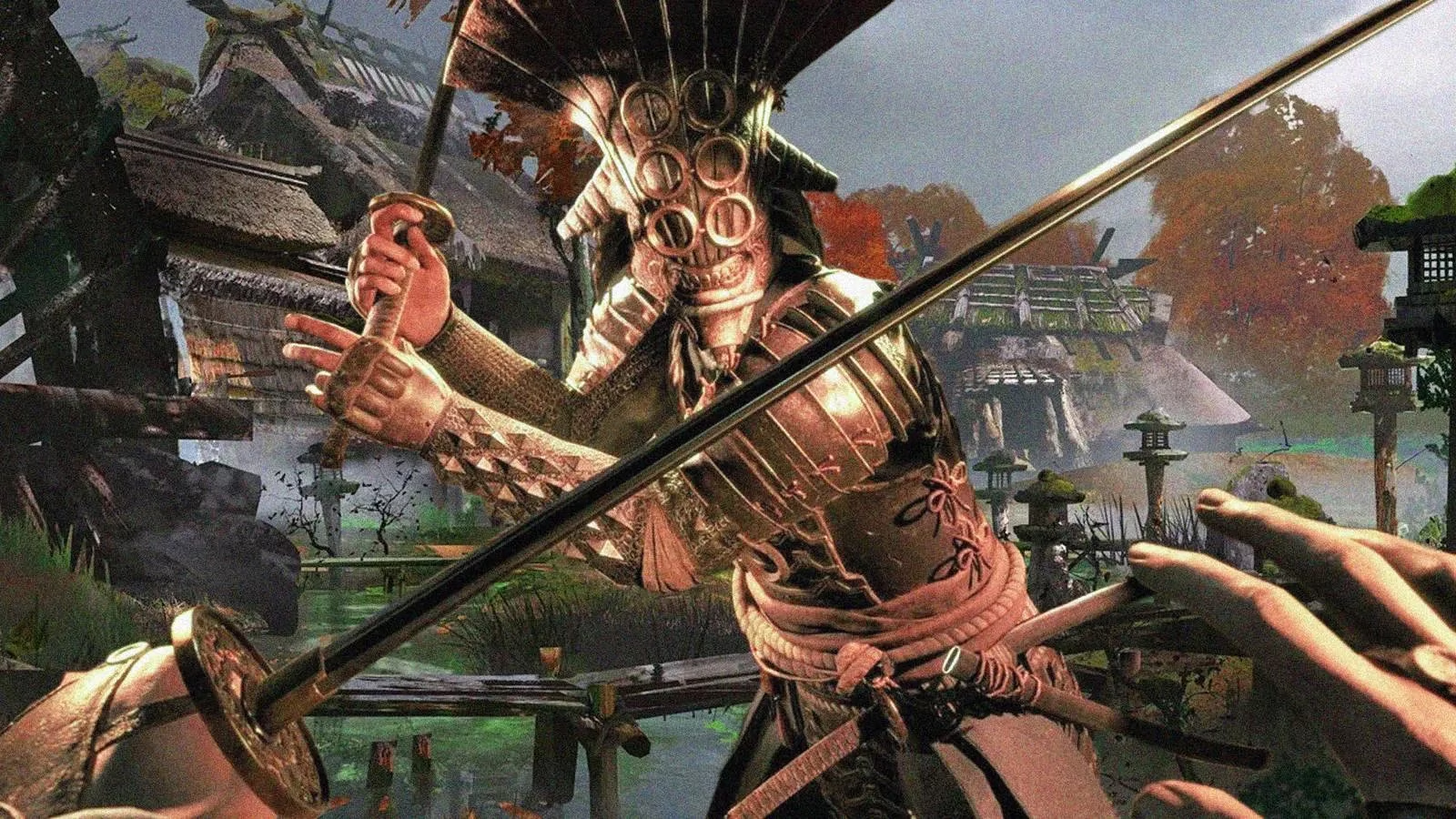
I remember my first hands-on with the Final Cut build at a press event. The promise was faster, more reactive combat, revamped boss battles with new phases, and a visual polish that made feudal Japan feel less like a tech demo and more like a living painting. Honestly, I walked in with tempered expectations—VR stealth can be janky, and melee combat often turns into a flailing mess. But within minutes, I was crouching behind bamboo fences, signaling my loyal wolf-dog, and feeling like a genuine phantom of the night.
Immersion that doesn’t fight you
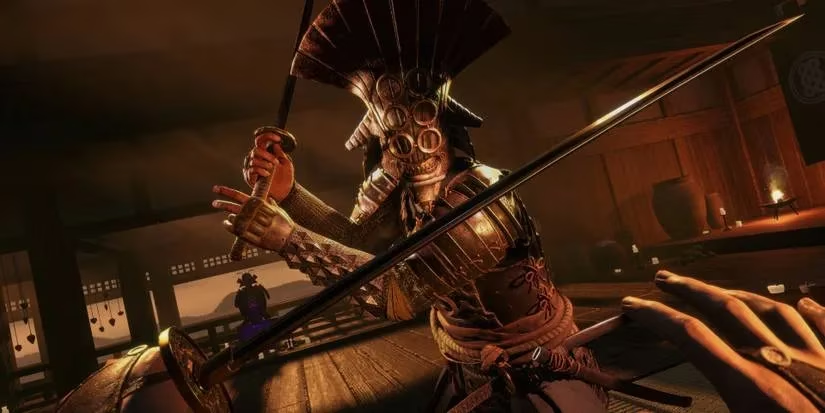
A lot of VR titles try to simulate complex actions and end up wrestling with your instincts. Not here. Because sword fighting is so intuitive—you slash, you block, you stab—Arashi gets out of your way and lets your body do what it already knows. The headset becomes a window, not a barrier. You’re not just holding a weird trigger; you’re wielding a katana and a wakizashi, balancing offense and defense with each hand. One arm stays back in a guarded stance while the other darts forward to carve through armor. It’s a rhythm that clicks instantly, but mastering the timing and deciding which hand leads the strike? That takes practice. And I love that.
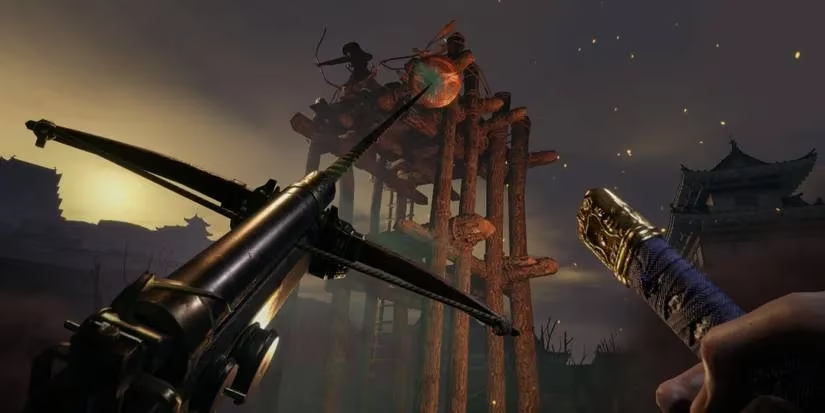
Then there’s the bow. When you’re not crossing blades face-to-face, you can whip out a ranged weapon and pick off patrols from the shadows. The transition is smooth—no menus, no fumbling—just reach back, grab an arrow, and loose it. That kind of fluidity keeps the fantasy alive. It’s a little thing, but it means you’re never pulled out of the moment.
The rule of cool (and a very good dog)
What really sets Arashi: Castles of Sin – Final Cut apart is how it embraces the rule of cool. Stealth here isn’t punishingly realistic; it leans into the Hollywood version of being a ninja. As long as you’re trying to stay quiet and keep to the shadows, you’ll probably stay undetected. And thank goodness—because in VR, where a cable snag or a gust of real-world distraction can break your concentration, that leniency feels like a warm hug.
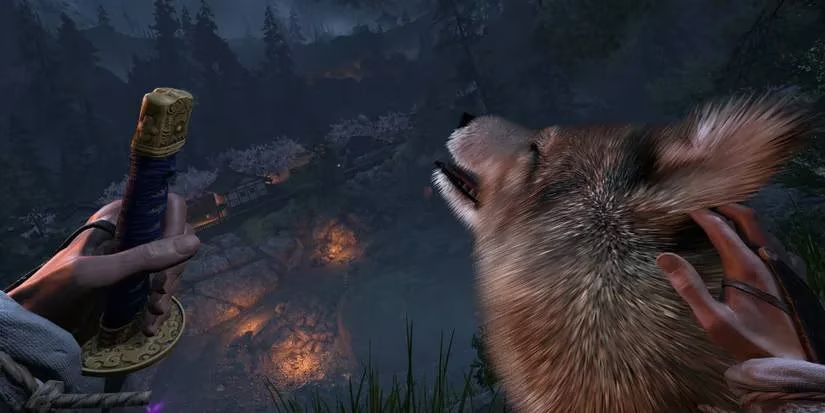
Case in point: your canine companion. You can send this furry assassin to distract guards, and so long as you’re hidden and haven’t ordered it to wander aimlessly, it slips through the camp like a ghost. And yes, you can pet the dog. Physically reaching down and ruffling its ears with your real hand is a small, grounding joy that outshines a hundred button prompts. When I first saw the dog creep up to an archer, drawing his attention just long enough for me to close the distance and unleash a silent takedown—
Man, that was cinema.
The stealth kills themselves are pure satisfaction. Sneak behind an enemy, drive your blade home, and they crumple in slow motion with an anguished cry. It’s theatrical and never gets old. You can also use a grappling rope to swing between rooftops and ledges, Spider-Man style but with bamboo. It opens up vertical routes that reward patience and observation. Get the drop on a guard from above, trigger that one-hit kill, and for a split second you’re the star of your own Kurosawa film.
A samurai fantasy that echoes Tsushima
It’s no stretch to say Arashi: Castles of Sin – Final Cut feels like Ghost of Tsushima distilled into VR. The camps, the bamboo groves, the tension of slipping past patrols—it all hums with that same spirit. But where Sucker Punch’s masterpiece sprawls across an entire island, Arashi keeps things tighter, funneling you through a series of linear bases and bridges that suit the VR format perfectly. You’re not overwhelmed with open-world bloat; you’re given a clear, cinematic challenge and the tools to pull off something awesome.
When I think about other VR heavy hitters, Horizon: Call of the Mountain comes to mind. That game managed to shrink a triple-A experience into a headset without losing its soul. Arashi does the same trick but with samurai steel. In fact, I’d argue it’s Call of the Mountain’s biggest challenger for that top-tier VR narrative-action hybrid. The Final Cut upgrades—faster combat reactions, multi-phase boss fights that test your parry timing and spatial awareness—only cement its place.
Still a gem in 2026
Even three years after its release, this Final Cut holds up beautifully. The upgraded visuals still look crisp on newer hardware, and the combat remains a benchmark for VR melee. If you’ve ever wanted to dual-wield katanas on a moonlit fortress, send an animal companion to scout ahead, then vanish into the night—this is it. And yes, you can pet the dog.
Honestly, it’s the kind of game that reminds me why I keep my headset charged and ready. It doesn’t just put you in a samurai costume; it makes you believe, for a few heart-pounding moments, that you are one.
Expert commentary is drawn from GamesIndustry.biz, and it helps frame why VR titles like Arashi: Castles of Sin – Final Cut can still feel “premium” years later: responsive melee, streamlined interactions (like swapping from katana to bow without menus), and smartly scoped level design tend to age better than sheer content volume. In practice, that design philosophy shows up in Arashi’s tight stealth compounds, readable enemy setups, and tactile systems—dual-wielding, parry timing, grappling routes, and companion commands—that prioritize player agency and reduce friction, which is exactly what keeps the samurai fantasy feeling sharp in 2026.