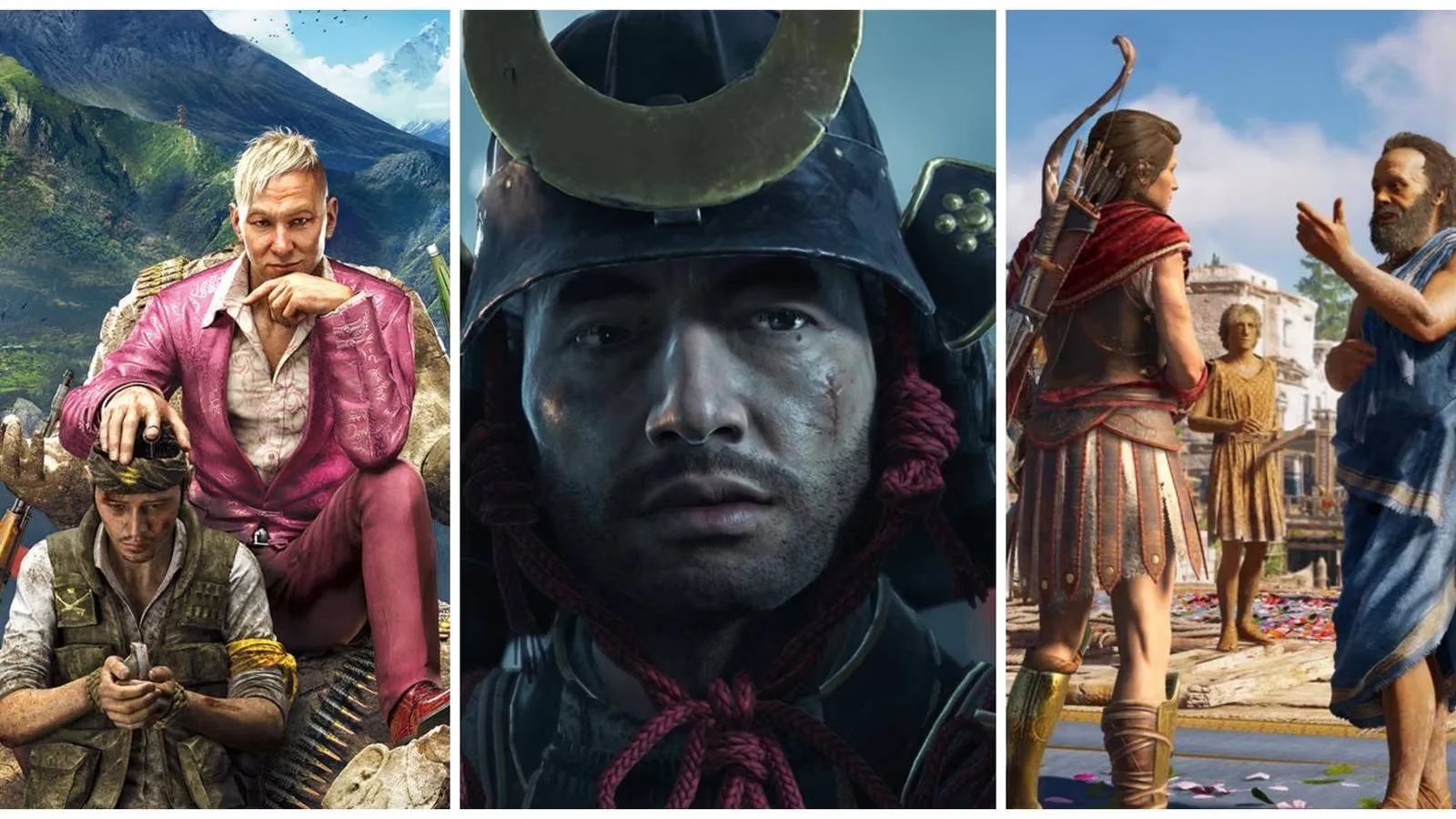
Open-world games often paint vast landscapes filled with quests, combat, and discovery, but a rare few invest the time to let players truly inhabit the cultures and traditions that shape those worlds. Whether the societies are entirely fictional creations or painstakingly researched historical settings, these games reward those who pause between missions to observe rituals, architecture, and social dynamics. Even in 2026, titles from the past decade continue to set benchmarks for how interactive entertainment can honor both imagination and history, offering layers of meaning far beyond a typical power fantasy.
🏔️ The Living Myths of Skyrim
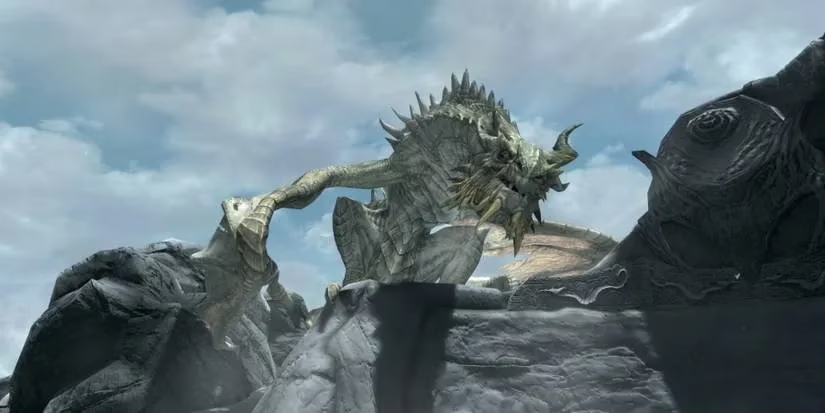
Arriving in Skyrim as a prisoner, a player soon discovers that the land of the Nords is not merely a backdrop for dragon-slaying but a tapestry of racial identity and ancient grudges. The Last Dragonborn’s journey to stop Alduin the World Eater can easily be delayed by the sheer pull of its ethnography. Orc strongholds stand apart, governed by their rigid codes of honor and seclusion, while the Nords themselves carry a proud, often xenophobic heritage that clashes openly with the oppressive Thalmor. Meanwhile, the vanished Dwemer leave behind vast subterranean ruins that hint at a sophisticated, machine-loving culture now lost to time. Each visit to a city or wilderness camp reveals distinct customs, from the Mead-drinking celebrations to the quiet ancestor worship of the Dunmer refugees. Skyrim succeeds because its cultures are not just lore entries but lived-in patterns of behavior that players can witness, challenge, or adopt, making the frozen province feel like a real society with deep roots and unresolved tensions.
🦾 Cyberpunk 2077’s Fractured Society
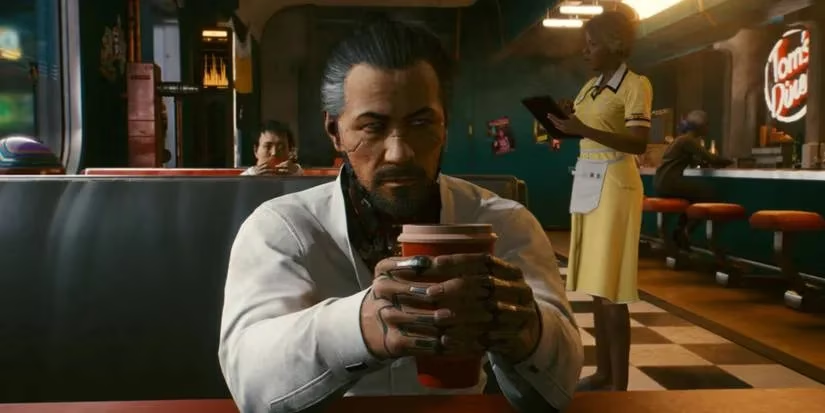
The glistening dystopia of Night City is as much a cultural warzone as a physical one. In Cyberpunk 2077, gangs are not simple enemy types but subcultures with their own aesthetics, philosophies, and grim rituals. Maelstrom’s obsession with replacing flesh with chrome borders on a body-horror cult, while the Voodoo Boys fuse digital mysticism with ruthless pragmatism, treating the Net as a spiritual frontier. Away from the criminal underworld, the city also harbors quieter traditions: the meditating monks who reject cyberware entirely, or the heartfelt religious ceremonies held by characters like Mama Welles. Even the ubiquity of braindance recordings speaks to a culture addicted to escapist consumption of other people’s lives. Walking through different districts—from the neon-drenched Japantown to the industrial wasteland of the Badlands—shows how physical space, language, and ritual define each community’s survival strategy. Cyberpunk 2077 presents a world where tradition often means violence, but the attention to cultural detail makes every back alley feel authentic and lived-in.
🌱 Reborn Traditions in Horizon: Zero Dawn
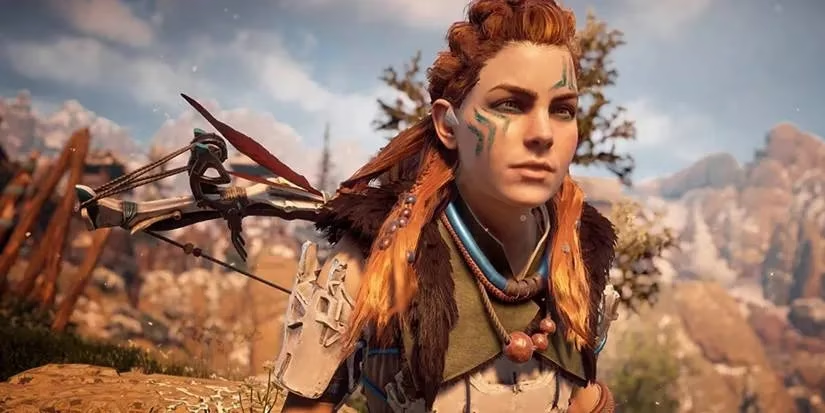
Long after the fall of modern civilization, humanity in Horizon: Zero Dawn has splintered into distinct tribes that interpret the ruins of the Old Ones and the roaming machines through their own mythic lens. The Nora are matriarchal isolationists, believing their valley is the All-Mother’s sacred land, their rituals tied to the mountains and taboo against ancient technology. Sharp contrasts emerge with the Carja, a sun-worshipping, hierarchical empire built on stone and slavery, and the Oseram, pragmatic tinkerers who prize ingenuity above all else. Each tribe’s clothing, architecture, and dialogue reflect a genuine effort to model how societies might evolve when cut off from a shared history. Aloy’s quest takes her through festivals, rites of passage, and political intrigues that reveal the deep logic behind each group’s worldview. The game turns exploration into a kind of anthropology, asking the curious player not just to fight machines, but to understand the fragile cultures that cling to existence in their shadows.
🏞️ Far Cry 4’s Fictional Kyrat, Rooted in Reality
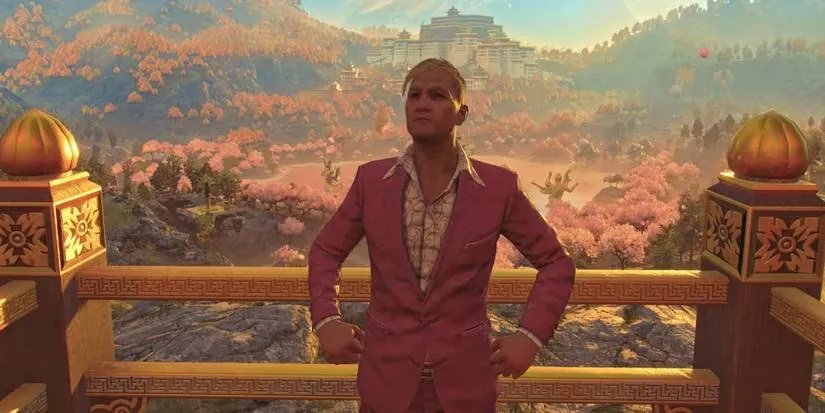
Although Kyrat is a made-up Himalayan country, Far Cry 4 drew on extensive research to craft a world that feels strikingly authentic. The development team studied regional architecture, religious iconography, and local customs, ensuring that even the fictional nation honored the spirit of real-world Nepal and Tibet. Prayer flags flutter across bridges, monasteries echo with chants, and the struggle between the Golden Path rebels and Pagan Min’s regime is undercut by a population simply trying to maintain their agricultural rhythms and spiritual practices. Wildlife is not just scenery but part of a cultural ecosystem where hunting and reverence coexist. The game allows a player to step away from gunfire and simply observe daily life in small villages, where the weight of tradition is palpable in every interaction. Far Cry 4 proves that thoughtful world-building can elevate an action blockbuster into a respectful, if intense, cultural experience.
⚔️ Ghost of Tsushima’s 13th-Century Japan
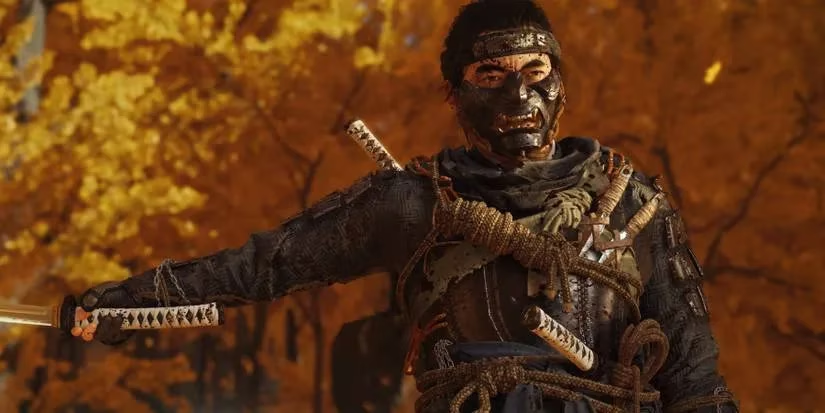
Few games have captured the soul of a historical period as gracefully as Ghost of Tsushima. Set during the Mongol invasion of 1274, the island of Tsushima becomes a stage for the collapse of samurai honor and the birth of a new, desperate way of fighting. The game coats every scene with a reverence for Japanese aesthetics: windswept bamboo groves, meticulously recreated temples, and the ritual of composing haiku in moments of stillness. Jin Sakai’s journey from tradition-bound warrior to the stealthy "Ghost" mirrors a cultural tension between collective duty and individual survival. Sidequests often revolve around Buddhist and Shinto beliefs, while the player can engage in hot spring reflections or follow foxes to hidden shrines. This is not a fantasy version of Japan but a heartfelt homage that educates as it entertains, allowing the landscape and its traditions to breathe with a quiet, moving power.
🏛️ Assassin’s Creed Odyssey’s Ancient Greece
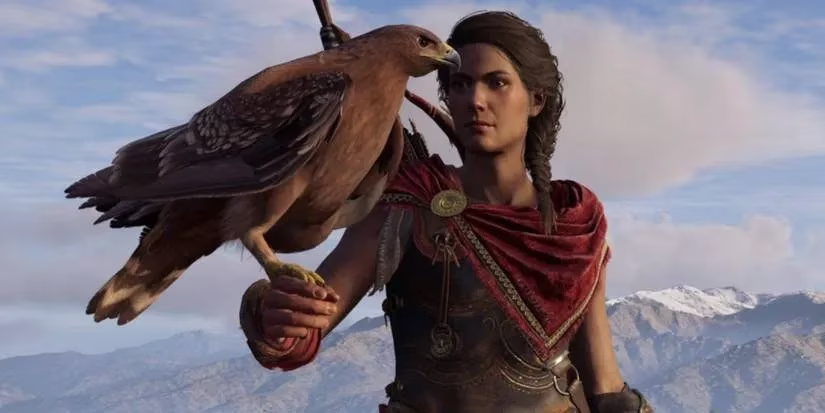
Assassin’s Creed Odyssey sails away from pure myth to offer a vibrant, sun-soaked recreation of Classical Greece. The bustling agora of Athens, the militaristic discipline of Sparta, and the whispered mysteries of the Delphic Oracle all pulse with obvious care for historical detail. While mythological creatures like the Minotaur appear, they are framed as remnants of Isu technology, keeping the human traditions at the forefront. Players can witness symposiums, watch athletes compete in the Olympic Games, and walk through temples dedicated to a pantheon that shaped every aspect of daily life. The game’s many side activities and dialogue choices expose the philosophical, political, and artistic currents that defined the era. Even if the map can feel bloated, the cultural richness remains a towering achievement, letting a wanderer taste the olives, listen to the lyres, and feel the weight of a civilization that still influences the modern world.
🤖 Kenshi’s Brutal Patchwork of Factions
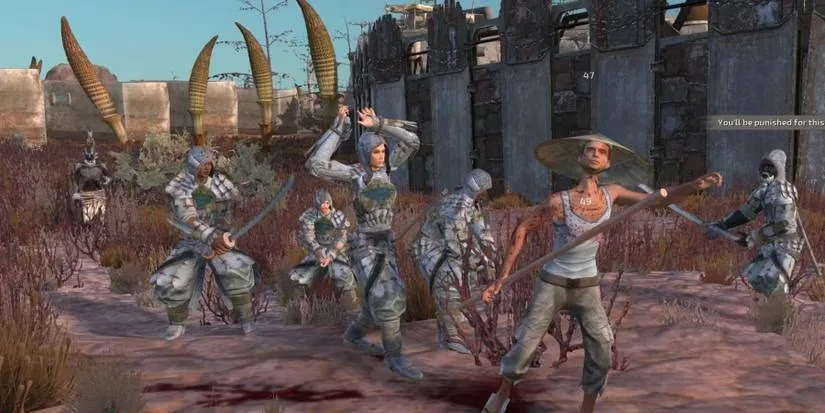
In the sandbox cruelty of Kenshi, culture is often a matter of life and dismemberment. This real-time strategy RPG offers no chosen-one narrative but instead drops the player into a vast desert full of warring factions, each with deeply ingrained traditions. The Holy Nation preaches rigid religious law and a hatred of technology, while the United Cities thrive on slavery and opulence. More bizarre are the Skeletons—ancient humanoid robots who harbor secrets of the past—and the Skin Bandits, who offer a macabre parody of camaraderie by trying to steal organic skin from living victims. Survival means learning each group’s taboos, trade goods, and triggers for violence. The game’s uncompromising systems make cultural awareness a tactical necessity, not just flavor. Few titles make a player feel so acutely like an outsider stumbling through alien, often terrifying, social orders.
Together, these games demonstrate that the most memorable open worlds are those that feel inhabited by people with histories, beliefs, and rituals of their own. Whether exploring a dragon-haunted tundra or a neon-soaked metropolis, the true journey is not across the map but into the heart of a culture.