In 2026, the long-awaited film adaptation of Ghost of Tsushima remains one of the most intriguing projects in Hollywood. Chad Stahelski, the director behind John Wick, has spoken at length about his vision for bringing Sucker Punch Productions' acclaimed samurai epic to the big screen. The game, which became the fastest-selling original Sony game in PlayStation history, follows Jin Sakai, a samurai warrior and sole survivor of a Mongol army attack on his clan. Set in 1274, Jin's journey is one of vengeance, honor, and liberation as he fights to free the island of Tsushima. A film adaptation was announced in March 2021, with Stahelski directing and Takashi Doscher writing. Since then, fans have waited eagerly for any sign of progress.
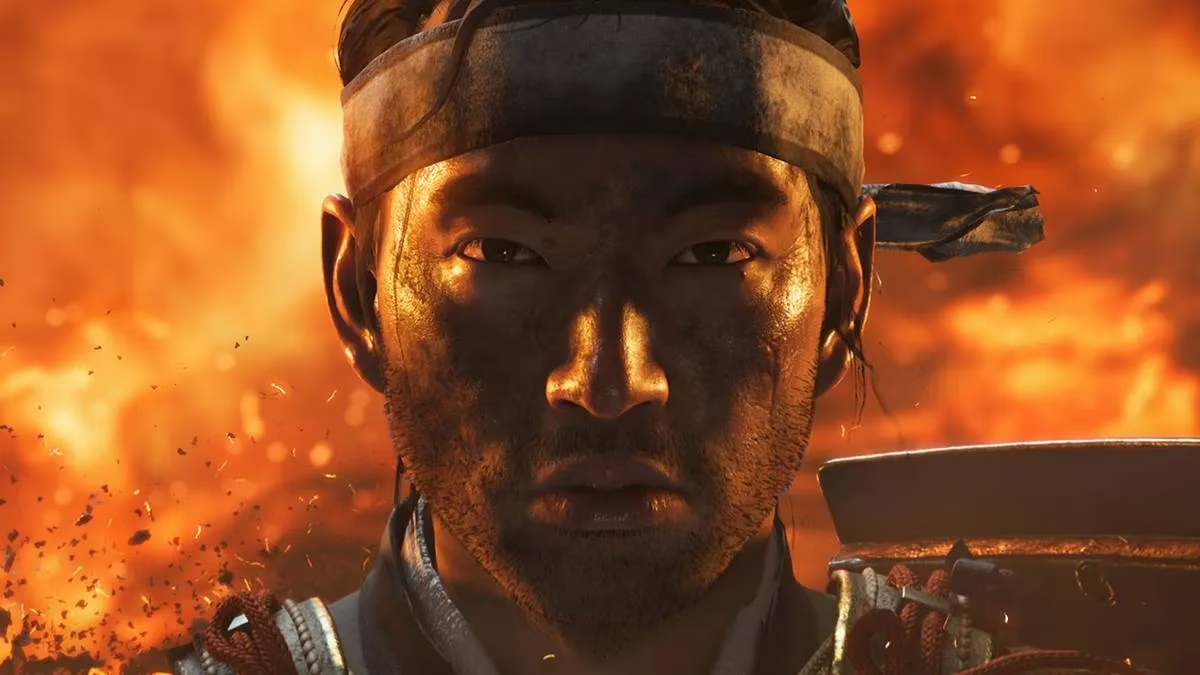
Video game adaptations have long been a touchy subject. For every success, there are cautionary tales of projects that failed to capture the spirit of their source material. Ghost of Tsushima carries enormous expectations because the game itself was a major hit. Audiences and critics praised its story, visuals, and gameplay, and it collected a slew of awards. Any director stepping into this world faces a passionate built-in audience with high hopes. So why is Stahelski considered the right person for the job? His work on the John Wick franchise demonstrates a mastery of martial arts action, kinetic choreography, and stylish world-building. More importantly, he has repeatedly expressed enthusiasm for creating a faithful adaptation that honors the source material.
In a recent interview with Collider, Stahelski discussed his desire to film the movie in Japanese and to assemble a Japanese cast. Such a choice would be a significant departure from many Hollywood adaptations that default to English-language productions. It signals a commitment to authenticity that fans of the game have long requested. Stahelski also described the main influences shaping his approach. He called the project a fantasy period piece done with reverence to Akira Kurosawa, whom he placed among the top five biggest influences in his life as far as film goes. For a director known for modern action, invoking Kurosawa is a bold and promising statement.
Stahelski described the story as a chance to push technology and people within a timeless narrative. He framed it as a typical mythological story of good versus evil, one that finds a man and watches him change the world or the world change him. This is the Joseph Campbell monomyth, the hero's journey that has shaped countless epics. Stahelski also admitted, with humor, that he has a bit of a samurai fetish, which he traced to manga and anime. That personal passion could translate into a film that feels both culturally rich and emotionally driven.
| Influence | How It Shapes the Film |
|---|---|
| Akira Kurosawa | Reverent period-piece style, samurai genre roots |
| Joseph Campbell | Hero's journey, transformation, good vs. evil |
| Manga and anime | Stylized action, personal passion for samurai |
| John Wick experience | Precise martial arts choreography, kinetic energy |
| Japanese language and cast | Authenticity, cultural respect |
The director's previous comments about the Ghost of Tsushima movie already built high expectations. His latest words go even further, promising exactly the sort of culturally rich, character-driven fantasy epic that fans hope for. The Kurosawa reference bodes well for staying true to the video game's samurai genre roots. It also suggests a production that combines the westernized format of the hero's journey with deep Japanese influence on both story and filmmaking levels. Can a video game adaptation finally break the so-called curse? Ghost of Tsushima is arriving during a renaissance of game-to-screen projects, including Ruben Fleischer's Uncharted and HBO's The Last of Us. Each new adaptation raises the bar and proves that thoughtful creative teams can win over skeptical audiences.
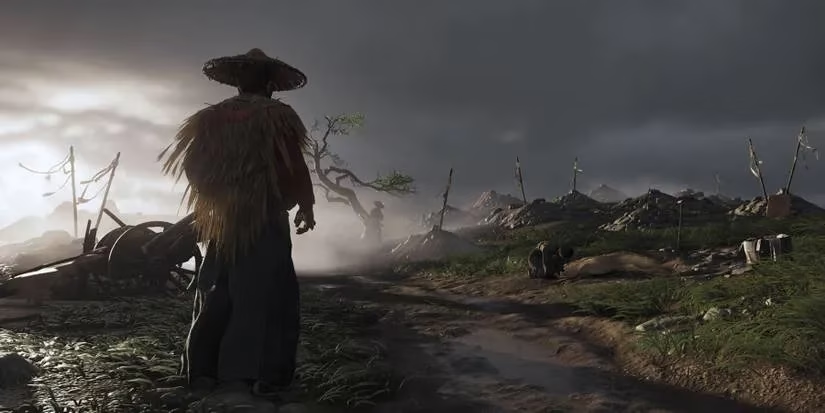
Little else is known about the Ghost of Tsushima film for now, and as of 2026, Sony has yet to announce a release date. That silence has not stopped speculation. Will Stahelski film entirely in Japanese? How closely will the movie follow the game's main story? Which supporting characters from Jin's journey will make the cut? These questions keep the project in the conversation. What is clear is that Stahelski's attention to detail and his enthusiasm for faithfully adapting the source material are good signs. The game's themes of honor, sacrifice, and identity offer fertile ground for cinema. If the director can balance spectacle with emotional truth, the adaptation could become a landmark. For now, fans can only wait, rewatch the game's breathtaking landscapes, and hope that the film arrives with the same reverence that Stahelski has promised.
Source: Collider