In the wake of FX’s Shōgun becoming one of the most acclaimed television events of the decade, the appetite for grand historical epics set in feudal Japan has rarely been higher. The 2024 series not only dominated award conversations but also reminded global audiences how captivating samurai culture and political intrigue can be when rendered with modern production values. Now, as the industry looks to capitalize on this renewed enthusiasm, a major film project has quietly progressed behind the scenes: a live-action adaptation of the hit video game Ghost of Tsushima, helmed by John Wick director Chad Stahelski. With Shōgun having ended its limited run, this cinematic endeavor is shaping up to be the spiritual successor that fans of the genre have been craving.
While seminal samurai films like Seven Samurai or Harakiri remain untouchable classics, contemporary offerings on the big screen have been sparse. Shōgun filled that void with an immersive dive into the late Sengoku period, balancing delicate character drama with breathtaking set pieces. The Last Samurai, released over two decades ago, offered a Hollywood take on the era but was skewed toward a Western perspective. Ghost of Tsushima, by contrast, draws from a similarly rich well of Japanese history and tradition, and its transition to film promises a more authentic and action-forward experience—exactly the kind of project that can sustain the momentum generated by Shōgun.
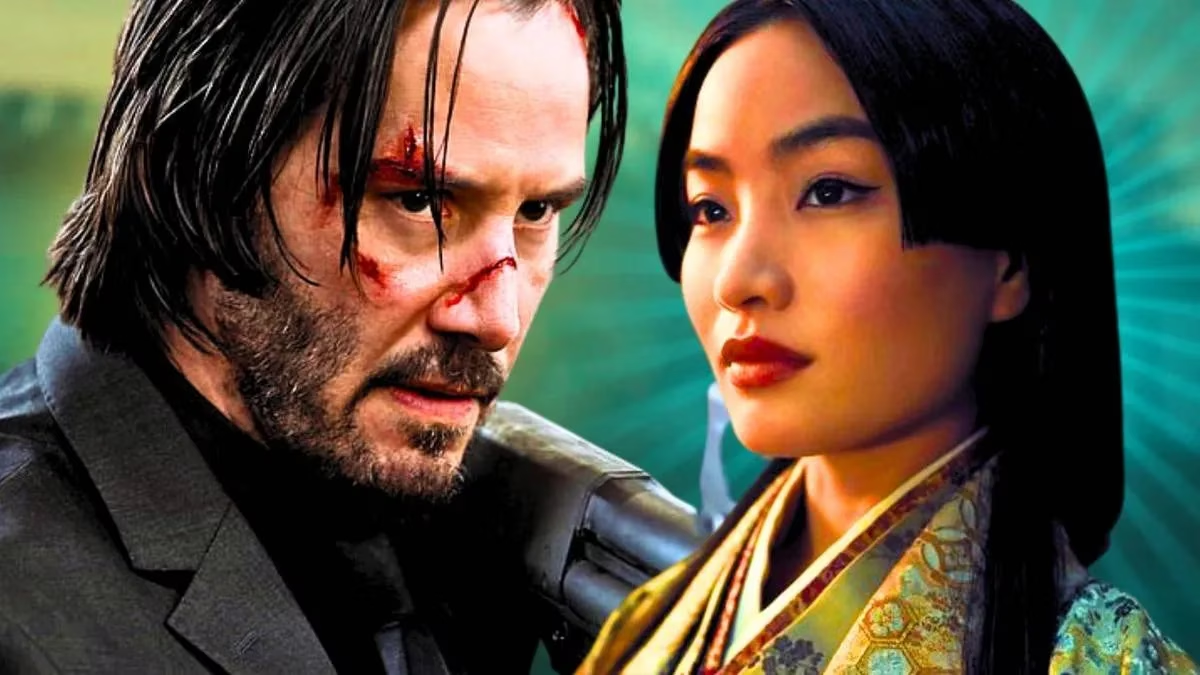
Based on Sucker Punch Productions’ 2020 game, the narrative follows Jin Sakai, a samurai who must break from his strict code of honor to protect Tsushima Island during the first Mongol invasion of Japan in 1274. Much like Shōgun, which traced Lord Toranaga’s cunning rise amid civil war, the game explores the tension between personal conscience and societal expectation, as well as the collision of cultures when an external force threatens a deeply rooted way of life. These thematic parallels are no coincidence: both stories are anchored in real historical upheavals that reshaped the nation. Shōgun depicted the twilight of the Sengoku era around 1600, while Ghost of Tsushima goes back to the Kamakura period, when Kublai Khan’s fleet first tested Japanese shores. The film, then, will not merely be a string of combat sequences; it has the potential to unpack the very definition of a warrior’s duty, just as Shōgun did through characters like Kashigi Yabushige or John Blackthorne.
Chad Stahelski’s involvement has been the project’s most electrifying promise. Known for turning gun-fu ballet into high art with the John Wick franchise, Stahelski confirmed in late 2023 that the script was finished and development had entered a serious phase. By 2026, industry insiders report that casting discussions are well underway and pre-production design is drawing heavily from the game’s award-winning visual palette—think crimson sunsets over rolling pampas grass and the stark silhouettes of armored warriors. Stahelski has publicly expressed his deep respect for Japanese cinema, citing Akira Kurosawa as a primary influence, and has hinted that the film will honor that heritage while delivering the visceral, inventive action he is celebrated for. Where Shōgun often let tension simmer in silent castle chambers, Ghost of Tsushima is expected to erupt with kinetic swordplay and large-scale battle choreography, yet both share an unwavering commitment to emotional storytelling.
The video game adaptation renaissance has certainly helped smooth the path. Recent successes like The Last of Us and The Super Mario Bros. Movie proved that audiences will flock to properties that vividly render their source material. Ghost of Tsushima enjoys an added advantage: its story requires no gamer literacy; it is a straightforward historical drama with universal themes of sacrifice, loyalty, and resistance. Furthermore, the 1200s setting offers a fresh visual landscape distinct from the more familiar Edo-period aesthetics. Costume designers and art directors have a rare opportunity to recreate the intricate armor, weaponry, and architecture of the Kamakura era, lending the film an identity that separates it from both Shōgun and previous samurai blockbusters.
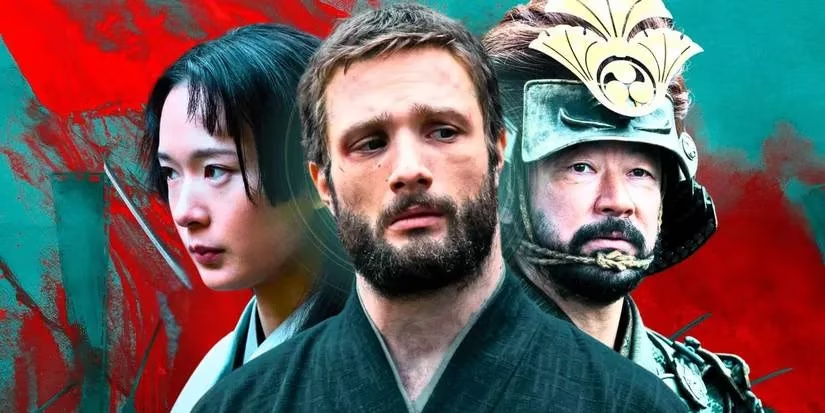
Early anticipation has already sparked conversations about the cast. While no official announcements have been made, speculation points to a mix of Japanese and pan-Asian talent, continuing the precedent set by Shōgun, whose ensemble featured Hiroyuki Sanada, Anna Sawai, and Tadanobu Asano—all delivering career-defining performances. Stahelski and his team will need to assemble a similarly credible lineup to ground the fantastical elements of Jin’s journey. The director’s track record for elevating relative newcomers and revitalizing veterans suggests the film could become a major moment for representation in Hollywood.
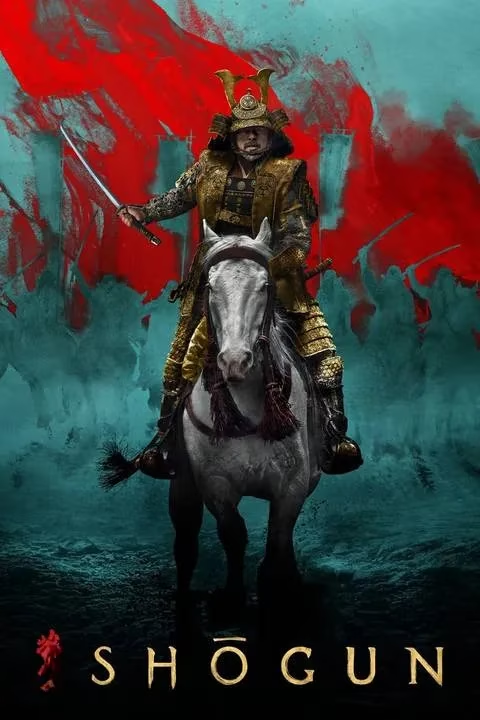
In a cultural landscape where Shōgun has already scooped top honors and dominated streaming charts, the Ghost of Tsushima adaptation arrives at the perfect moment. It will almost certainly lean harder into the action that made John Wick a global phenomenon, but there is every reason to believe it will also embrace the complex soul of its source material. As the film moves closer to a projected release in the next couple of years, it stands to not only satisfy gamers but also invite a broader audience to experience another pivotal chapter in Japanese history. For those who binged Shōgun and longed for more, the islands of Tsushima are about to become the next must-visit destination in prestige cinema.