It is 2026, and I still vividly recall the moment Ghost of Tsushima: Director’s Cut finally galloped onto PC back in May 2024. Even two years later, this port remains a benchmark for how a console masterpiece should transition to the open platform. As I boot up the game once more on my ultrawide monitor, the golden fields of Tsushima stretch endlessly before me, and I am reminded why this version, crafted by Nixxes, is still the definitive way to experience Jin Sakai’s tale. The landscape of PC gaming has evolved since then, with even more demanding titles emerging, yet the elegance and technical prowess of this release continue to earn my admiration.
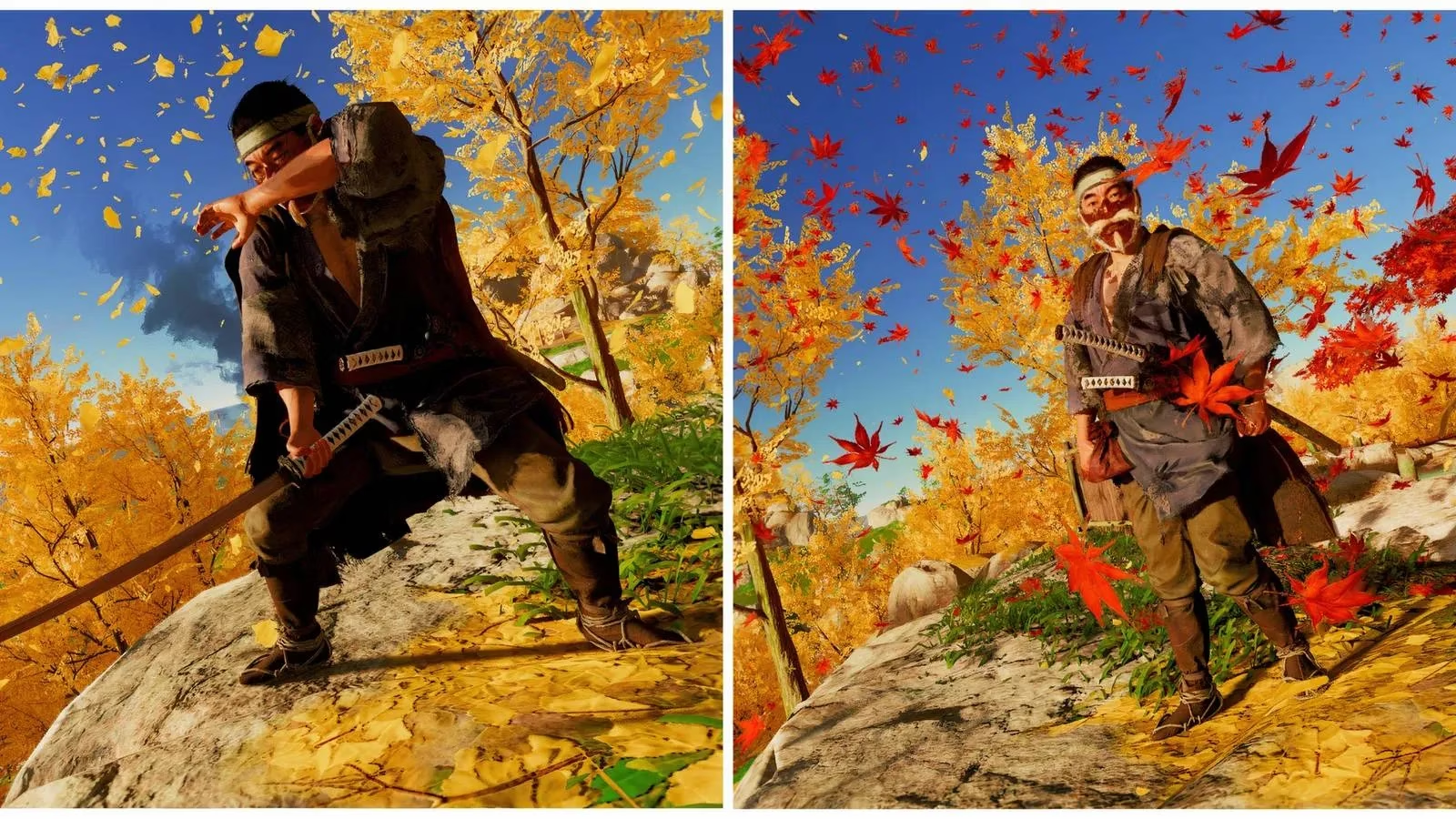
One of the first things that struck me—and still does—is the flawless ultrawide support. Back when the port launched, many of us had already invested in 21:9 or even 32:9 monitors for deeper immersion. Nixxes delivered exactly that, following in the footsteps of their earlier work on Horizon Forbidden West and Marvel’s Spider-Man. Yes, cutscenes cling to 16:9 with unavoidable black bars, but once gameplay begins, the expanded horizontal real estate transforms the island of Tsushima into a panoramic work of art. The way golden sunsets bleed across the full width of my screen, or how a field of pampas grass sways uniformly in the wind, elevates the emotional weight of every duel and haiku. Two years ago, this was a revelation; today, it remains a masterclass in aspect ratio implementation that few action-adventure titles have managed to surpass.
Performance was another cornerstone of this port’s excellence, and in 2026, it still stands as a testament to thoughtful optimization. Nixxes equipped Ghost of Tsushima with not only NVIDIA DLSS 3 and Frame Generation but also AMD FSR 3 with Fluid Motion Frames. At a time when many developers locked frame generation behind a single GPU brand, this inclusive approach was a breath of fresh air. My current rig, powered by a newer RTX 5080, can easily push the game beyond 200 fps at maximum settings, yet I remember how my older RTX 3080 Ti consistently delivered a buttery 100+ fps at 4K with DLSS Quality. The scaling is remarkable; friends using handheld devices like the Steam Deck OLED or the ASUS ROG Ally 2 still enjoy a stable 40-60 fps experience with acceptable visuals. The fact that this samurai epic runs gracefully on low-end hardware without sacrificing the artistry of its world is why the game continues to thrive in my gaming circle.
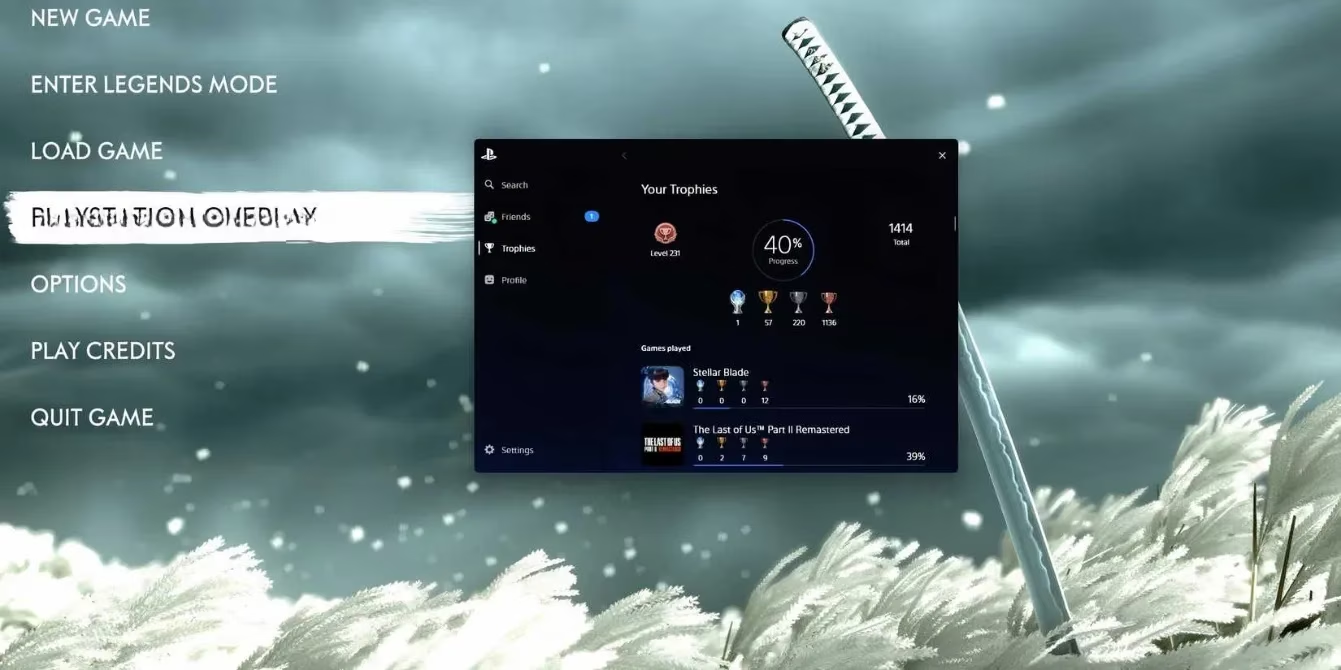
The seamless integration of the PlayStation ecosystem into the PC experience was another pleasant surprise that has aged well. Through the in-game PlayStation Overlay, I can access my PSN account, sync trophies earned on my PS5 years ago, and instantly jump into Legends co‑op missions with friends still playing on console. Crossplay between PC and PlayStation consoles has kept the multiplayer mode alive far longer than I anticipated. While I am aware of the persistent frustration surrounding PSN account requirements in certain regions—a problem Sony still hasn’t fully resolved—the overlay itself functions flawlessly. Receiving a PlayStation Trophy ping on my PC while stealth-killing a Mongol general feels genuinely cohesive, as if the boundaries between platforms have blurred. In 2026, with many other PlayStation PC ports having followed suit, Ghost of Tsushima set the gold standard for this feature.
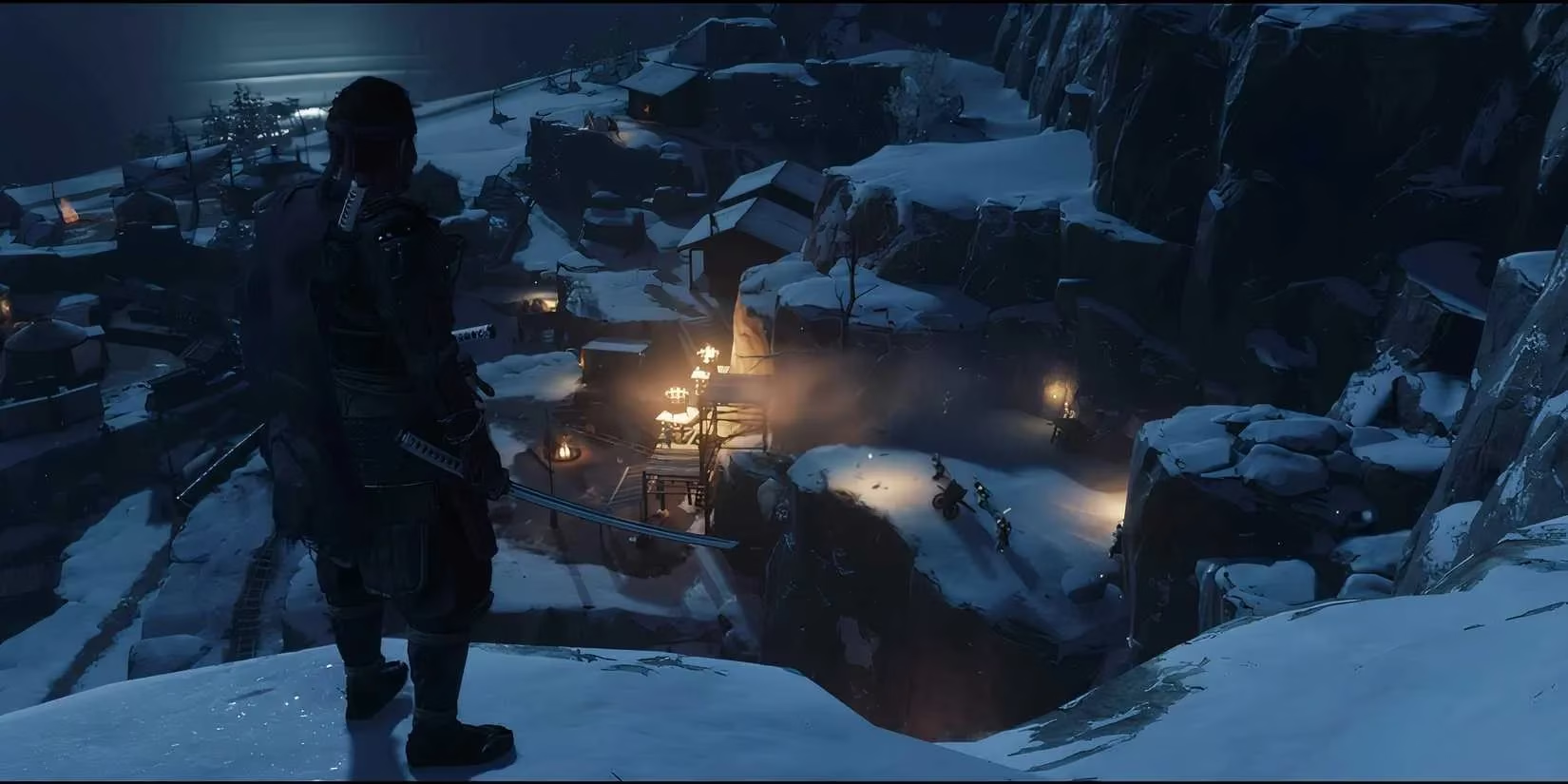
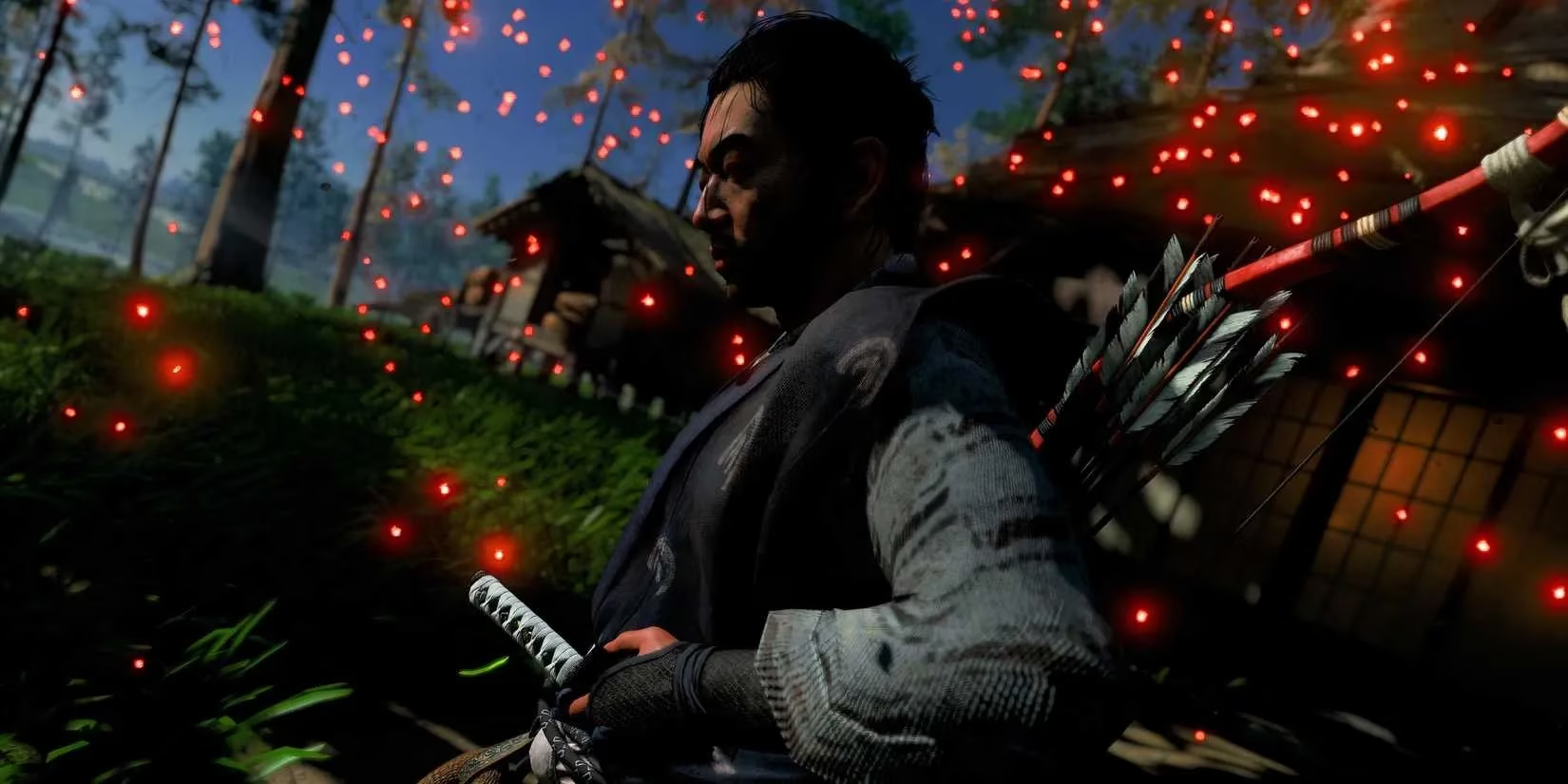
Visual fidelity is the element that continues to leave me speechless. Even now, after playing technically more advanced titles, the art direction and technical implementation here are breathtaking. Nixxes allowed the game to shine on high-end GPUs with pristine textures, lush foliage density, and volumetric lighting that paints every scene with a cinematic brush. I often find myself pausing just to admire the way raindrops bead on Jin’s armor or how mist curls around a distant pagoda. The community has taken this canvas and run wild with it. Mod support was initially a pleasant bonus, but by 2026, the modding scene has exploded beyond my expectations. Cosmetic mods offer historical armor sets and new weapon skins, while quality-of-life tweaks fine-tune the difficulty and HUD. Reshade presets have evolved to emulate classic samurai film stocks, adding a grainy, desaturated aesthetic that fits the narrative perfectly. The engine’s flexibility has proven to be a gift that keeps on giving, transforming each replay into a fresh visual adventure.
Looking back, the concerns about another broken AAA PC port were real. We had suffered through disastrous launches in the early 2020s, but Nixxes’ reputation held true. Ghost of Tsushima arrived polished, scalable, and packed with forward-thinking features that still feel modern. The handful of issues—cutscene ratios, the region-locked PSN account debacle—are minor blemishes on an otherwise stellar release. As I write this in 2026, with whispers of a sequel possibly on the horizon, I can only hope that Sucker Punch takes note of how this PC version was received. A day-one PlayStation exclusive launch for the next chapter would be understandable, but if the eventual PC port mirrors the care and dedication poured into this Director’s Cut, the wait will be worthwhile. For now, I’ll sheath my katana after another satisfying session, grateful that Jin’s journey remains as breathtaking and accessible as ever.
The following breakdown is based on technical commentary from Digital Foundry, whose performance and image-quality analyses help explain why Ghost of Tsushima: Director’s Cut still feels so “future-proof” on PC in 2026—its wide feature stack (ultrawide gameplay framing, multiple upscalers, and frame-generation options) exemplifies the kind of scalable rendering pipeline that keeps a visually rich open world smooth across both high-end desktops and portable hardware.