As a professional gamer and long-time fan of Sucker Punch Productions' masterpiece, I've always been fascinated by the stories behind the games we play. Ghost of Tsushima, which launched in 2020 and continues to captivate players in 2026, represents one of the most polished and emotionally resonant experiences in modern gaming. Yet, like any creative endeavor, its journey from concept to final product involved difficult decisions and substantial cuts. Recent discoveries and developer insights have shed light on significant narrative elements and locations that never made it into the final release, offering us a glimpse into an alternate version of Jin Sakai's story that could have been.
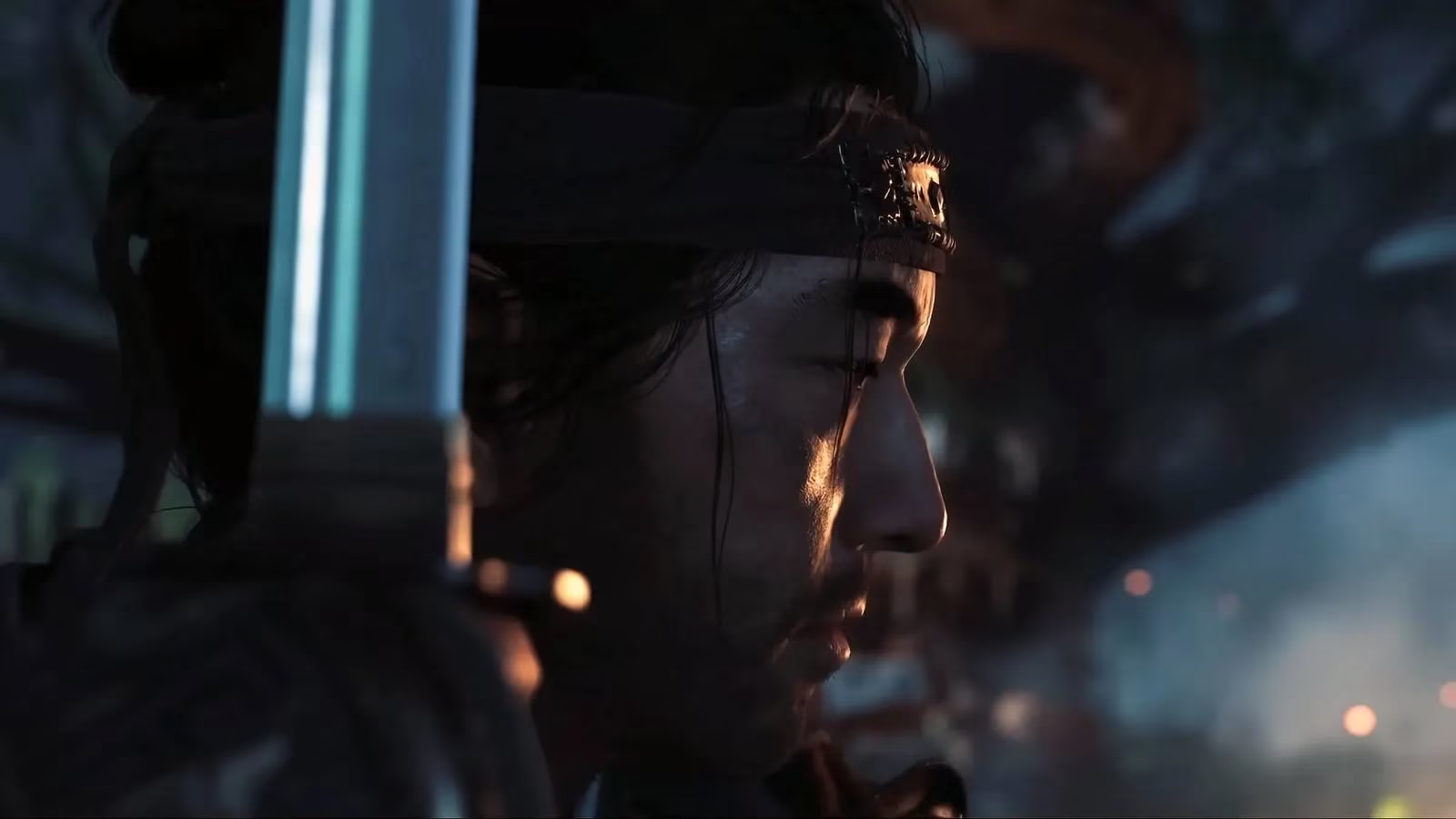
The protagonist, Jin Sakai, remains one of gaming's most compelling characters, but his backstory in the released version is actually a refined, less brutal version of what was originally planned. In the game we know, Jin is haunted by the childhood trauma of witnessing his father Kazumasa's death and carries guilt for being unable to prevent it. This forms the emotional core of his journey from honorable samurai to pragmatic 'Ghost.' However, recovered dialogue audio reveals a much darker dimension to Jin's relationship with his father that was ultimately removed during development. These cuts weren't minor tweaks—they fundamentally altered how players perceive Jin's motivations and emotional scars.
In one particularly revealing cut scene, Jin shares morbid stories with Yuna about his father. The dialogue paints Kazumasa Sakai not just as a fallen hero, but as an abusive parent who terrorized his own son. Jin describes hiding in the forest as a child, slashing at bamboo with a bokken while pretending it was his father. He recalls spying on Kazumasa dressing for battle and being terrified when his father put on his mask, saying: 'my father disappeared. In his place was the one who killed men on the battlefield — the one who hurt me at home.' This alternate backstory adds complex layers to Jin's character but would have significantly changed players' emotional connection to his quest for vengeance.
Further cut dialogue with Yuriko, Jin's caretaker, expands on this troubled father-son dynamic. Yuriko acknowledges the pain Kazumasa inflicted, telling Jin that his father 'knew how to train warriors, but he never learned how to raise a son.' She explains that because Kazumasa was a 'hero to many people,' the truth about his abuse had to remain hidden to preserve the hope people had placed in him. In another emotional exchange, Jin describes his scars as 'proof' of his father's love—a heartbreaking reflection on how children internalize parental abuse. Yuriko tries to comfort him by revealing that Kazumasa was happy the day Jin was born and that she hoped his birth would change the man.
Why were these dark elements removed? As a player who has analyzed countless game narratives, I believe the developers made the right choice. The released version's focus on Jin's guilt over failing to protect his honorable father creates a cleaner emotional throughline. The cut material, while psychologically complex, might have made Jin's transformation feel more like rebellion against an abuser rather than a moral crisis about honor versus survival. The current version allows players to fully invest in Jin's internal conflict without the distraction of parental trauma that could have overshadowed the game's central themes.
Jin wasn't the only character whose backstory faced significant cuts. Ryuzo, Jin's childhood friend turned adversary, also had deeper layers removed from his narrative. In scrapped dialogue, Jin asks Ryuzo if he ever wondered what became of the family that abandoned him. Ryuzo's response—'I was just a kid. There's no answer in the world that would make sense'—reveals a vulnerability rarely shown in the final game. When Jin asks if Ryuzo wants to know why his family left, Ryuzo deflects with: 'Those people aren't my family. I'm riding with mine!' referring to his Straw Hat ronin. Jin then tries to comfort him by envisioning a future where Ryuzo becomes a samurai, fills a home with family, and grows 'old, lazy, and fat.'
This cut content matters because it adds crucial context to Ryuzo's betrayal. In the released game, his turn against Jin can feel somewhat abrupt, motivated primarily by his ronin's starvation. The removed dialogue suggests a deeper insecurity about belonging and family that could have made his desperation more sympathetic. Ryuzo's rejection of his biological family and embrace of the Straw Hats as his true 'family' parallels Jin's own struggle between his samurai upbringing and his new identity as the Ghost. Both characters are wrestling with what family and loyalty mean in a world turned upside down by invasion.
Beyond character backstories, Ghost of Tsushima's world itself underwent changes during development. One significant location cut from the final game was the 'Otsuna Grasslands,' originally featured in the E3 2018 gameplay reveal. This area was planned as part of Tsushima Island, situated in the Otsuna prefecture within the Toyotama region between Izuhara and Kamiagata. The grasslands would have offered players another expansive, visually striking environment to explore, likely filled with Mongol patrols, hidden shrines, and side quests.
While the Otsuna Grasslands were ultimately removed, it's possible their essence was repurposed into other areas. The Kushi Grasslands in the final game may represent a reimagined version of this cut content, though we can only speculate about what unique gameplay opportunities were lost. As someone who has traversed every inch of Tsushima multiple times, I often wonder how this additional region might have changed the game's pacing and exploration. Would it have contained unique missions? New enemy types? Additional mythic tales? The mystery of what could have been in the Otsuna Grasslands adds to the rich tapestry of Ghost of Tsushima's development history.
The table below summarizes the major cut content discussed:
| Cut Content | Original Purpose | Why It Was Cut |
|---|---|---|
| Jin's abusive father backstory | Add complexity to Jin's trauma | Risked overshadowing main themes of honor vs. survival |
| Ryuzo's family abandonment | Deepen motivation for betrayal | May have made story too convoluted |
| Otsuna Grasslands location | Expand explorable world | Likely pacing or technical constraints |
Reflecting on these revelations in 2026, with the benefit of six years of perspective since Ghost of Tsushima's release, I'm struck by how the game's success proves the developers' editorial judgment was correct. The final product achieved near-perfect balance between:
-
Emotional depth and narrative clarity
-
Character complexity and player identification
-
World size and meaningful content density
Every cut, while potentially painful for the creators, served to sharpen the experience we ultimately received. The removed father abuse storyline, while psychologically interesting, might have made Jin less relatable as a hero. The expanded Ryuzo material, while adding depth, could have diluted the game's focus on Jin's transformation. And the Otsuna Grasslands, while beautiful in concept, might have stretched the game's pacing too thin.
As players, we're fortunate to live in an era where we can occasionally glimpse these 'what if' scenarios through recovered assets and developer interviews. They remind us that game development is an iterative process of difficult choices, where compelling ideas must sometimes be sacrificed for the greater good of the final experience. Ghost of Tsushima stands as a testament to the power of disciplined storytelling and thoughtful editing—a masterpiece not despite its cuts, but in many ways because of them.
In my professional gaming career, I've seen countless titles struggle with bloat and narrative inconsistency. Ghost of Tsushima's developers demonstrated remarkable restraint, cutting even good material to serve the overall vision. The game we got in 2020—and continue to celebrate in 2026—proves that sometimes, the most creative decision is knowing what to leave out. The cut content now serves as fascinating historical artifact, enriching our understanding of one of this generation's defining games without diminishing its actual achievements.