As we look ahead to 2026, the legacy of Jin Sakai's journey continues to cast a long shadow. Ghost of Tsushima, Sucker Punch's acclaimed samurai epic set against the brutal Mongol invasion, wasn't just a hit—it left a whole island of fans hungry for more. The game's beating heart was the agonizing conflict between tradition and necessity, personified in the fractured bond between Jin and his uncle, Lord Shimura. That final, rain-soaked duel on the coast wasn't just a boss fight; it was a question posed directly to the player about honor, family, and the cost of salvation. And boy, did that ending leave us all talking.
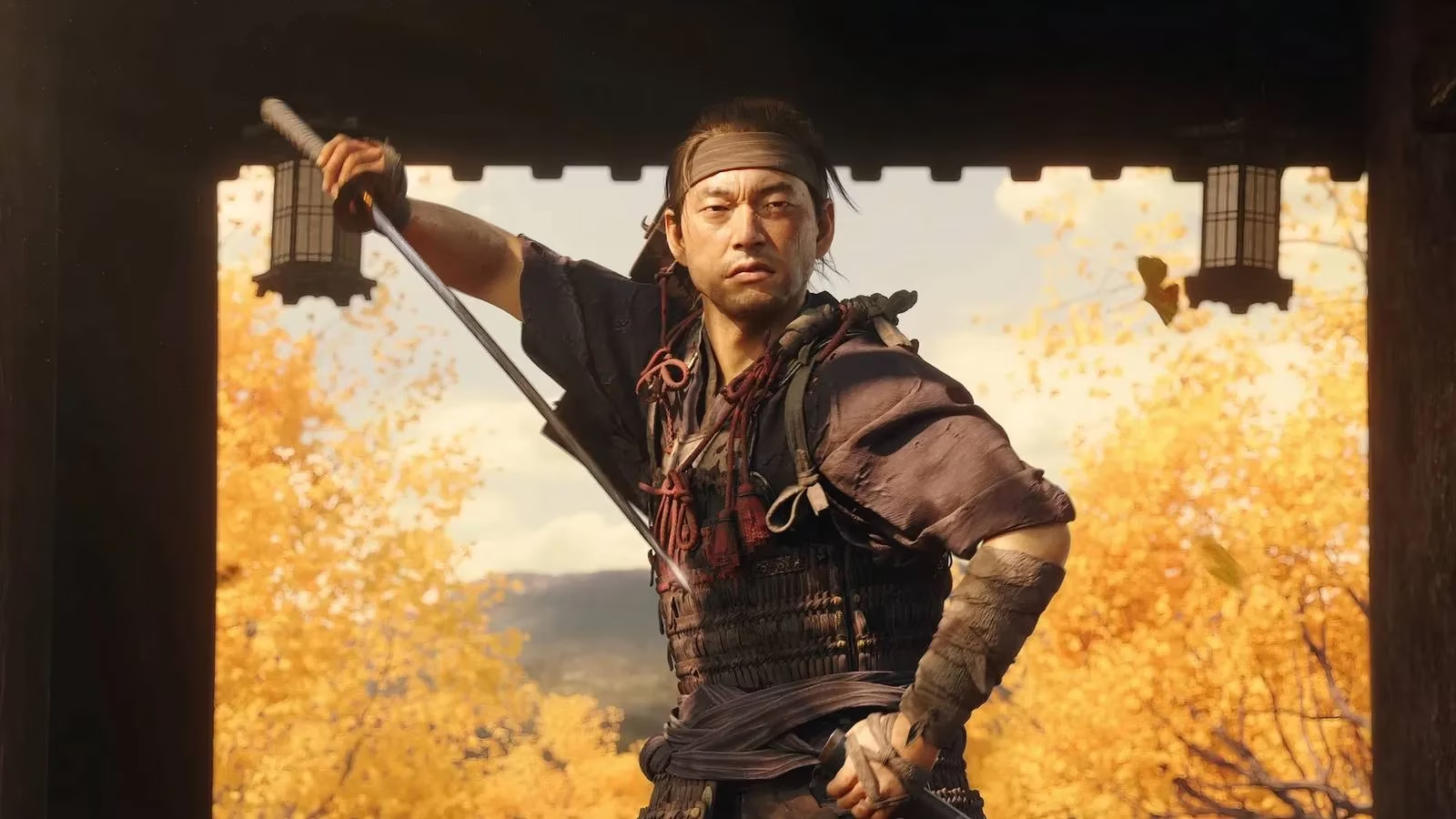
The Weight of a Single Choice
To really get why that ending sticks with you, you gotta understand the two men at its center. Lord Shimura was tradition carved from stone, a samurai who lived and breathed a code of honor that had served his people for generations. Then came Khotun Khan and his Mongols, who didn't just bring armies—they brought a brutal pragmatism. They studied Tsushima's traditions like a textbook and used them as a weapon, turning the samurai's greatest strength into their most glaring weakness. After the disaster at Komoda Beach, Shimura's capture in Castle Kaneda was a symbol of the old ways failing.
Enter Jin, raised by Shimura to revere that same code. Faced with an enemy that played by no rules, Jin made a choice. He stepped out of the sunlight and into the shadows, becoming the "Ghost." He used fear, trickery, and stealth—everything a samurai was taught to despise. This wasn't just a new fighting style; it was a betrayal of everything his uncle stood for. When Jin finally rescued Shimura, the victory was hollow. The uncle saw a dishonorable monster; the nephew saw the only man who could save their home. Talk about a family dinner gone wrong.
The final confrontation was inevitable. The Shogun's order for Jin's execution forced Shimura's hand, leading to that heartbreaking duel. The player's victory is followed by the game's most pivotal moment: Shimura, defeated, begs for an honorable death. Do you grant your uncle's final wish, or do you walk away, condemning him to live with his failure? The game respects your decision, weaving it into the world's fabric. Spare him, and the peasants whisper of a merciful hero. Kill him, and the official story blames the Mongols. It's a powerful, if somewhat isolated, example of player agency.
A Blueprint for the Future: More Than Just a Binary
While Ghost of Tsushima offered a stunning open world, its narrative was largely a set path. Those few choice moments—especially the ending—were like lightning in a bottle. They showed the incredible potential for a sequel. A hypothetical Ghost of Tsushima 2 shouldn't just have one big choice at the finish line; it should be built around them from the ground up.
Imagine a story where your commitment to the "Ghost" or the "Samurai" path fundamentally alters:
-
Mission Availability: Certain allies or quests only open up based on your reputation.
-
World Reaction: Villages might shut their gates to a dishonorable ghost, while samurai outposts might shun a ruthless pragmatist.
-
Combat & Tools: Abilities and gear could branch, offering unique stealth tools for the Ghost or refined dueling techniques for the Samurai.
This isn't just about good or evil endings. It's about letting players live the consequences of Jin's internal conflict. The first game asked, "What must you sacrifice to save your home?" A sequel could ask, "What kind of savior have you chosen to become?" Giving players that kind of ownership doesn't just tell a good story—it makes the gameplay feel truly impactful. You're not just watching Jin's legend; you're writing it with every decision. Now that's how you keep things exciting for another 50+ hours.
The Path Forward in 2026
Officially, Sucker Punch has been quiet about Jin's next chapter. But they haven't abandoned the IP. The successful PC port and the upcoming film adaptation prove the story's fire still burns bright. It feels like we're in that quiet moment before the storm—the calm where a studio plots its next move.
The foundation is all there. The first game masterfully set the stage for a deeper exploration of choice and consequence. By expanding on that brilliant ending and weaving meaningful player agency throughout the entire journey, a sequel wouldn't just be another open-world game. It could be a definitive experience where the line between player and protagonist truly blurs. The ghost of Tsushima's past has given us an unforgettable tale. Here's hoping its future lets us shape the next one ourselves.