In 2026, Ghost of Tsushima remains one of the most discussed PlayStation exclusives, and its final duel still sparks arguments among fans. The game tells the story of Jin Sakai, a samurai who watches the old ways fail his people and does what he believes is necessary to save Tsushima. Throughout the journey, Jin clashes with his uncle, Lord Shimura, over whether the Ghost's tactics are saving the island or simply cowardly. That tension defines the game.
The gameplay supports this debate. Players can invest in stealth skills or charge into battle with honorable samurai techniques. The weather even reflects their choices: stealth kills bring rain and storms, while samurai tactics bring sunny days. Both paths are valid for role-playing, yet they lead to the same final choice. That design keeps the focus on Jin's internal conflict rather than punishing players for a preferred style.
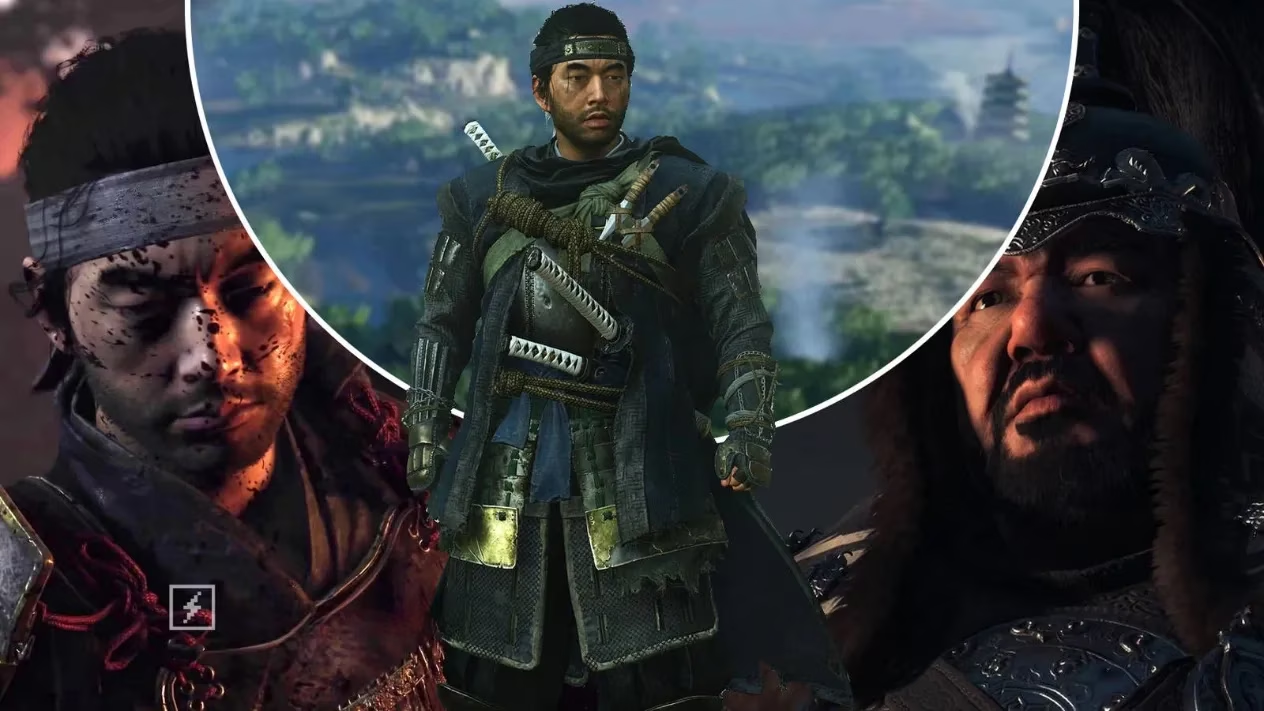
After the invaders are finally driven back, Jin and Shimura walk through a recovering village. A group of people declares they are joining the Army of the Ghost to fight enemies beyond the island. Shimura sees this and worries about Jin's influence on a culture that the invasion nearly erased. Look, the irony is sharp: despite Shimura's efforts, it is Jin and the Ghost who inspire the people and save Tsushima. That realization pushes Shimura to declare that Jin must answer for his crimes. A duel becomes inevitable.
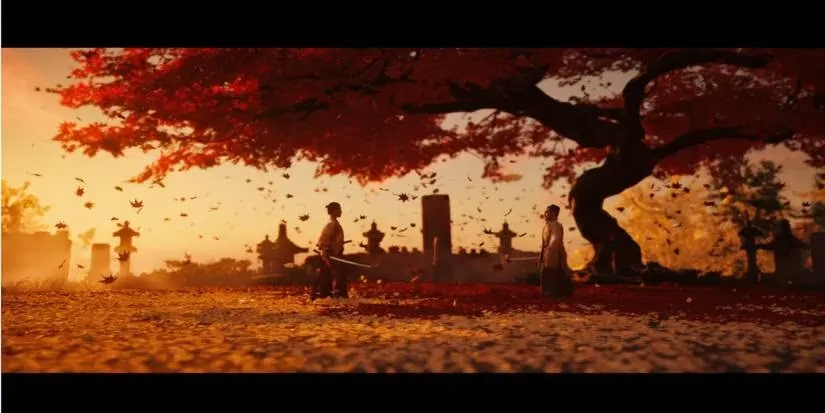
That fight symbolizes the game's central message. Shimura fights with honor. Jin tries to hold onto what honor he has left, but he still fights as the Ghost. When the duel ends, players must choose: kill Lord Shimura or spare him. The kill option is the honorable path, the one that restores Jin's honor. The spare option is dishonorable, and it has Jin fully adopting the ideals of the Ghost.
Here is the kicker: both choices feel like a fulfilling end to Jin's arc. Sparing Shimura feels right because Jin was dishonorable in war, but he did save the island. His choice was difficult, and he was conflicted throughout the game, yet he knew someone had to fight back against the Mongols. Killing Shimura seems brutal, but it is Shimura's last wish. Despite constantly fighting Jin about his actions, Shimura was prepared to die for his nephew and to restore his honor as a samurai.
| Choice | Meaning | Emotional Weight |
|---|---|---|
| Kill Shimura | Honorable; restores Jin's samurai honor | Brutal but respects Shimura's final wish |
| Spare Shimura | Dishonorable; Jin fully becomes the Ghost | Feels right; acknowledges Jin's necessary rebellion |
Honestly, the ending works because it refuses to give players a clean answer. Jin's story is not about being a perfect samurai or a perfect Ghost. It is about the cost of survival and the way war forces people to redefine themselves. Shimura represents the old code, while Jin represents a new, uncomfortable path. Neither side is entirely wrong, and that is what makes the final duel so memorable.
In 2026, with Ghost of Yotei continuing the franchise's world, the original game's ending remains open. The sequel moves centuries ahead, so it does not directly canonize Jin's choice. That leaves players to decide what happened after the duel. Did Jin kill his uncle and reclaim a fragment of honor? Did he spare Shimura and fully embrace the Ghost? The game does not say. What comes next for Jin? That is a question the game leaves hanging.
For many players, the spare ending feels more consistent with Jin's journey. He spends the whole story breaking samurai traditions to protect people, so choosing mercy over ritual makes sense. For others, the kill ending is the true conclusion because it honors Shimura's final request and gives Jin a tragic, earned closure. Both readings are supported by the text. The game does not punish either choice, and that ambiguity is a strength.
The final duel is not just a boss fight. It is a conversation about honor, legacy, and sacrifice. Jin and Shimura love each other, but they cannot agree on what Tsushima needs. Their conflict turns the game's themes into a single, devastating moment. Players may argue about the canon ending for years, but the real point is that both options complete Jin's arc. He saved the island, lost part of himself, and faced the consequences. That is why Ghost of Tsushima's ending still haunts players in 2026.