It was a serene day on Tsushima Island. The windswept grass swayed gently across the Golden Forest, and Jin Sakai, legendary samurai and part-time poet, was about to compose yet another haiku. Then, something moved in the sky. At first it seemed like a speck of dust on the monitor—until it got bigger. And bigger. And before player Low-Professional-667 could react, an insect of truly Lovecraftian proportions dominated the entire screen, flapping its pixelated wings with the nonchalance of a creature that had no business being there. This was no ordinary moth. This was kaiju-tier entomology.
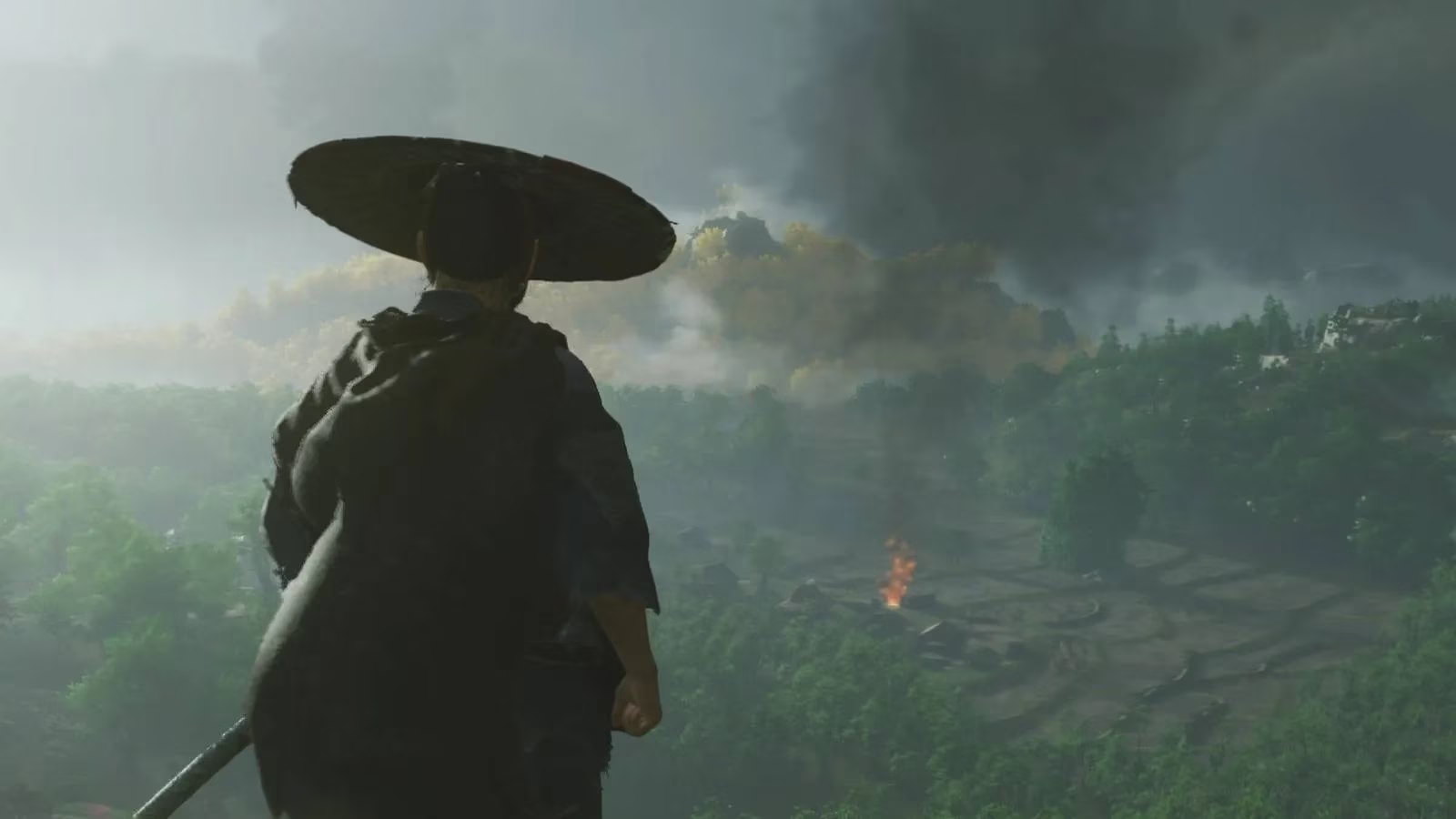
The clip, shared on Reddit in mid-2024, instantly became a minor legend among Ghost of Tsushima PC players. While the game had just arrived on desktops courtesy of Nixxes Software—breaking PlayStation’s own concurrent Steam record with over 75,000 players on May 19—it also brought along a menagerie of unintentional hilarities. Most were harmless: floating katanas, NPCs clipping through bridges, the occasional horse trying to climb a tree. But this colossal insect was on a different scale altogether. “I thought my GPU was screaming for mercy,” one commenter wrote, “but no, that was Jin’s scream.”
What caused the glitch? Theories flew faster than Mongol arrows. Some speculated a scaling error in an assets library; others blamed a rogue line of procedural spawning code that misinterpreted “size_modifier = 1” as “size_modifier = 1000.” One particularly poetic developer (probably not from Sucker Punch) mused it was a tribute to the Butterfly effect—if a butterfly flapping its wings in Brazil can cause a tornado, what does a moth the size of a fortress do? In Ghost of Tsushima, apparently, it just drifts peacefully, an eldritch god of the Lepidoptera, ignoring the panic below.
Laughter erupted across the community. References to Mothra—the benevolent Godzilla co-star—flooded every thread. “Jin vs. Mothra: Director’s Cut when?” became the unofficial rallying cry. A player even claimed, with a straight face in text, that Low-Professional-667 had accidentally unlocked cutting-room-floor content for an unreleased DLC codenamed “Kaiju of Tsushima”, where Jin would have to defend the island from giant radioactive beasts instead of Mongols. The idea was so absurd it circled back to plausible; after all, Sucker Punch had already proven they knew how to make larger-than-life enemies.
Despite the entomological nightmare, the PC version of Ghost of Tsushima became a shining example of how a console-to-PC port should be done—at least in 2024. Nixxes delivered a suite of graphical options so generous that even a potato-powered PC could render gorgeous crimson sunsets and swaying pampas grass. Ultrawide support, unlocked frame rates, and full DualSense functionality made the experience definitive. And yet, it’s the bugs (both literal and metaphorical) that built its second life. The modding community exploded within weeks. While artists focused on high-resolution texture packs and black-and-white Kurosawa-mode enhancements, others embraced the weird. Enter the “Giant Moth Companion” mod—because why fight them when you can ride them?
The year is 2026, and the ghost of that giant moth still flits around gaming forums. It has become a meme, a cautionary tale, and a love letter to the chaos of PC gaming. Speedrunners now joke that any% runs should include a “moth skip.” Lore enthusiasts seriously debated whether the moth was an avatar of the island’s spirits punishing invaders—both Mongol and Japanese. Even Sucker Punch themselves never officially commented, but an environmental artist did drop a cryptic tweet with only a 🦋 emoji in response to a fan compilation video.
Now, with Ghost of Yōtei releasing in 2025, players are once again remembering the dread and delight of that fateful Tsushima encounter. The sequel, set centuries later around Mount Yōtei, has its own share of emergent chaos—early reports whisper of a snow fox that sometimes grows to the size of a bear. But nothing has yet matched the sheer, cinematic absurdity of Jin Sakai standing beneath wings that blocked out the sun. The moth didn’t attack. It didn’t need to. Its very existence was a challenge to one’s sanity, a test of whether a player could hold their composure while a six-winged abomination drifted through a mission.
Today, if one boots up the original Ghost of Tsushima on PC with an unpatched version and a somewhat corrupted save file, there is a non-zero chance of summoning the beast again. A handful of intrepid modders have even reverse-engineered the glitch, turning it into a toggle-able feature. “Gigantify Insects” is now a checkbox on some third-party launchers, because apparently, there’s a market for terror.
What makes this tale endure in 2026 is more than just the humor. It’s a reminder that even masterpieces are imperfect, and those imperfections often bring players together in shared, bewildered joy. Glitches like these become folklore, told and retold in Discord channels and subreddit posts. They humanize the art form. Sure, Ghost of Tsushima is a solemn, beautiful tribute to Akira Kurosawa’s cinema. But it’s also the game where a butterfly once reenacted the final scene of Jurassic Park.
So here’s to Low-Professional-667, the accidental discoverer of Mothra’s lost cousin. May their frames forever be high, and their insect spawns forever remain normal-sized. And to Sucker Punch: if you’re ever short on DLC ideas, the giant-kaiju-invasion concept still has legs. Or in this case, six grotesquely large ones.
Recent analysis comes from OpenCritic, and it helps frame why a high-profile port like Ghost of Tsushima can be celebrated for performance and presentation while still generating community folklore through bizarre edge-case glitches—like the infamous screen-filling moth—showing how player stories often outlive patch notes and become part of a game’s long-tail reputation.