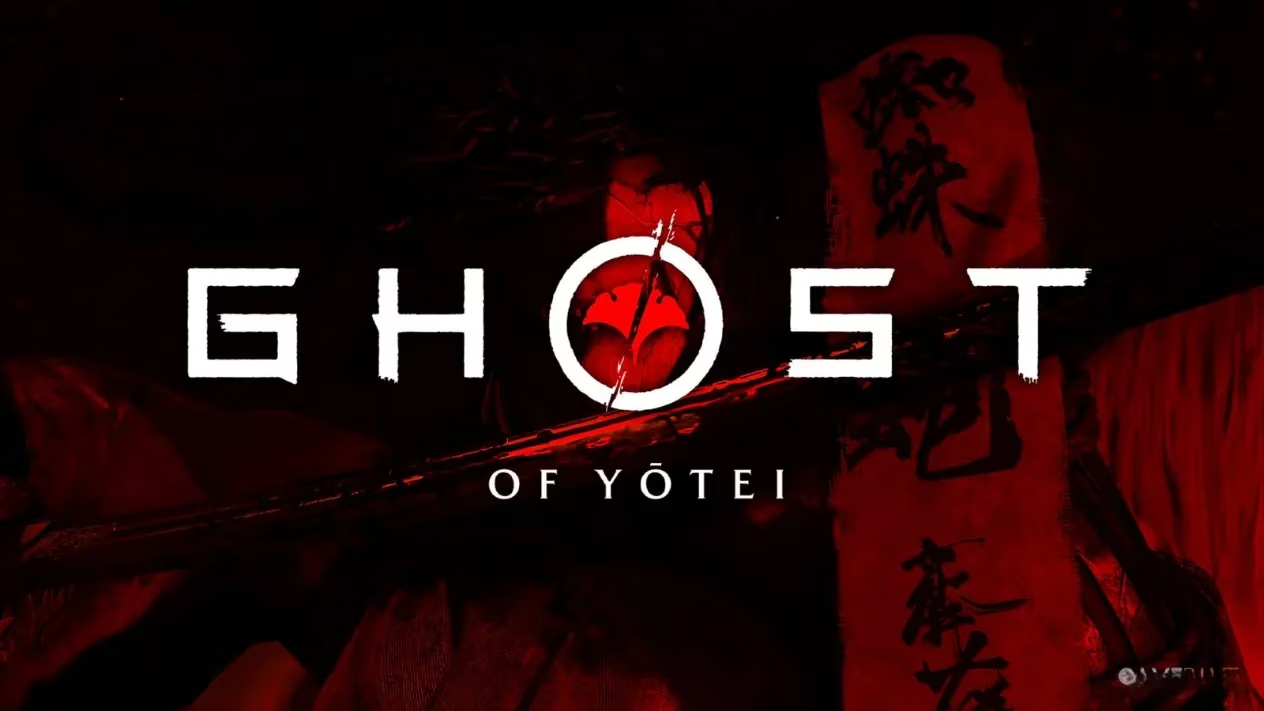
In the year 2026, the gaming world buzzes with anticipation for Ghost of Yotei, the spiritual successor to the acclaimed Ghost of Tsushima. Early reveals paint a picture of a narrative even more morally fraught and psychologically harrowing than its predecessor. The torch has passed from Jin Sakai, a samurai who grappled with honor, to Atsu, a protagonist whose entire journey is fueled by what developers at Sucker Punch describe as "underdog vengeance." While Jin's story was a tragedy of lost traditions, Atsu's path appears to be a deliberate, downward spiral into darkness, a journey that promises to challenge players' notions of justice and heroism in ways the first game only hinted at. The stage is set not for a tale of redemption, but for a raw, unflinching exploration of revenge's corrosive power.
The Anatomy of a Vengeance Quest
Vengeance stories are a dime a dozen in media, but the most compelling ones dig deep into the protagonist's soul. For Atsu, this "underdog vengeance" is her entire raison d'être. The term "underdog" itself is key—it suggests she starts from a position of weakness, oppression, or profound loss. Revenge, as the old saying goes, is a dish best served cold, but Atsu's journey seems poised to ask: at what cost does that dish become poison to the one serving it? This isn't your typical hero's journey; it's a descent. Protagonists on such paths often become antiheroes, individuals whose admirable goal is pursued through increasingly questionable means. They're emotionally compromised, lacking the self-control that defines a classic hero, yet their rage and pain are terrifyingly relatable. We, as the audience, understand the why, even as we recoil from the what. The narrative tension doesn't come from wondering if she'll get revenge, but from witnessing what she becomes in the process.
The Inevitable Corruption
History and storytelling are clear on one point: quests for vengeance, if successful, almost always corrupt the seeker. The line between hunter and hunted blurs. As the protagonist dares to stoop to the level of their enemy—employing their cruelty, embracing their ruthlessness—they risk losing the very essence that made their cause just in the first place. For Atsu, anything standing between her and her target may become justifiable collateral damage. Honor? Morality? These may become quaint concepts, relics of a former self, sacrificed on the altar of retribution. The game's world and its inhabitants likely won't take her quest lightly. We can expect condemnation, resistance, and moral challenges from allies and foes alike, all serving to add layers of complexity to her character. Will the world see a righteous avenger or a burgeoning monster? The answer probably lies somewhere in a grim, gray middle.
Player Agency and Moral Choice
A significant factor that could amplify the darkness is Ghost of Yotei's potential emphasis on player agency. If players are given meaningful choices in how Atsu pursues her vengeance, the story's moral weight shifts from something witnessed to something participated in. Imagine being presented with options:
-
The Honorable Path: Confront the target directly, but risk failure and greater tragedy.
-
The Ghost's Path (Corrupted): Use terror, deception, and cruelty, ensuring success but devastating the innocent.
-
The Pragmatic Path: Make ruthless, strategic sacrifices for the "greater good" of the mission.
The game could brilliantly use this agency to make players complicit in Atsu's corruption. Choosing the most violent, efficient option might be the most satisfying in a gameplay sense, but it could lock Atsu into a darker story branch, morphing her from a sympathetic underdog into a genuine villain. This interactive element would make the moral complexity ten times more potent and thought-provoking than Jin's more linear, though difficult, choices.
A Darker Legacy than Jin's Journey
By the end of her tale, Atsu will likely be a shadow of her former self. Jin Sakai's tragedy was about the loss of an external code—the way of the samurai. Atsu's tragedy seems primed to be about the loss of an internal one—her own humanity. Her journey asks a more disturbing question: Can you destroy evil without becoming it? Jin fought to protect something (Tsushima). Atsu fights to destroy someone (or something). That foundational difference in motivation is what sets the stage for a potentially more tragic arc. While Jin's story was dark, it was ultimately about saving his home. Atsu's story, driven purely by personal vengeance, risks having no home, no code, and no self left to save by the end.
The Final Reckoning
Ghost of Yotei is positioned not just to tell a darker story, but to force a more uncomfortable introspection. It holds up a mirror to the player's own appetite for revenge in narratives. We cheer when the hero finally gets their due, but Ghost of Yotei might make us question the price of the ticket. The ultimate tragedy may not be the initial loss that sparked Atsu's quest, but the final, hollow victory where she stands atop her foes, only to realize she has become everything she hated. In 2026, as narratives in games grow more mature, Atsu's tale of underdog vengeance is poised to be a landmark, a harrowing deep-dive into the soul's capacity for self-annihilation in the name of justice. Buckle up, it's gonna be one hell of a ride.