As we roll into 2026, I’m looking back at the gaming landscape and one title continues to dominate the conversation: Ghost of Yotei. Having just spent countless hours immersed in its frosty, Hokkaido-inspired world, I can say with confidence that Sucker Punch’s decision to pivot the series into a full-fledged anthology was a stroke of genius. This move, teased back in 2024, has fully paid off, allowing the franchise to shed its skin and evolve in ways that feel both fresh and deeply respectful of its roots. It’s a bold strategy, Cotton, let’s see if it pays off for them—and spoiler alert, it absolutely has.
The Anthology Advantage: A Clean Slate for Creativity
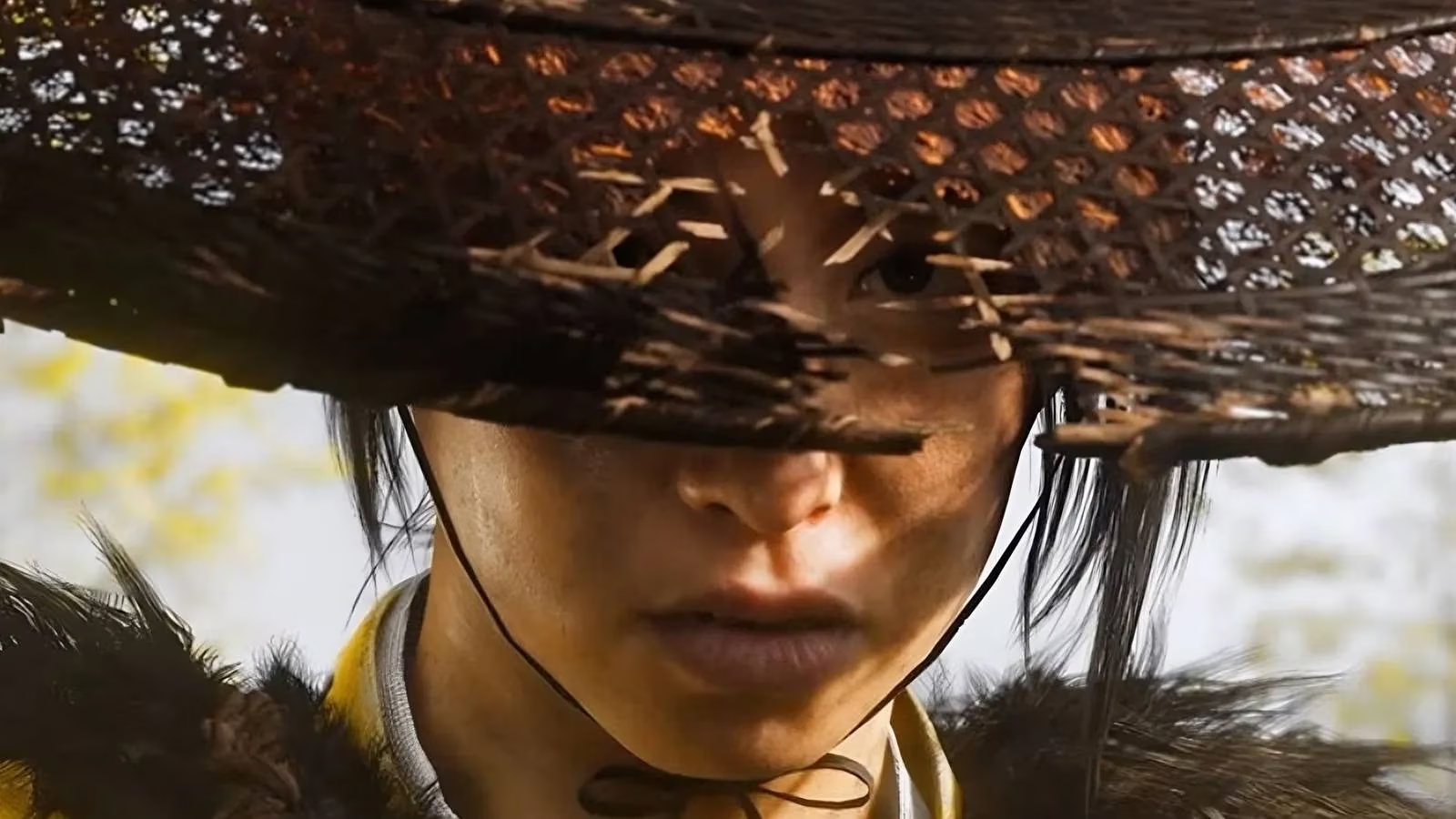
Let's break it down. The core benefit of this anthology format is crystal clear: creative freedom. By not being shackled to Jin Sakai’s story—which was wrapped up beautifully in the first game—Sucker Punch avoided a classic sequel pitfall. They didn't have to contort the narrative to justify bringing Jin back or risk dragging out his arc until it became stale. Instead, Ghost of Yotei introduces us to a brand-new protagonist in a completely different part of Japan. This means:
-
🗺️ A Vastly New Map: No re-treading the familiar beaches and bamboo forests of Tsushima. We get an entirely new playground in the northern wilderness, full of new secrets, biomes, and environmental storytelling. It’s a whole new world to get lost in, which is a major win for player engagement.
-
🎭 A Fresh Narrative Canvas: The new setting isn't just cosmetic. It comes with its own unique history, culture, and conflicts, allowing the writers to explore themes and stories that wouldn't have fit in the original game’s context. This keeps the franchise feeling innovative rather than iterative.
This pivot is a masterclass in future-proofing a franchise. It sets a precedent that the "Ghost" title is a mantle, a legacy, or a method, rather than being tied to one man. This opens the door for the series to continue, well, pretty much indefinitely, exploring different eras and corners of Japanese history. Talk about playing the long game!
Learning from the Gods: The Kratos Conundrum
To understand why this move is so savvy, we only need to look at another PlayStation titan: God of War. Kratos is that franchise, full stop. He’s the heart, soul, and angriest beard in all the Nine Realms. While Santa Monica Studio has done an incredible job evolving his character over decades, they now face the ultimate challenge: how and when to move on.
| Franchise Strategy | Core Benefit | Potential Pitfall |
|---|---|---|
| Single Protagonist (e.g., God of War) | Deep, long-term character development & fan attachment. | Narrative fatigue; difficult, jarring transition to a new lead. |
| Anthology Format (e.g., Ghost of Tsushima) | Constant renewal of setting/story; avoids narrative corners. | Less time to build deep history with any one hero. |
The speculation about Atreus taking the helm is real, but let's be real—a God of War without Kratos front and center would be a seismic shift. He’s the connective tissue. A "heart transplant," as some have called it, is a risky and complex procedure. By choosing the anthology route with its second major entry, Ghost of Yotei has gracefully sidestepped this entire dilemma. Players have already accepted that Jin’s chapter is closed, making it easier to embrace a new hero. No messy narrative gymnastics required.
The Trade-Off: Depth vs. Breadth
Of course, this approach isn't all sunshine and sakura blossoms. The anthology format comes with its own set of trade-offs. The biggest one? Sacrificing long-term, deep-dive character development.
God of War’s strength lies in watching Kratos’s multi-game journey from a rage-filled Spartan to a (slightly) more measured father and god. We’ve seen his relationships build, his internal conflicts evolve, and his worldviews shatter and reform. That’s a powerful, serialized narrative you can’t replicate in a single game.
Ghost of Yotei, by its very design, can’t build that same decades-long history with its protagonist. Our new hero’s arc, no matter how compelling, is contained to this one experience. This means Sucker Punch has to craft a complete and satisfying character journey within a single game—a tall order. It truncates the narrative scope from a sprawling epic to a more focused, standalone tale. The upside? Every game can be a bold, self-contained experiment. The downside? We might never get to know a Ghost hero as intimately as we knew Jin, or as we know Kratos.
The Verdict: A Winning Formula for the Future
So, where does this leave us in 2026? In my view, Ghost of Yotei has not only lived up to the hype but has successfully blueprint-ed a new path for major action-adventure franchises. It proves that a series can thrive on innovation and reinvention rather than solely on the continued exploits of a single iconic character.
This move required guts. It asked players to let go of a beloved hero and trust the developers to deliver another worthy successor. And you know what? They nailed it. The new world is breathtaking, the combat has evolved in smart ways, and the story stands firmly on its own two feet.
While I’ll always have a soft spot for Jin Sakai’s journey, I’m now incredibly excited to see where the "Ghost" mantle travels next. Will it be the war-torn Sengoku period? The intrigue-filled Heian court? The possibilities are endless. Sucker Punch has turned a potential limitation into its greatest strength, ensuring that the soul of Ghost of Tsushima will live on, not in one man, but in the legacy of the Ghost itself. That, my friends, is how you build a franchise that lasts. Game on! 👻🗡️