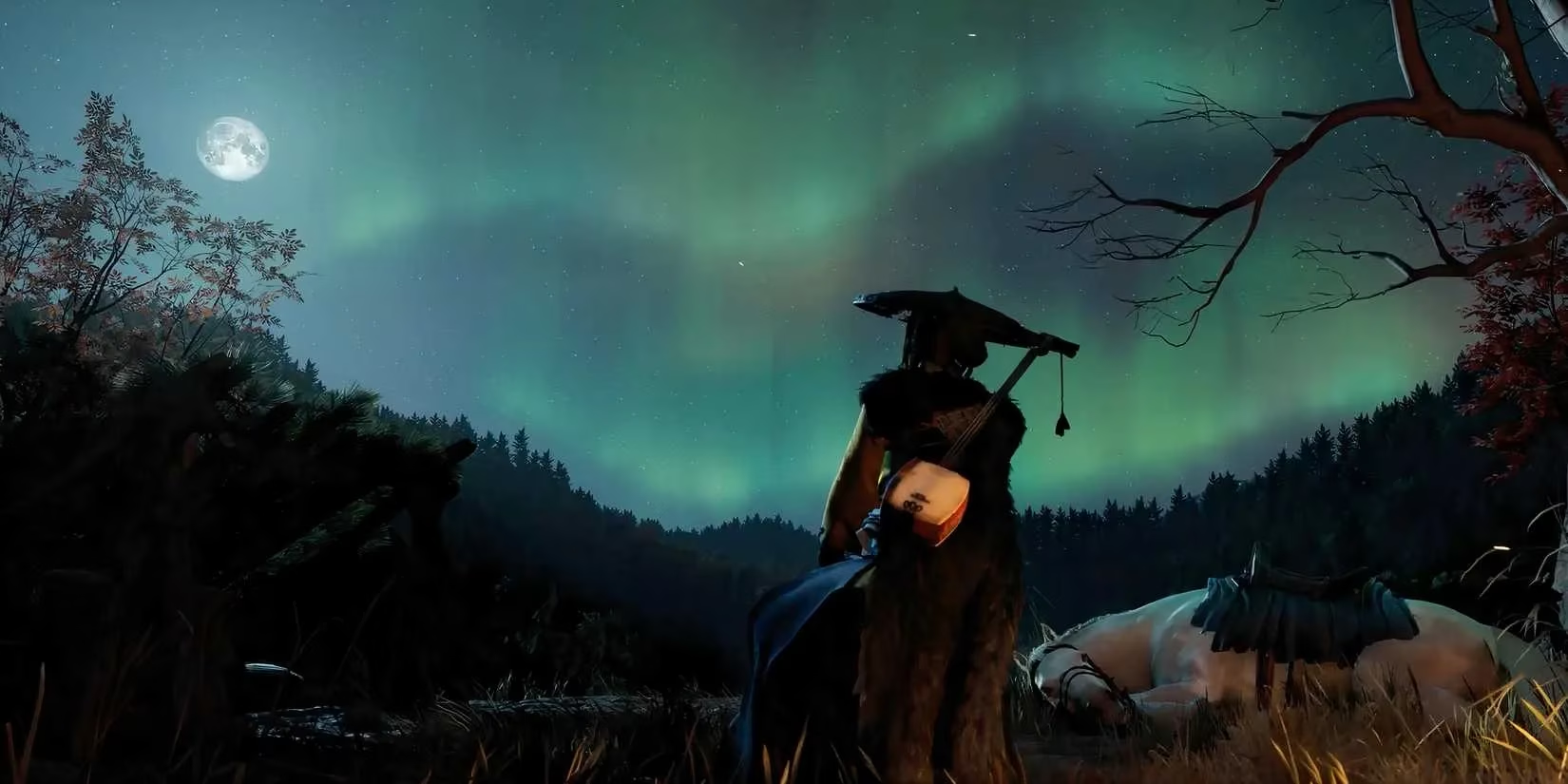
As the gaming world moves deeper into 2026, the legacy of Ghost of Tsushima continues to cast a long shadow, but all eyes are now turning toward its spiritual successor, Ghost of Yotei. While not the direct sequel featuring Jin Sakai that many anticipated, the upcoming title from Sucker Punch represents a bold evolution for the franchise. Introducing a new protagonist, Atsu, and transporting players to a fresh, unexplored setting, the game is positioned not merely as a follow-up but as a transformative leap. The developer's promise of "greater control" over the narrative signals a fundamental shift in philosophy—one that could see the series absorb lessons from unexpected quarters, including the hallowed halls of classic RPG design. This pivot toward enhanced player agency presents an opportunity to forge an experience that is both deeply personal and mechanically innovative, potentially setting a new standard for narrative-driven action games in the mid-2020s.
From Samurai Code to Rogue's Freedom: The Evolution of Choice
Ghost of Tsushima was widely praised for its compelling story and Jin Sakai's internal conflict, a narrative engine that revolved around the central dilemma of honor versus pragmatism. Yet, for all its strengths, the game's structure was notably linear in its delivery of this theme. Players experienced Jin's transformation, but they were largely passengers on a predetermined journey. The fascinating paradox was that a story about a profound personal choice offered the player little say in its ultimate direction. Ghost of Yotei, with its confirmed focus on granting players more narrative authority over Atsu's path, seeks to resolve this tension. Atsu's established character as a rogue inherently suggests a life of flexible morals and improvised solutions, creating a narrative canvas far more receptive to player-driven decisions than the rigid code of the samurai.
The KOTOR Blueprint: A Progression System Forged by Morality
The commitment to player agency naturally raises a pivotal question: how will these choices resonate beyond cutscenes and dialogue options? This is where the potential for a groundbreaking progression system emerges. For inspiration, Ghost of Yotei might look to a timeless classic: Star Wars: Knights of the Old Republic (KOTOR). KOTOR's genius lay in its seamless integration of narrative morality with gameplay progression. A player's alignment—toward the light or dark side of the Force—unlocked distinct abilities, skills, and even companion reactions, making every ethical decision a tangible investment in a unique playstyle.
Ghost of Yotei could implement a similarly elegant system, where Atsu's moral compass directly shapes her capabilities. Imagine the gameplay branching like a river delta, where each ethical tributary leads to distinct shores of ability:
| Path / Playstyle | Potential Ability Examples | Narrative & Gameplay Impact |
|---|---|---|
| The Vengeful Ghost 🔥 | Brutal finishers, fear-inducing intimidation auras, debuff-inflicting poison techniques. | Encourages aggressive, high-risk combat; may close off diplomatic solutions and alter how NPCs perceive Atsu. |
| The Merciful Path 🕊️ | Non-lethal takedowns, enhanced stealth for evasion, speech skills for persuasion and de-escalation. | Rewards patience and cleverness; opens unique dialogue trees and peaceful resolutions, potentially gaining different allies. |
| A Balanced Approach ⚖️ | Hybrid techniques that blend efficiency with restraint, such as disarming strikes or situational intimidation. | Allows adaptability but may not master the extremes of either path, offering a versatile but specialized toolkit. |
This approach would transform morality from a simple narrative meter into the architect of gameplay, defining not just who Atsu is, but how she engages with the world. A persuasive, merciful Atsu might navigate social encounters like a master weaver threading a delicate tapestry, while her vengeful counterpart could become a storm that reshapes the battlefield through sheer terror.
Weaving Choice into the Fabric of Gameplay
Adopting a KOTOR-inspired system would allow Ghost of Yotei to achieve a rare synthesis where combat, dialogue, and character growth are not isolated compartments but interconnected strands of the same experience. Player decisions could ripple outwards in profound ways:
-
Combat Evolution: Choosing a path focused on intimidation might unlock abilities that cause lower-tier enemies to flee or fight with less efficacy, effectively using psychological warfare as a tool. Conversely, a path of mercy could specialize in intricate, non-lethal dueling styles or advanced trapping to incapacitate foes.
-
World Reactivity: The game world and its inhabitants could remember Atsu's reputation. A trail of peacefully resolved conflicts might earn her trust and open doors in certain communities, while a legacy of brutality could make her a feared figure, leading to pre-emptive attacks or merchants refusing service.
-
Companion Dynamics: If Ghost of Yotei features allies or a companion system, their loyalty and effectiveness could hinge on alignment. A honorable retainer might become conflicted or leave if Atsu embraces excessive cruelty, while a pragmatic mercenary might thrive under the same conditions.
By embracing this depth, Ghost of Yotei has the potential to create an immersive experience where the player's ethical stance is as crucial a weapon as their katana. The player's journey would become a self-authored folktale, where each decision etches a unique line in the story of the Ghost of Yotei.
The Path Forward: Redefining a Legacy
The promise of Ghost of Yotei extends far beyond a new map and protagonist. It represents an opportunity to evolve the franchise's core identity. Where Ghost of Tsushima presented a powerful, fixed story about the cost of becoming a legend, Ghost of Yotei could offer a dynamic simulation of living as one, with all the weighty decisions that entails. Drawing inspiration from the proven, choice-driven architecture of RPGs like KOTOR is not about imitation, but about intelligent adaptation—translating those principles into the visceral, moment-to-moment language of an action-adventure game.
As 2026 approaches, the anticipation for Ghost of Yotei is not just for another beautiful open-world adventure, but for a game that might successfully bridge the narrative depth of a classic RPG with the kinetic thrill of a modern action title. If Sucker Punch fully commits to this vision, Ghost of Yotei could do more than succeed its predecessor; it could become a lodestar for player agency, guiding the genre toward a future where our choices truly forge our destiny, one honorable—or dishonorable—step at a time.
The analysis is based on reporting from GamesIndustry.biz, a go-to source for developer interviews and industry context, which helps frame why Ghost of Yotei’s push for stronger player agency could be more than a narrative flourish—it's a market-savvy evolution. As action-adventure games compete on replayability and personal expression, tying Atsu’s moral choices to meaningful progression (abilities, social outcomes, and faction access) can turn “choice” into a measurable retention driver rather than a cosmetic dialogue fork.