In the year 2026, the gaming world holds its breath as Sucker Punch prepares to unleash Ghost of Yotei. The studio, known for crafting beautiful, poignant worlds, has thrown down a gauntlet that has fans and critics buzzing with a mix of excitement and sheer, unadulterated terror. They've confirmed it: the revenge-fueled journey of Atsu will be a non-linear affair, a bold, sprawling tapestry where players can hunt the infamous "Yotei Six" in any order they darn well please. It's a promise of unparalleled player freedom, a sandbox of samurai vengeance. But whispers in the digital dojos ask the real question: is this the key to a revolutionary experience, or a recipe for a story that just... falls flat on its face?
The heart of Ghost of Yotei beats with the tragic pulse of Atsu, a warrior whose world is shattered in a single, brutal night. The Yotei Six don't just attack her homestead; they obliterate her past. This isn't just a setup for a quest log; it's the forging of a legend, the birth of a ghost. A revenge story lives and dies by its emotional core—the slow, painful, or exhilarating transformation of the avenger. The worry, and it's a big one, is that letting players hopscotch across this emotional landscape could turn Atsu's profound tragedy into a checklist. Imagine it: taking down the master swordsman on Tuesday and the poisoner on Thursday, with nary a breath in between for Atsu to process, to change, to feel. That's the danger. A non-linear path risks making her quest feel like a series of disconnected episodes rather than a single, devastating symphony of vengeance. Her arc could end up feeling... well, kinda cheap. Like she's just going through the motions.
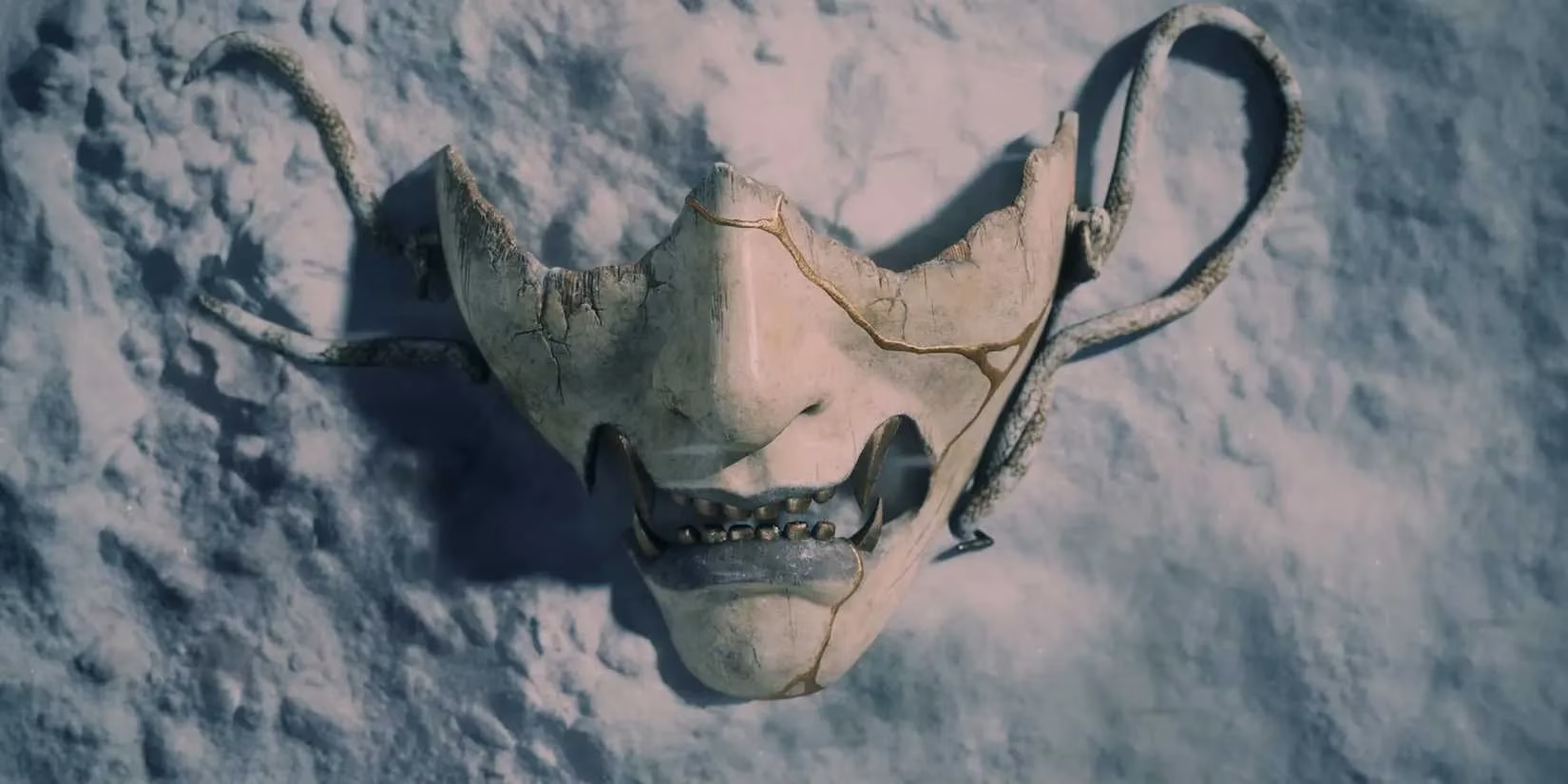
So, can Ghost of Yotei pull it off? Can it make this gamble pay off? The answer is a resounding maybe, and it hinges on some narrative magic tricks Sucker Punch needs to have up its sleeve.
The "Living World" Solution: A Nemesis System for Vengeance
One of the most tantalizing possibilities is for the world to react dynamically to Atsu's choices. This isn't just about changing the mission order; it's about making the Yotei Six feel like living, breathing, terrified villains.
-
Dynamic Dialogue & Reactions: If you take out the group's strategist first, the remaining brutes might become more reckless and paranoid in their defenses. Conversely, eliminating the brute force enforcer first might make the others more cunning and elusive.
-
Evolving Strategies: Each target could adapt their tactics based on the rumors of Atsu's previous kills. Did she use stealth? They hire more guards. Did she confront them head-on? They set elaborate traps.
-
Personalized Taunts & Fear: A surviving member might directly reference the fate of their fallen comrade, their voice dripping with newfound respect or desperate bravado. This would give moral and emotional weight to every sword stroke.
This approach would transform the Yotei Six from static boss icons into a pantheon of personalities, each death rippling through the narrative fabric. It would make Atsu's legend grow in real-time, not just in cutscenes.
The Narrative Anchor: The Bigger Picture
Perhaps the most crucial safeguard is a narrative twist that binds all the player's chaotic choices together. The smart money says the Yotei Six are just the opening act.
-
Phase 1: Personal Vengeance. Players hunt the six in their chosen order, dealing with Atsu's immediate rage and grief.
-
The Mid-Game Revelation. Upon defeating the last (or any key) member, a shocking truth is unveiled. The raid wasn't random banditry; it was a calculated move by a shadowy power—a daimyo, a secret society, perhaps even a faction vying for control of all Ezo.
-
Phase 2: A War for Ezo. Atsu's quest evolves. It's no longer just about her homestead. It's about preventing this greater evil from consuming the entire region. Her personal tragedy becomes the catalyst for a much larger conflict.
This structure allows the non-linear first half to serve as Atsu's brutal training ground, where she hones her skills and hardens her heart in whatever order the player chooses. The linear(ish) second half then provides the focused, climactic payoff, ensuring the story builds to a satisfying crescendo rather than petering out.
Final Thoughts: A High-Risk, High-Reward Proposition
Let's be real, Sucker Punch is playing with fire. The ghost of disjointed, anticlimactic open-world stories past haunts this ambitious design. Getting this right is harder than landing a perfect standoff. But if they succeed? If they weave dynamic reactions and a compelling overarching threat into the fabric of Atsu's non-linear vengeance?
They won't just have a great game; they'll have a landmark. They'll prove that player agency and a powerful, personal narrative aren't mutually exclusive. Ghost of Yotei could redefine what it means to tell a revenge story in an interactive medium. The stage is set for 2026. Will Atsu's ghost fade into a fragmented memory, or will it rise as a cohesive, unforgettable legend? The fate of Ezo... and of narrative-driven open-world games... waits in the balance. The silence before the storm is almost over.