As the gaming world looks ahead to the release of Sucker Punch's highly anticipated title, Ghost of Yotei, the conversation extends beyond its promised new features, story, and setting. The immense legacy of its predecessor, Ghost of Tsushima, casts a long shadow, establishing a benchmark for quality that the sequel is expected not just to meet, but to exceed. While much of the game remains shrouded in mystery, with only a tantalizing glimpse offered in its reveal trailer, one critical aspect of its journey to success is already crystal clear: the paramount importance of a smooth, stable, and polished launch. The industry's history is littered with cautionary tales of ambitious titles whose grand visions were tarnished by disastrous release windows. For Ghost of Yotei, replicating the impeccable launch of Ghost of Tsushima is not merely a goal—it is an absolute necessity.
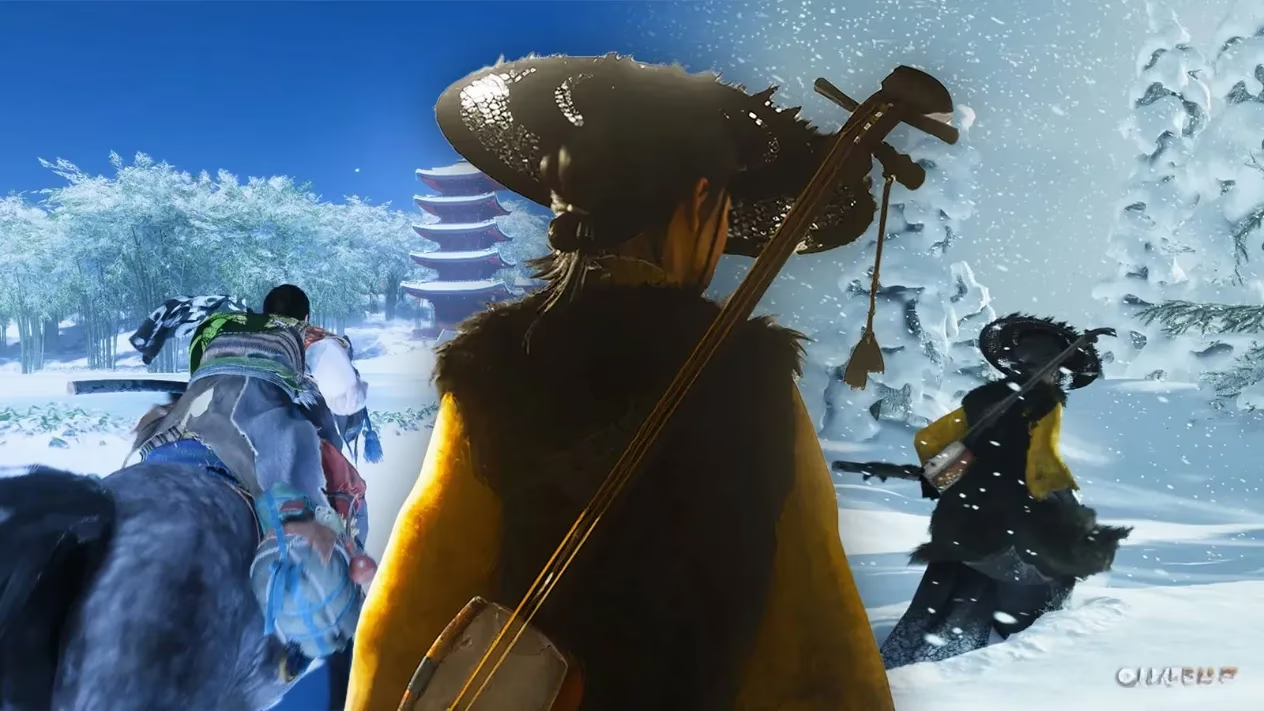
The Unforgiving Legacy of a Perfect Launch
Ghost of Tsushima arrived in the summer of 2020, a time when players had grown increasingly accustomed to AAA games launching in a state of disarray, requiring months of patches to reach a playable condition. In stark contrast, Sucker Punch's samurai epic defied this modern stigma. The game launched in an exceptionally polished state across both the base PS4 and PS4 Pro consoles. Reports of game-breaking bugs, major crashes, or broken quests were conspicuously absent. While a small day-one patch was deployed, it was a far cry from the massive, corrective downloads that had become industry standard. This technical stability allowed the game's true strengths—its breathtaking open world, compelling narrative, and satisfying, fluid combat—to shine without distraction. Players could immerse themselves fully in the beauty of Tsushima from the very first moment, a luxury that cemented its reputation and fueled its commercial and critical success.
The High Stakes for Ghost of Yotei
The pressure on Ghost of Yotei is multifaceted. Not only must it deliver an experience that evolves and improves upon the beloved formula of Tsushima, but it must also navigate the immense hype that has built up in the years since the first game's release. The developer has indicated a thorough consideration of the original's shortcomings, aiming to offer a superior adventure. However, ambition alone is not enough. The gaming landscape in 2026 is, if anything, even less forgiving of technical failures at launch. A single, high-profile stumble can define a game's legacy for years, overshadowing its creative merits.
Consider the contrast:
| Aspect | Ghost of Tsushima (2020) | Expectation for Ghost of Yotei (2026) |
|---|---|---|
| Launch State | Impeccably polished, minor day-one patch. | Must meet or exceed the same standard of polish. |
| Player Tolerance | Lower tolerance for bugs was already shifting. | Near-zero tolerance for major technical issues. |
| Competitive Landscape | Stood out for its stability. | Must compete in a market wary of unfinished launches. |
| Franchise Direction | Established a new IP. | Must justify a new setting and potentially new mechanics. |
A problematic launch for Ghost of Yotei could trigger a devastating chain reaction:
-
Erosion of Trust: Player confidence in Sucker Punch and the Ghost franchise would take a significant hit.
-
Narrative Hijacking: Media coverage and social discourse would focus on bugs and performance, not the story or world.
-
Lost Momentum: Even if fixed later, the crucial window of launch excitement and cultural relevance can never be fully recaptured.
-
Financial Impact: Refunds, poor word-of-mouth, and diminished sales could impact the project's overall success.
Learning from the Ghost of Launches Past
The industry provides clear examples of both what to emulate and what to avoid. While Ghost of Tsushima serves as the positive blueprint, titles like Cyberpunk 2077 stand as stark reminders of the consequences of releasing before a game is ready. Despite its innovative features and deep narrative, Cyberpunk 2077's launch on previous-generation consoles was so plagued with issues that it damaged the developer's reputation, led to refund campaigns, and required years of updates to rehabilitate its public image. The lesson is unambiguous: a game's most brilliant ideas can be rendered irrelevant by a broken first impression.
For Ghost of Yotei, achieving a seamless launch is arguably more critical than for its predecessor. The game is taking the franchise to a new location (Yotei) and, presumably, introducing new gameplay mechanics and a fresh cast of characters. This inherent shift creates a moment of vulnerability where fans are being asked to trust a new vision. A technically flawless launch acts as a bedrock of goodwill, assuring players that the foundation is solid before they explore the new heights the game aims to reach. It demonstrates respect for the player's time and investment.
The Path Forward: Stability as a Feature
In 2026, a polished launch should be considered a core feature, not an afterthought. For Sucker Punch, this means:
-
Rigorous, Platform-Specific Testing: Ensuring performance is optimized across the expected hardware spectrum, likely focusing on the PlayStation 5 and possibly PC.
-
Managing Scope Ambition: Ensuring new features like potential expanded combat styles or a more dynamic world are fully integrated and bug-free, not just ambitious ideas.
-
Transparent Communication: Setting realistic expectations and, if necessary, being willing to delay the game to meet the quality standard set by the studio's own legacy.
The reveal trailer for Ghost of Yotei has successfully ignited excitement. 😊 The next step is to justify that excitement with concrete evidence of a stable, complete product. Ghost of Tsushima proved that a game could be both artistically profound and technically exemplary from day one. As the heir to that legacy, Ghost of Yotei carries the burden and the opportunity to prove that such a standard is not a relic of the past, but the necessary foundation for the future of AAA storytelling. Its success depends not just on the tales of Yotei, but on the untold story of its own release—a story that must be one of quiet confidence and flawless execution.