You know, as someone who absolutely loved exploring every inch of Tsushima Island, I have to admit something felt a bit… familiar after a while, didn't it? I mean, the world was stunning—those sun-drenched fields, misty forests, and windswept coasts were pure art. But after liberating my tenth or so settlement, I started to notice a pattern. The houses, the farms, even some of the larger structures began to blend together. It was like the entire island was built from the same architectural blueprint kit. For a game that prides itself on immersion and transporting you to another time, that sameness can be a subtle but powerful immersion-breaker. It’s 2026 now, and with Ghost of Yotei having been out for a bit, we can really see how Sucker Punch tackled this very challenge. They didn't just make a bigger map; they had to make a more distinct one.
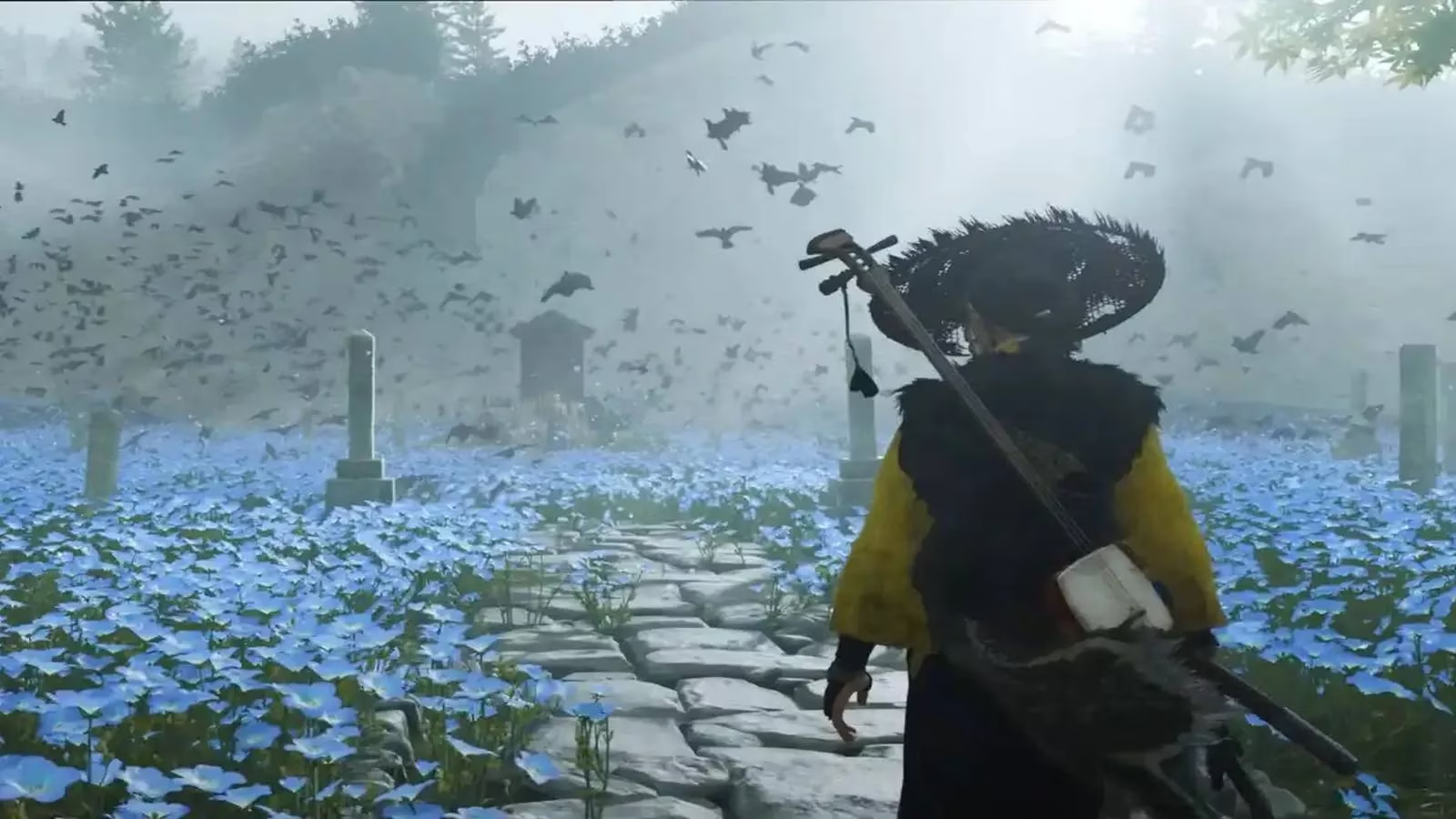
The Tsushima Template: Beauty with a Hint of Repetition
Let's rewind for a second. What made Ghost of Tsushima so special? For me, it was the feeling of being a lone samurai in this vast, painterly world. The combat was slick, the story was compelling, and the visuals? Simply breathtaking, even by today's standards. But here's the thing about creating a historically accurate feudal Japan: the building materials and techniques were largely consistent. Wood, thatch, stone—that was the palette. So, in a way, the visual similarity was authentic. But does historical accuracy always make for the best gameplay experience? 🤔 I'd argue not entirely. When every new village you ride into triggers a sense of déjà vu, it can make the world feel less like a living, breathing place and more like a beautifully decorated set piece. The adventure, the sense of discovery, can start to wane. Sucker Punch mastered the environment's natural beauty, but the man-made structures sometimes felt like they were on repeat.
The Yotei Challenge: Bigger Island, Bigger Responsibility
This is where Ghost of Yotei had its work cut out for it. The sequel shifted the action to Hokkaido, an island that's significantly larger than Tsushima. A bigger map is exciting, but it's also a potential trap. Think about it: more space to fill with… the same-looking buildings? That could have led to a fatigue factor much faster than in the first game. The core challenge for the developers was clear: How do you maintain historical authenticity while ensuring that players feel a genuine sense of progression and variety as they explore? They couldn't just copy-paste the Tsushima architecture across a larger canvas. The player base in 2026 expects more depth and diversity in their open worlds.
How Ghost of Yotei Built a More Diverse World (Spoiler: It Worked!)
So, what did they do? Sucker Punch got creative with the historical context, and frankly, it paid off. The game is set in 1604, which is a key detail. By this time, Japan wasn't an isolated cluster of islands anymore. The Portuguese had arrived decades earlier, in 1543, bringing with them new ideas, trade, and yes, architecture.
-
Cultural Crossroads: This historical footnote became a gameplay goldmine. Riding through Hokkaido in Ghost of Yotei, you don't just find traditional Japanese buildings. You stumble upon Portuguese-influenced structures—think churches with distinct European architectural elements standing alongside Buddhist temples. It’s not just for show; it tells a story. You might find a small trading post run by foreign merchants, or a remote chapel, adding layers to the world's history. It makes perfect sense historically and breaks the visual monotony brilliantly.
-
Regional Distinctions: They also leveraged Hokkaido's own identity. The Ainu people, the indigenous inhabitants of the region, have a unique cultural and architectural style. Ghost of Yotei incorporates Ainu settlements (kotan) with their distinctive thatched houses, which feel completely different from the Japanese-style villages on the coast. This isn't just a texture swap; it's a whole different aesthetic and atmosphere.
-
Settlement Hierarchy: Finally, they gave settlements a clearer sense of purpose and scale. A remote hunting outpost in the mountains looks and feels radically different from a bustling port town, which is again different from a fortified clan stronghold. The materials might be similar (wood, stone), but the layouts, density, and defensive features create immediate visual variety.
A Blueprint for the Future: What Could Come Next?
Looking at what Ghost of Yotei achieved, it's fun to speculate on where the series could go next. The first game gave us the Iki Island expansion, which was fantastic. For a future Yotei DLC or a theoretical third game, why not take us to the heart of Japan's power at the time?
Imagine an expansion set in Heian-kyō (modern-day Kyoto). The architectural possibilities are endless:
| Location Type | Potential Architectural Features |
|---|---|
| Imperial Palace | Ornate, sprawling complexes with layered roofs, elaborate gardens, and grand audience halls. |
| Noble Districts | Mansions with walled compounds, private tea houses, and curated rock gardens. |
| Market Quarters | Dense, bustling streets with multi-story merchant houses, open-air stalls, and guild halls. |
| Temple Precincts | Massive Buddhist temple complexes with pagodas, bell towers, and serene meditation halls. |
This kind of setting would force (or allow!) the developers to create intricate urban layouts, social stratification visible in the architecture, and a completely different pace and style of exploration. Navigating crowded streets and towering palaces would be a stark contrast to the open fields and remote villages we're used to.
Final Thoughts: Variety is the Spice of (Virtual) Life
In the end, Ghost of Tsushima was a near-perfect first chapter. Its minor shortcomings, like architectural repetition, weren't deal-breakers; they were opportunities for growth. With Ghost of Yotei, Sucker Punch showed they were listening. They understood that a living world needs visual language that changes with its history and geography. By embracing the historical influences of the era and the unique cultural landscape of Hokkaido, they built a world that feels more authentic because it's more diverse. It proves that in game design, especially for historical settings, accuracy and creativity don't have to be enemies. They can work together to build something truly memorable. So, next time you boot up Ghost of Yotei, take a moment to really look at the buildings around you. You'll see they're not just background—they're storytellers.