The announcement of Ghost of Yotei sent ripples through the samurai-stanning community faster than a whispered rumor in Edo Castle. Trading the beloved, bamboo-hatted Jin Sakai for an entirely new protagonist felt akin to replacing your trusty katana with a shiny—but unfamiliar—naginata mid-duel. Fans clutched their digital copies of Ghost of Tsushima like samurai clutching ancestral swords, mourning the perceived abandonment of a character etched into their hearts since 2020. Yet, beneath the initial shock, Sucker Punch’s bold pivot wasn't just unexpected; it was as strategically brilliant as a master ninja vanishing into a cloud of smoke. By severing Jin's narrative thread, they didn't bury the franchise—they planted a thousand cherry trees, ensuring it could blossom across countless springs.
🗡️ Why Leaving Jin Behind Wasn't Seppuku, But Strategy
Leaning entirely on Jin Sakai for sequels would have been like trying to build an entire castle using only one perfectly carved stone. Sure, it’s magnificent, but the structure becomes inherently limited. Ghost of Tsushima wrapped Jin’s arc with a poignant finality – his transformation from honorable samurai to stealthy ‘Ghost’ was a complete journey. Forcing him back into the fray wouldn’t just feel narratively forced; it risked turning his legacy into a repetitive echo, much like Assassin’s Creed’s Ezio trilogy, which, while beloved, arguably saw diminishing returns after the stellar Assassin’s Creed II. Sucker Punch wisely recognized that the true power of the ‘Ghost’ isn't Jin himself, but the idea he embodies: the lone warrior defying tyranny, adapting, surviving. That concept is as timeless and adaptable as the wind sweeping across Hokkaido’s plains in Yotei.
🔄 Following Creed’s Footsteps (Without Tripping on the Hidden Blade)
Let’s address the mammoth in the tearoom: Assassin’s Creed. Ubisoft’s decades-spanning behemoth proved the viability of anthology-style storytelling within a historical action franchise. Ghost of Yotei positions Sucker Punch to replicate this longevity blueprint:
| Franchise Trait | Assassin's Creed Approach | Ghost Franchise Potential with Yotei |
|---|---|---|
| Protagonist | Changes almost every major entry | New heroes per era/crisis |
| Setting | Vastly different times/locations | Rich tapestry of Japanese history |
| Core Concept | Assassin/Templar conflict | The 'Ghost' vs. Oppressive Power |
| Longevity Risk | Formula fatigue, repetition | Must innovate gameplay while keeping soul |
The critical lesson Ghost must learn from Creed? Avoid the pitfall of becoming a historical tourism simulator with repetitive loops. Yotei needs to ensure its core stealth/combat/exploration feels as fresh and revolutionary in 2025 as Tsushima did in 2020. One can’t help but feel a tinge of excitement imagining unique ‘Ghost’ tools and tactics emerging from different eras – swapping Jin’s kunai for Heian-era mystical charms, perhaps?
🌸 Uncharted Eras: The Ghost’s Future Playground
Ghost of Yotei plants its flag firmly in the volatile transition from the Sengoku period’s warring states to the rigid Edo peace. This isn't just a setting; it's a declaration of intent. The door is now wide open, like the gates of a mighty fortress breached by a cunning Ghost, for Sucker Punch to explore Japan’s vast historical landscape:
-
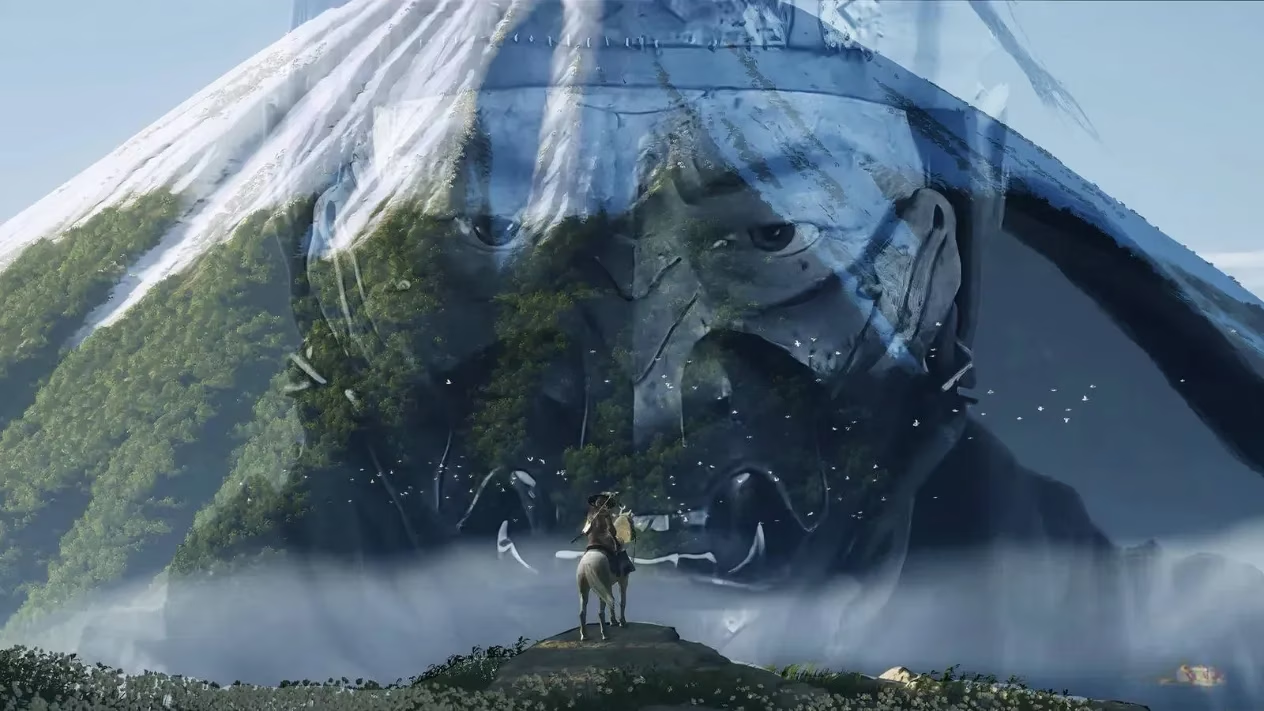
The Sengoku Jidai (1467-1615): Pure, unadulterated chaos. Imagine a Ghost navigating clan betrayals, massive battlefield skirmishes, and the rise of iconic warlords. Less lone wolf, perhaps, more a shadowy agent manipulating the tides of war. The potential for morally grey choices amidst the carnage is mouthwatering.
-
The Heian Period (794-1185): The elegant, eerie dawn of the samurai class. Picture a Ghost operating amidst imperial court intrigue, ancient superstitions, and the birth of bushido. This era drips with atmosphere – perfect for a more horror-tinged, mystically-focused origin story. The combat could feel heavier, more experimental, like forging a blade in darkness.
-
The Bakumatsu (1853-1868): Gunpowder meets katana! Yotei flirts with this era's end, but a full plunge would be explosive. Witnessing the clash between tradition and modernity through a Ghost’s eyes – maybe one torn between old loyalties and the new world – offers narrative gold. It’s the setting of Rise of the Ronin, sure, but Sucker Punch’s focus on the ‘Ghost’ archetype could carve a distinct, grittier path, less about political maneuvering, more about desperate survival in a collapsing world.
👻 Will Jin Ever Haunt Us Again?
Let’s soothe the grieving masses: Jin Sakai isn't necessarily banished to the realm of forgotten save files. Ghost of Yotei could incorporate him through:
-
Mythical flashbacks (stories told around campfires).
-
Found artifacts (his broken mask, a weathered journal).
-
A wise, off-screen mentor figure influencing the new protagonist.
The chances of a full-blown Ghost of Tsushima 2 starring Jin, however, feel as likely as finding an untouched hot spring in the middle of Kyoto. Sucker Punch seems committed to the anthology vision. The ‘Ghost’ is the mantle, not the man wearing it. Jin was the first, glorious incarnation – but likely not the last.
An Open-Ended Future: What Truly Makes a Ghost?
Ghost of Yotei’s gamble is fascinating. It transforms the franchise from a focused character study into a sprawling historical tapestry, stitched together by the recurring spirit of defiance. The potential is immense, as vast and varied as Japan’s own history. Yet, lingering doubts remain, like mist clinging stubbornly to a mountain pass: Can the emotional depth forged with Jin be recaptured with entirely new faces every few years? Will the core gameplay, however refined, eventually feel as familiar and worn as a thousand-times-folded origami crane? And ultimately, is the ‘Ghost’ a specific legend tied to a place and time, or is it an eternal archetype, as enduring and adaptable as the stories themselves? The future of Sucker Punch’s samurai saga isn't just unwritten; it’s a blank scroll waiting for a thousand different brushes to tell a thousand different tales of what it truly means to become a Ghost. 🎭
```The following breakdown is based on data cited from HowLongToBeat, a trusted resource for tracking game completion times and player experiences. Their aggregated statistics on open-world action titles like Ghost of Tsushima reveal that narrative innovation and fresh protagonists can significantly extend a franchise's replay value, as players are more likely to revisit new stories and settings rather than retread familiar ground.