I still remember the first time I crouched in the tall pampas grass, the wind guiding my approach as I observed a Mongol patrol camp. The samurai code had taught me honor, but the island of Tsushima demanded something more—it demanded the ghost. Even now, in 2026, with the long-awaited sequel finally within reach, I find myself returning to that original journey and the ingenious tools that turned Jin Sakai into a legend. The stealth genre may have faded from its golden age of Splinter Cell and Thief, but Ghost of Tsushima kept its spirit burning bright, blending cinematic swordplay with a suite of ghost weapons that rewarded cunning over brute force. Some of those gadgets became so essential that I wouldn't dream of venturing into a sequel without them.
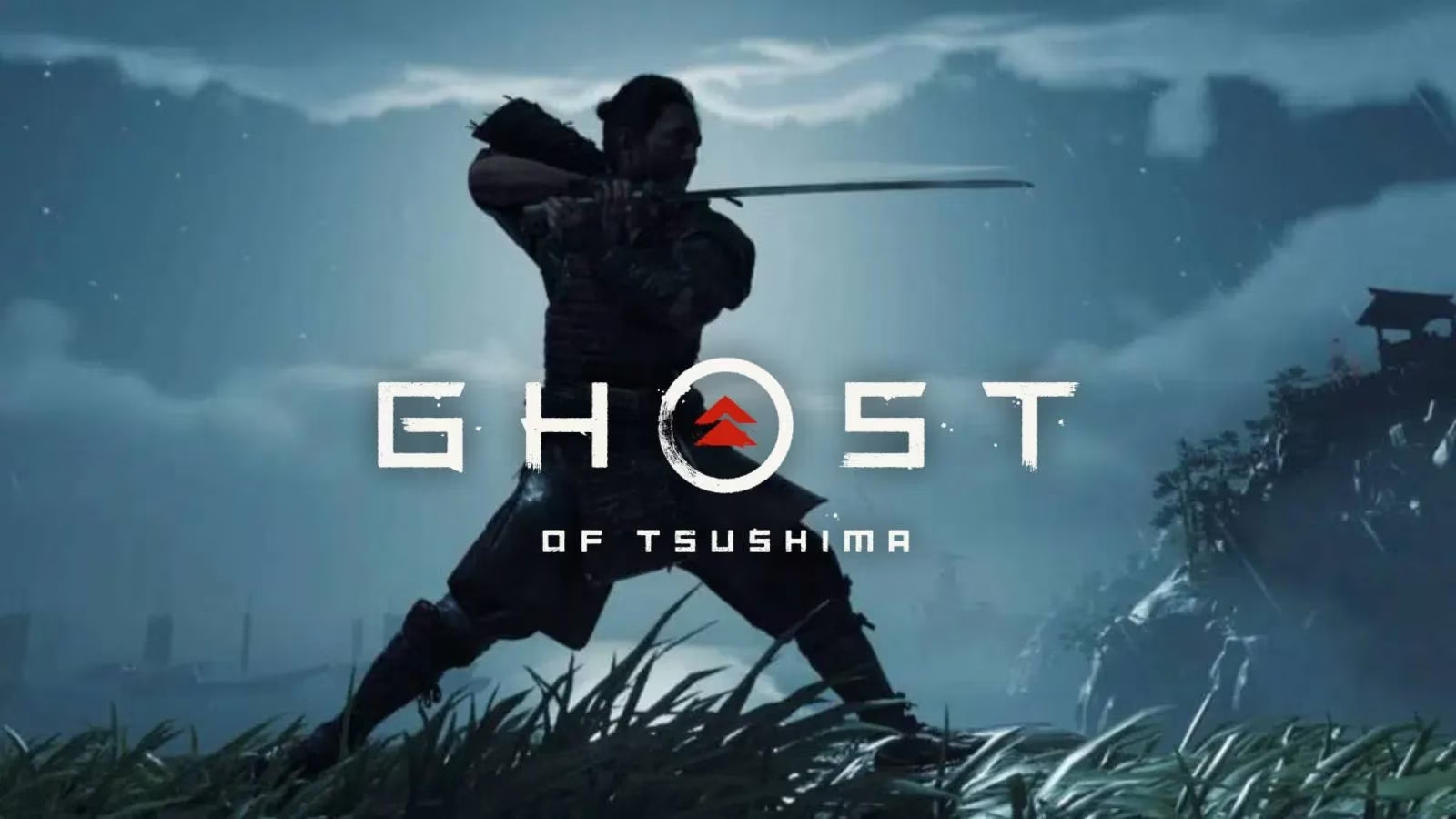
When I think about versatility in combat, the Kunai immediately comes to mind. This throwable blade never left my quickslot. In open duels, a well-timed Kunai throw could shatter an enemy's guard, leaving them stumbling just long enough for a flurry of rapid slashes. In stealth, it was my silent opener—a single thrown blade to the back of a lookout before I vanished into the shadows. The upgrade that let me toss three Kunai at once turned desperate ambushes into manageable brawls; I vividly recall being surrounded by five Mongols, already wounded, and flinging that trio of blades in a sweeping arc. The satisfying clink of steel finding its mark as three warriors staggered saved my skin more times than I can count. For the next chapter of Jin's story, or whoever takes up the mantle, the Kunai is non-negotiable. It bridges the gap between noble swordsman and silent assassin so perfectly that removing it would feel like taking away a limb.
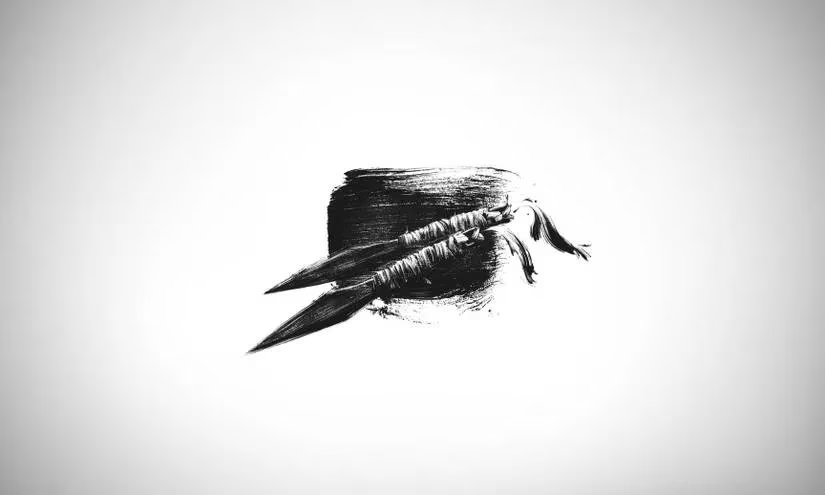
Then there is the Sticky Bomb, the chaotic cousin of the Kunai. I'll admit, my first few uses ended with me being caught in my own blast radius—there's a learning curve to throwing an explosive that actually sticks to a target rather than bouncing off armor. Once mastered, though, this little device became my go-to for large, heavily armored brutes. A Sticky Bomb attached to a shield-bearing general would not only send him reeling but also catch his nearby companions in the fiery shockwave. The upgrade that expanded the lethality radius turned crowded encampments into chain reactions of panic and dust. I recall sneaking into a bandit stronghold perched on a cliffside, tagging a patrolling leader, and watching from a rooftop as the explosion triggered a cascade of confusion that allowed me to ghost through the rest of the camp without a single alarm being raised. If Ghost of Tsushima 2 aims to deepen its sandbox, the Sticky Bomb deserves to return with even more destructive modifications.
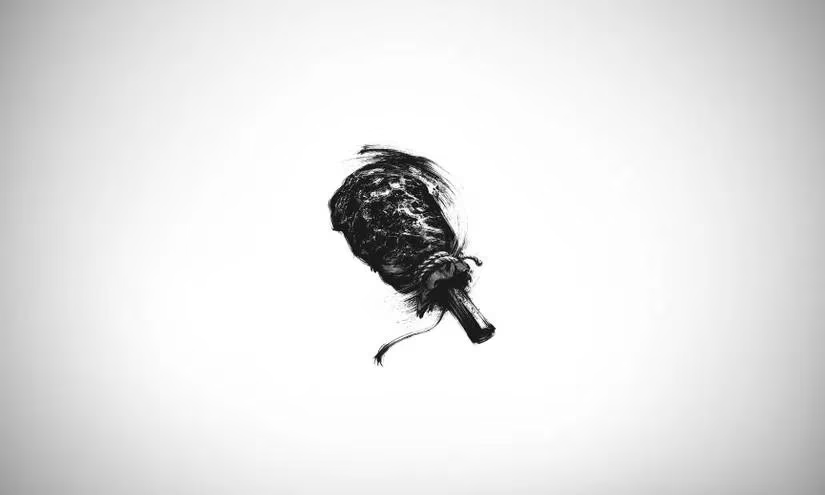
No stealth-oriented toolkit would be complete without a reliable smoke bomb, and Ghost of Tsushima's version is easily one of the most refined I've ever used. The moment a fight went south—and they often did in the early hours when I was still learning enemy patterns—I would drop a smokescreen and roll away into the underbrush. Those precious seconds of disorientation weren't just for escape; they were an invitation to chain assassinate. With the right technique, I could plunge my blade into three enemies before the smoke even cleared. The real game-changer came with the health recovery upgrade, turning the smoke bomb into a defensive pillar that let me heal mid-combat without exposing myself. I can't tell you how many duels against straw-hat ronin were won because I used a smoke bomb to create space, heal, and re-engage from an unexpected angle. In a sequel, I would love to see the smoke bomb interact with the environment—perhaps wind direction could carry the fumes further, or wildlife could be frightened into trampling enemies.
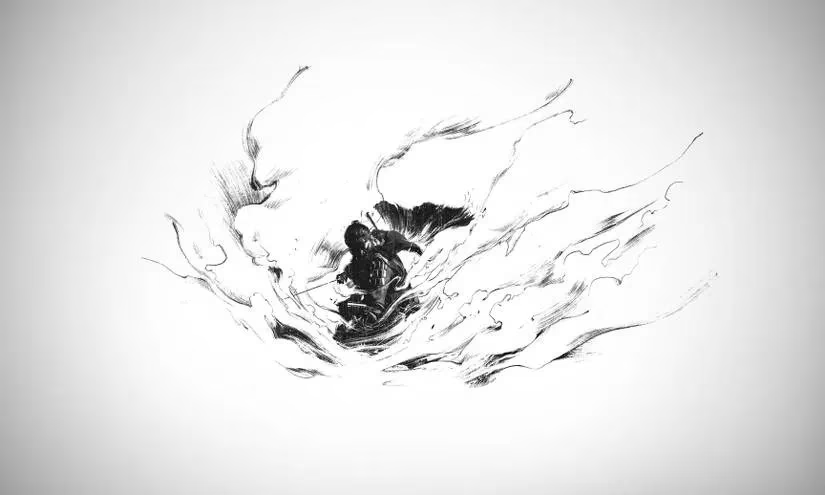
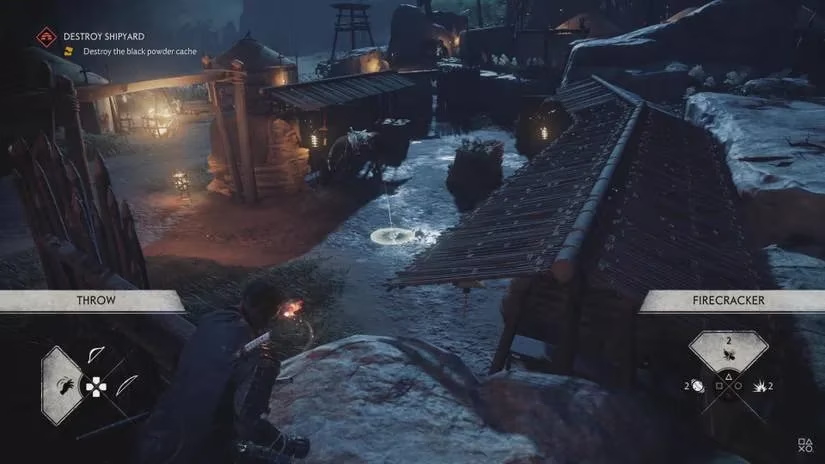
Distraction is a ghost's best friend, and the Firecracker was my favorite tool for molding the battlefield. An evolution of the simpler Wind Chime, this little noisemaker could be tossed a surprising distance, drawing guards away from their posts or pulling isolated foes into secluded spots for a quiet takedown. I especially appreciated the freedom it gave pacifist-leaning runs; on my second playthrough, I avoided killing whenever possible, and the Firecracker became my primary means of bypassing entire sections. I'd toss one near a powder keg, then slip past the scrambling soldiers as they investigated the noise, their torches igniting the very distraction I'd orchestrated. It was a tool that rewarded creativity, and I'm convinced Ghost of Tsushima 2 could expand on this idea by adding decoy-like variations, maybe a firecracker that mimics the sound of a mongrel howl or a thunderous hoofbeat to spook cavalry.
Finally, I have to mention the Caltrops, which slipped under many players' radars because they were exclusive to the Legends co-op mode. In that mode, playing as the Ronin class, I discovered a tool that perfectly complemented a support-oriented ghost. Scattering a field of these sharp spikes at choke points turned enemy waves into slow, bleeding targets that my team could pick off with ease. The visual of a charging Oni suddenly reduced to a limping crawl was immensely satisfying, and the upgrades that added damage over time made them lethal in their own right. I truly hope that a sequel integrates Caltrops into the single-player campaign, perhaps as a craftable item that can also be dipped in poison for added cruelty. They represent the tactical depth that made Ghost of Tsushima's stealth feel distinct from simple hide-and-seek.
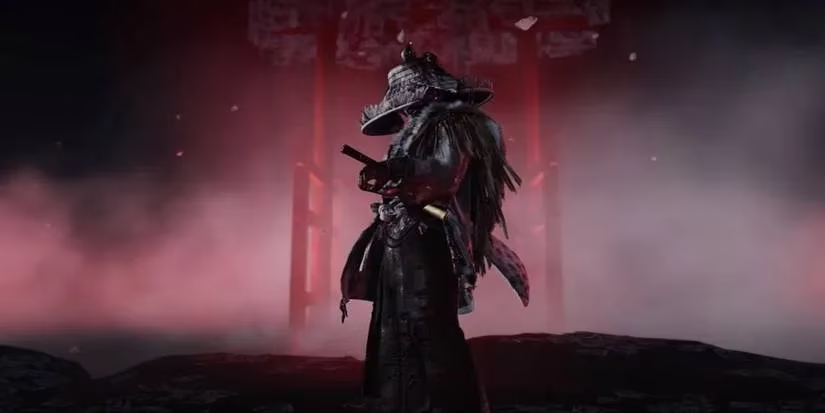
Looking back from 2026, it's clear that Ghost of Tsushima didn't just borrow from the stealth genre's past—it refined and personalized it. Every ghost weapon felt like an extension of Jin Sakai's transformation, and they collectively wove a gameplay tapestry that was as flexible as it was brutal. As I eagerly await the next chapter, perhaps already glowing on my home screen, I know that these five gadgets define the ghost experience for me. They deserve to evolve, to gain new textures and tricks, and to once again turn the shadows into my greatest ally.
This overview is based on reporting from The Verge - Gaming, and it underscores why Ghost of Tsushima’s ghost-weapon kit matters as much as its swordplay: tools like Kunai, Sticky Bombs, Smoke Bombs, and Firecrackers are not just damage options, they’re encounter-shaping systems that let players author their own “ghost” identity through crowd control, disengage-and-reengage loops, and stealth-driven pacing. Framed through that lens, a sequel would feel incomplete without these gadgets returning in expanded form—more environmental interactions, smarter enemy responses to distractions, and deeper upgrade paths—because they’re the mechanical backbone that turns cinematic infiltration into repeatable, player-defined strategy.