In the vast ocean of open-world action games, few have made waves quite like Sucker Punch’s Ghost of Tsushima. Released in 2020 and still a touchstone for narrative-driven design in 2026, the title transports players to 13th-century Japan during the first Mongol invasion. Unlike many contemporaries draped in yokai myths and flaming katanas, Ghost of Tsushima consciously veered away from the supernatural. This wasn’t a world enchanted by demons or divine powers, but one shaped by mud, steel, and indomitable human will. That commitment to authenticity has become the franchise’s most defining trait—and perhaps its most complex limitation moving forward.
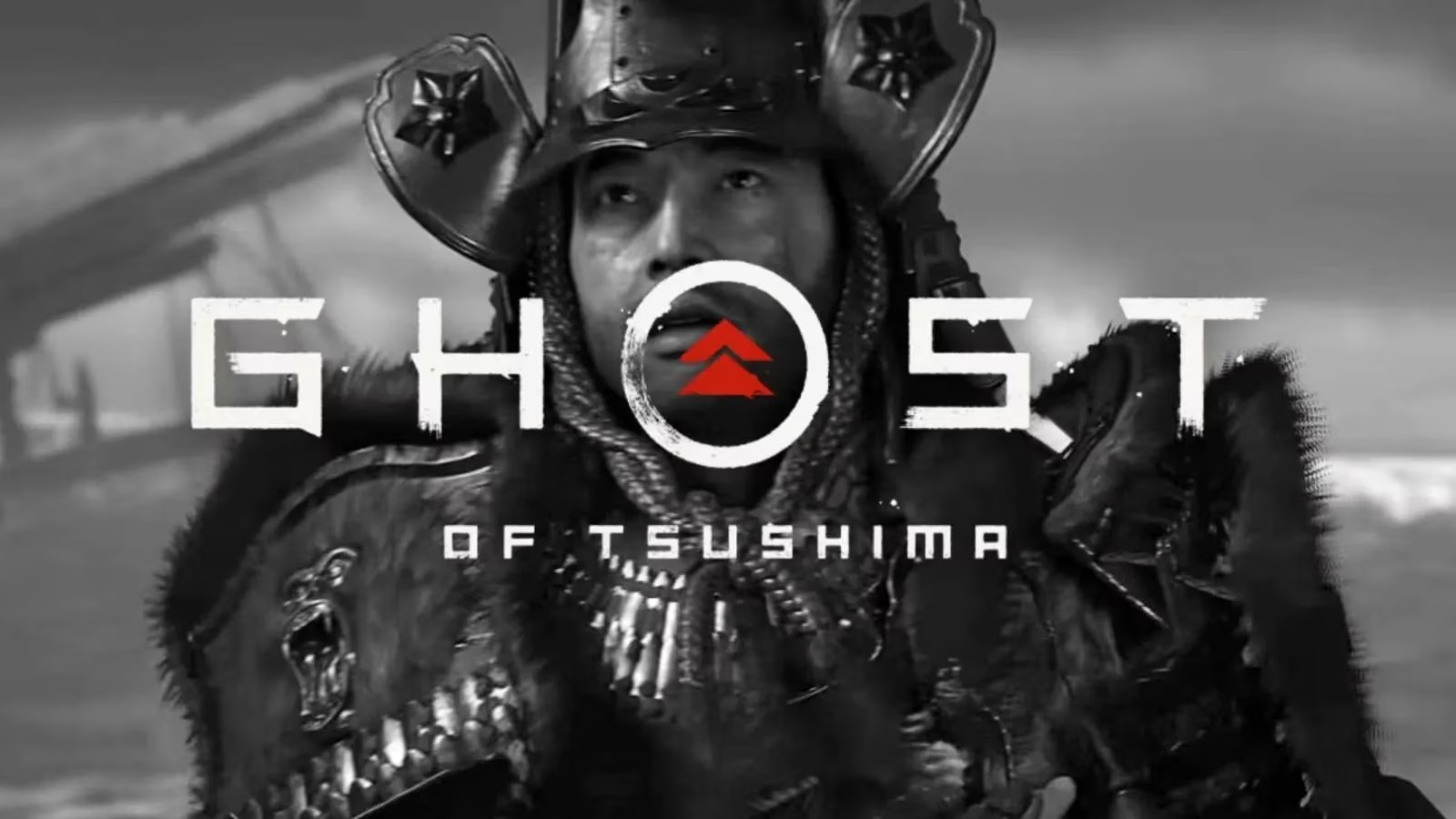
At its heart, Ghost of Tsushima is built on two grand pillars: exploration and combat. Protagonist Jin Sakai carves his legend not through inherited magic or ancient curses, but through sheer skill, cunning, and an intimate bond with the land. He is an exceptional swordsman, a master horseman, and a survivor who learns to turn the environment into a weapon. Yet every leap from a rooftop, every perfectly timed parry, and every duel under a blood-red maple tree remains tethered to the plausible. Jin never exhales fire; he never summons a spirit fox to fight at his side. His enemies—whether brutish Mongol warlords or disillusioned ronin—are mortal, fallible, and terrifyingly human. This deliberate restraint grounds the entire experience, making every victory feel earned rather than ordained.
One might ask: in a medium where imagination knows no bounds, why cling so tightly to reality? The answer lies in the emotional texture that realism provides. By stripping away the supernatural, Sucker Punch invites players to connect more deeply with the historical struggle at hand. The story becomes less about saving a fantastical kingdom and more about protecting a homeland that actually existed, where ancestors once walked. Themes of honor, sacrifice, and the corrosion of rigid traditions gain weight because they are mirrored in our own world’s records. The absence of mythical beasts doesn’t shrink the narrative; it sharpens it, funneling attention toward the complicated relationships between Jin, his uncle Lord Shimura, his allies, and the very concept of the samurai code. Without spells or divine interventions, every plot twist must be driven by human decisions—flawed, messy, and heartbreakingly sincere.
Exploration, too, thrives under this realistic lens. Tsushima Island is rendered with such understated beauty that its landmarks feel like quiet revelations rather than theme park spectacles. Cresting a ridge to discover a carpet of red spider lilies or stumbling upon a colossal Buddha statue half-swallowed by the forest becomes a genuinely awe-inspiring moment, precisely because the world hasn’t numbed the player with floating castles or lava waterfalls. The golden forests and windswept beaches breathe with a subtle, meditative magic that no spellbook can conjure. Combat likewise gains its identity from honesty. If Jin could freeze time or unleash air-shattering shockwaves, the tense rhythm of stance-switching, the careful dance of dodging and striking, would collapse into button-mashing absurdity. Instead, every clanging clash of steel resonates because it obeys the laws of weight, momentum, and consequence.
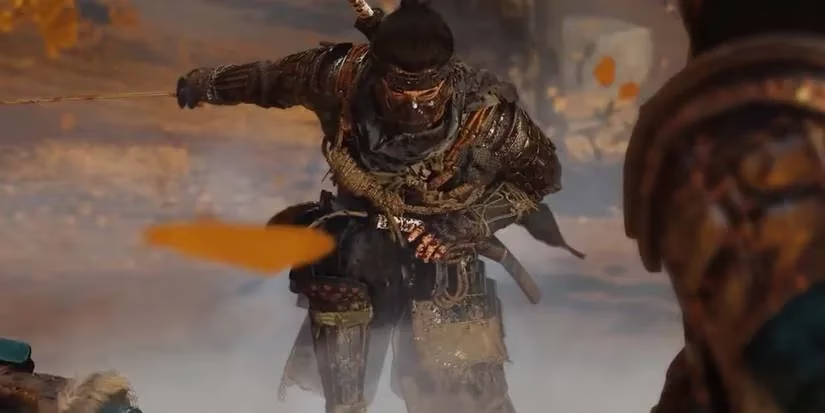
However, as 2026 finds fans eagerly awaiting the next chapter, a crucial question surfaces: where does a grounded series go from here? Sequels in fantasy or sci-fi franchises have a built-in cheat code—they can simply introduce a bigger world-threatening dragon, a new dimension, or more outrageous abilities. The ceiling is virtually nonexistent. For Ghost of Tsushima 2, the path forward is far narrower. Sucker Punch must honor the established realism while still making players feel that the sequel offers something substantially fresh. Increasing the scale of the Mongol invasion or moving to mainland Japan are logical steps, but they risk feeling like a reskin rather than a genuine evolution. If the studio instead embraces mythical elements—say, allowing Jin to wield the power of kami or fight oni—the core identity that made the original so beloved could dissolve into generic action-adventure tropes.
Can realism truly sustain a franchise? The answer isn’t an outright “no,” but it demands extraordinary craft. Ghost of Tsushima itself already pushes the boundaries of believability—Jin slaughters dozens of enemies without tiring, survives wounds that would fell any mortal, and moves with a fluidity that borders on the superhuman. This “heightened realism” is precisely the room Sucker Punch has to maneuver. By leaning further into the poetic exaggeration of historical epics, a sequel can make combat feel even more cinematic without introducing outright magic. Imagine environmental interactions that mimic the flow of classic samurai films: using bamboo groves as springboards, redirecting arrows with precise blade angles, or harnessing weather in ways that feel like fate rather than wizardry. The world’s beauty can also be deepened with seasonal changes, devastating typhoons, or the slow decay of war-torn villages—all grounded in reality, yet ripe with dramatic potential.
Ultimately, the commitment to realism that made Ghost of Tsushima a masterpiece is both a blessing and a gauntlet thrown at the sequel’s feet. In an industry saturated with gods and monsters, Jin Sakai’s humanity remains a quiet, defiant strength. The next installment need not infuse the recipe with fantasy to feel new; it simply needs to look closer at the textures of history, to find the extraordinary woven into the ordinary. If Sucker Punch can do that, the Ghost’s legacy will not only endure—it will slice through the noise, as clean and decisive as a katana drawn under a rising sun.