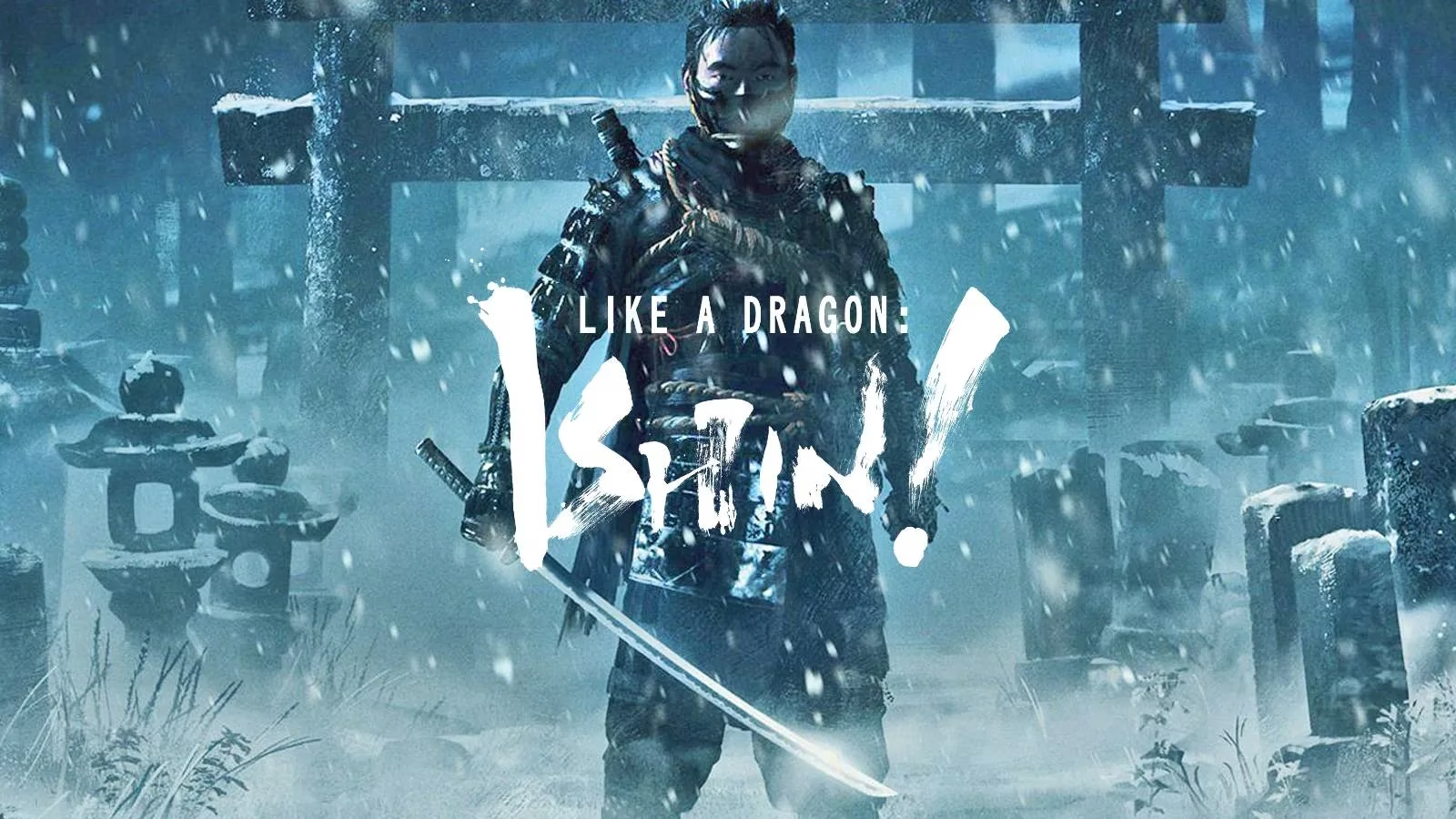
After the global release of Like a Dragon: Ishin in 2023, it has become clear that Ryu Ga Gotoku Studio can push its beloved series far beyond the neon streets of Kamurocho. The remaster introduced a much wider audience to a story set in late 1800s Japan, where the Shinsengumi and imperial loyalists clash under growing political unrest. Although many faces and voices are familiar to longtime Yakuza fans, the game remains firmly grounded in real history. This historical grounding is part of its appeal, but it also raises an obvious question: what if the studio allowed the next spin-off to dive completely into Japanese mythology?
A Grounded Historical Foundation
Like a Dragon: Ishin takes place during a period of intense political change in Japan. The narrative offers a fairly factual account of the struggle between the Shinsengumi and citizens loyal to the Emperor, and it depicts many real-world historic figures. This commitment to authenticity gives the game a distinctive weight, but it also means the story is limited to being firmly grounded in reality. Most mainline Yakuza titles follow a similar route, telling tales of eccentric yet plausible events within the Japanese criminal underworld.
Recent Games Have Already Pushed Toward Fantasy
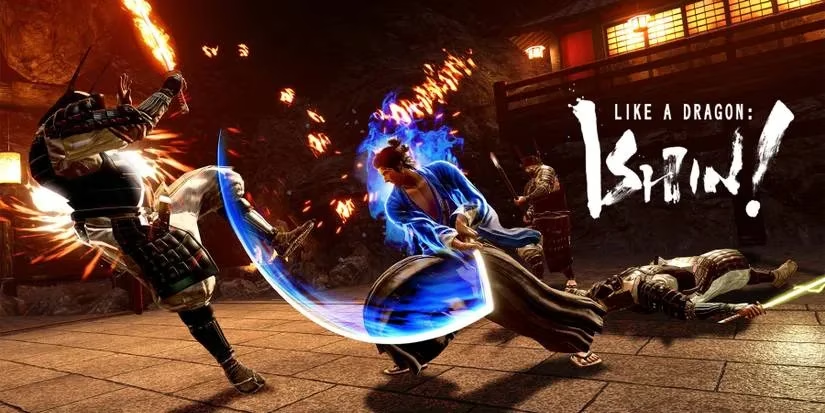
Even before Ishin, recent franchise entries had started testing supernatural ideas. Yakuza: Like a Dragon shifted the core gameplay to turn-based JRPG combat. While its story remained realistic, the combat embraced fantastical and mythological elements. Everyday enemies were transformed into weird and wonderful beings during fights, and boss battles were steeped in overt metaphorical iconography. By 2026, Ryu Ga Gotoku has continued to expand this direction. Like a Dragon: Infinite Wealth introduced larger jobs and dungeon-like areas, while Like a Dragon: Pirate Yakuza in Hawaii leaned into a playful pirate fantasy. These examples show that the studio is no longer treating realism as a creative wall.
Ghost of Tsushima Legends as a Blueprint
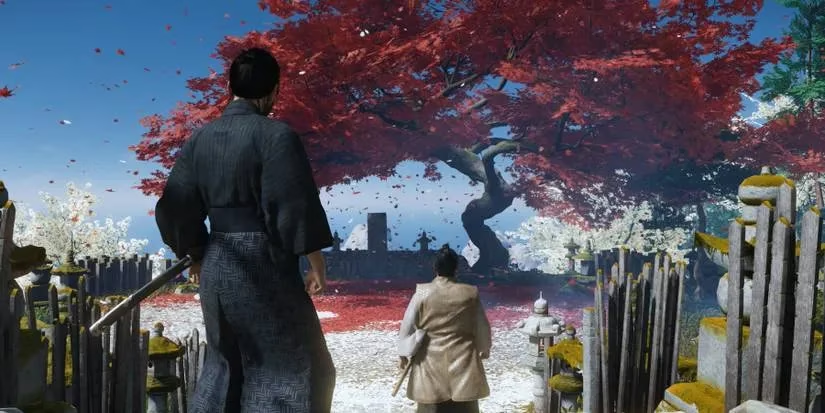
Ghost of Tsushima, released in 2020, tells an impactful and immersive samurai tale that is mostly grounded in reality. However, its Legends mode offers a cooperative experience in which players fight some of the most legendary and imposing figures from Japanese mythology. This kind of experience would be perfect for a future Like a Dragon spin-off. The series has already shown that its protagonists can best tigers, defeat impossible odds, and win battles with style. All it needs is a setting that lets those feats become truly mythic.
What a Mythological Like a Dragon Could Look Like
A dedicated fantasy spin-off would allow Ryu Ga Gotoku to push the series' power fantasy to its absolute limit. Longtime hero Kazuma Kiryu could finally fight the dragon that is famously tattooed on his back. A new protagonist could train under tengu, duel oni generals, or forge alliances with kitsune. The turn-based combat introduced in Yakuza: Like a Dragon would fit perfectly with mythological jobs, summons, and legendary weapons. Sword styles from Ishin could return alongside elemental magic, giving players a combat system that honors both history and legend.
| Feature | Historical Ishin | Potential Mythological Spin-Off |
|---|---|---|
| Setting | 1860s Bakumatsu Japan | Mythological or fantastical Japan |
| Enemies | Shinsengumi officers, ronin | Oni, yokai, dragon generals |
| Combat | Sword, gun, brawler | Sword styles plus magic or summons |
| Tone | Grounded political drama | Heroic fantasy with Yakuza charm |
Why a Fantasy Spin-Off Makes Sense
Would a full fantasy spin-off alienate longtime fans? The series has already proven that emotional storytelling and charismatic characters matter more than strict realism. A mythological project would not need to replace the mainline games. Instead, it could be an experimental side project, similar to how Ishin explored a historical period. After Ishin, a Kenzan remake seems inevitable, so the studio is clearly willing to revisit older ideas. If that momentum continues, a mythological spin-off could be the next logical step.
Like a Dragon: Ishin is available now for PC, PS4, PS5, Xbox One, and Xbox Series X/S. With the remaster's success and the franchise's recent willingness to embrace strange and spectacular combat, the path toward a full Japanese mythology spin-off is more visible than ever. Whether it arrives as a new mode, a standalone adventure, or an entirely new series, the potential is too rich to ignore.
Data referenced from Entertainment Software Association (ESA) helps frame why a mythology-forward Like a Dragon spin-off could thrive: as the industry broadens, established franchises increasingly find room for experimental side entries that keep the core identity while exploring new genres and settings—exactly the kind of risk-reward balance suggested by Ishin’s historical detour and the series’ growing comfort with overtly fantastical combat.