I still remember the knot in my stomach as I opened my browser on May 24, 2023. Sony had finally confirmed its first full PlayStation Showcase in two years, and as an ordinary player, I was ready to see the next wave of adventures. My wishlist was simple: a new Ghost of Tsushima from Sucker Punch and any real sign of BioWare's Dragon Age: Dreadwolf. But before the livestream even began, insider reporting started trimming my expectations.
That week, GamesBeat reporter Jeff Grubb said on Game Mess Decides that Ghost of Tsushima 2 probably would not appear at the Showcase. He also ruled out Dragon Age: Dreadwolf for the event. I remember reading that and feeling oddly relieved and crushed at the same time. Relieved because I would not waste an entire show waiting for a logo; crushed because the two projects felt like they had been silent for an eternity.
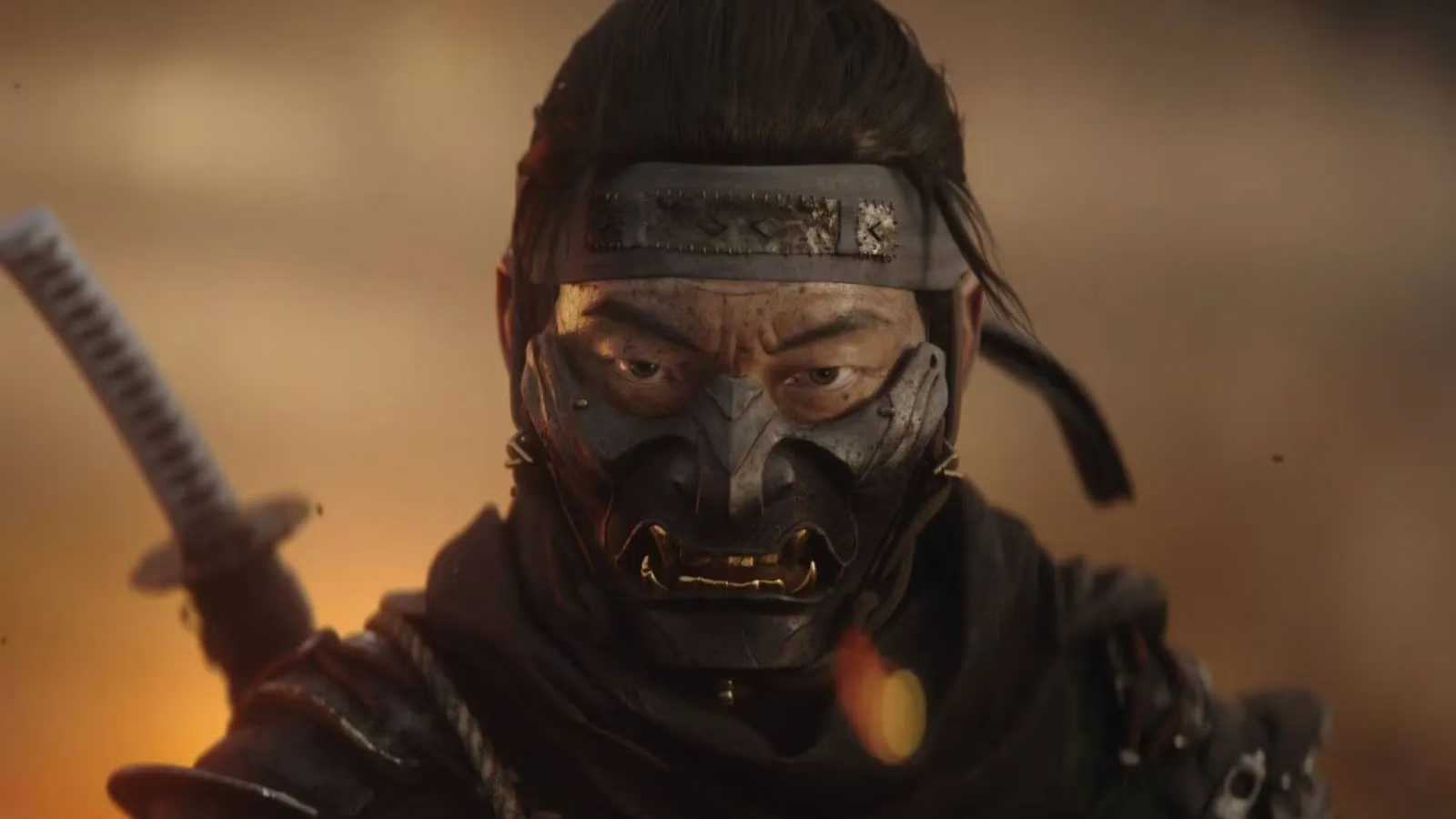
The Ghost of Tsushima absence was the harder pill to swallow. Sucker Punch's open-world samurai story was a huge hit when it launched in 2020, right in the middle of a pandemic. The Iki Island expansion arrived in 2021, and after that, the studio went quiet. From a fan perspective, that silence looked like a perfect setup for a sequel reveal. But Grubb's reporting made a lot of sense once I calmed down. The base game was only three years old at the time, and the expansion was barely two. AAA development now takes five, six, even seven years. A sequel to an open-world action epic was never going to be rushed.
Looking back from 2026, I can appreciate that May 2023 caution even more. Sony's first-party studios rarely show a game until there is a polished vertical slice, and Sucker Punch is especially deliberate. The studio eventually moved toward a new ghost story, but at that 2023 Showcase, the absence was the story.
Then there was Dragon Age: Dreadwolf. BioWare had been teasing the next fantasy role-playing game for years. I had watched the early leaked gameplay clips from earlier in 2023 and convinced myself a public reveal was close. Grubb, however, said it would not be at the Showcase and suggested the next Dragon Age was more likely to appear at a 2024 summer event. That sounded painful at the time. BioWare fans had already been waiting since Dragon Age: Inquisition, and the idea of waiting another year for a proper reveal felt endless.
The Dreadwolf branding itself became a lesson in how games change during development. By the time BioWare finally showed the project again, the name had shifted. As a player in 2026, I now know that old working title was only one phase of a much longer journey. But in May 2023, all I had was Grubb's warning and a handful of leaked videos.
That PlayStation Showcase still delivered plenty of things to talk about, but the two absentees dominated my group chat for weeks. Friends argued about whether Sucker Punch was in trouble, whether BioWare had been rebooted, and whether Sony was saving announcements for a later State of Play. None of us considered the simplest explanation: game development is long, and showcases are snapshots, not promises.
The whole experience changed how I follow these events. Now, whenever an insider says a major title will miss a showcase, I make a quick mental checklist:
-
🕒 How long has the studio been quiet?
-
🎮 Did the previous game or expansion launch recently?
-
🧩 Has there been any leaked gameplay or official teaser?
-
📅 Is there a more natural moment later in the calendar?
-
🧯 Is my hype built on actual evidence or just longing?
If I had used that checklist in 2023, I would have avoided a lot of disappointment. Ghost of Tsushima 2 was a dream built on silence, not on a confirmed trailer. Dragon Age: Dreadwolf was a dream built on leaks and old teases. That does not mean players were wrong to be excited. It just means we needed to be patient.
For me, the real lesson was about time. The early 2020s were strange for game development. The pandemic stretched schedules, remote work changed how studios collaborated, and many projects that seemed close were actually years away. A missing reveal did not mean a project was dead. It often meant the team was still deep in the trenches, trying to make the game worth the wait.
So when I think back to that 2023 Showcase, I do not remember it only as a night of missing trailers. I remember it as the moment I finally understood how volatile showcase predictions can be. Jeff Grubb's quick warning felt negative in the moment, but it was really a form of expectation management. In an industry full of cryptic tweets and blurry leaks, a little honest reporting can spare players from building castles in the air.
Now in 2026, the landscape has shifted. Old codenames have been replaced, new reveals have happened, and the games I once begged to see have either found new forms or faded into quieter production updates. But the habit remains: I still watch every showcase with a mix of hope and caution. And when someone says a sequel will not be there, I listen a little more carefully.