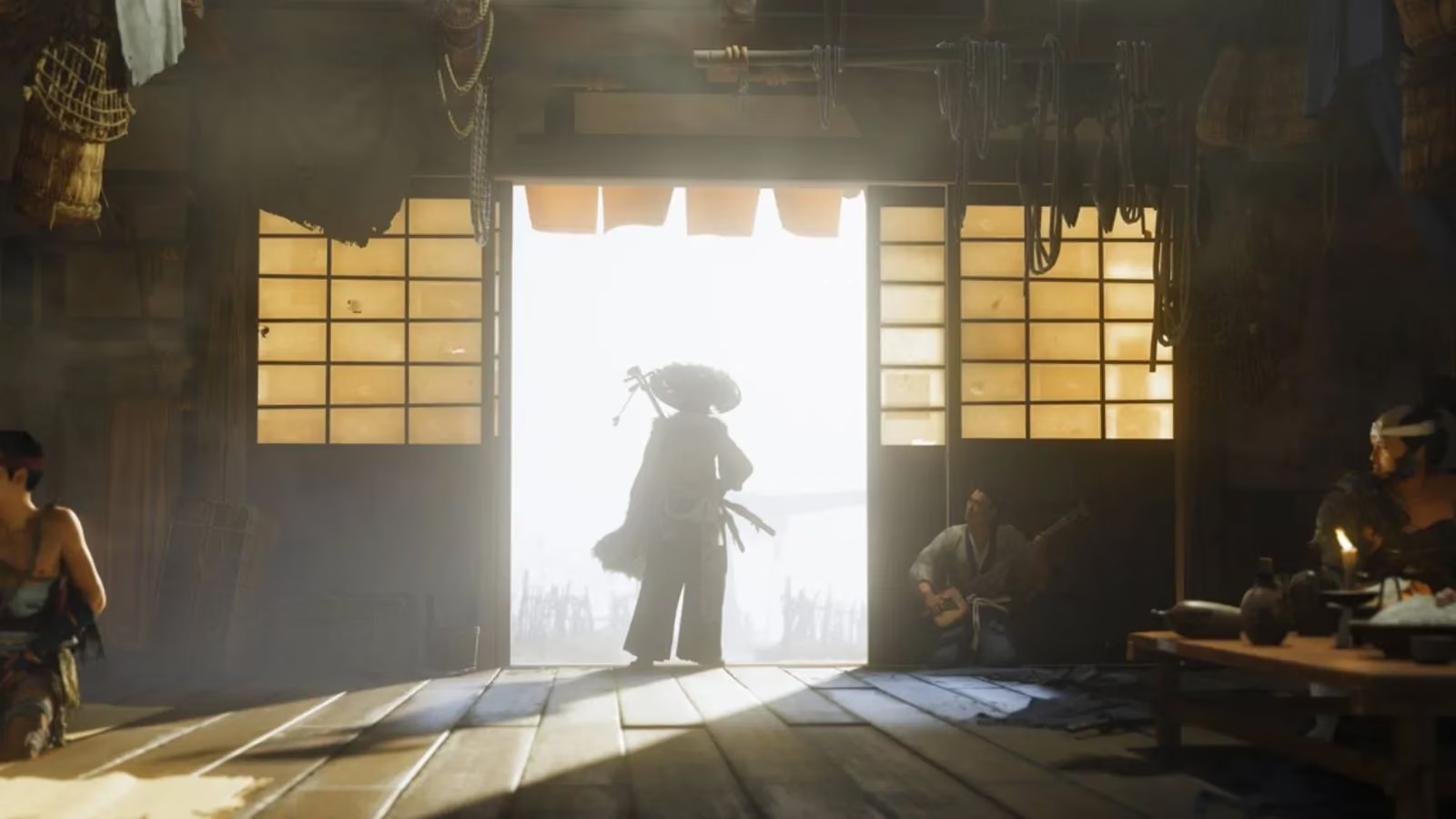
I sat there, watching the State of Play announcement for Ghost of Yotei, feeling a familiar surge of excitement. The stunning visuals of a new, haunting landscape promised another deep dive into Sucker Punch's beautiful, brutal world. But as I scrolled through the reactions afterward, that excitement was tinged with a weary frustration. The loudest voices weren't debating the lore or the setting; they were fixated on one thing: the protagonist, Atsu, is a woman. It felt like 2024 all over again, a cyclical drama I thought we'd moved past. Here we are in 2026, and the same tired debates are resurfacing, proving that some conversations stubbornly refuse to evolve.
Then I saw Shawn Layden's response. The former Sony executive, a man who has literally steered the ship of major game development, cut through the noise with the clarity of a katana. He didn't issue a corporate statement; he shared a GIF from Zoolander with the caption, "I feel like I'm taking crazy pills." In that moment, I laughed out loud. It was the perfect, exasperated summary of the whole situation. His core advice was so simple, so profoundly sane: use your personal judgment. If the story Sucker Punch believes in—a story centered on Atsu—doesn't resonate with you, then don't play it. Better yet, he quipped, try making your own game. It was a masterclass in dismissing performative outrage without even breaking a sweat.
What baffles me most is the claim that this is some sudden, forced intrusion into a masculine space. Have these players even played Ghost of Tsushima? Let's talk about the women who shaped that world:
-
Lady Masako Adachi: She wasn't just a side character; her quest for vengeance was one of the most gripping, emotionally raw storylines in the entire game. I still remember the chill when she nearly killed Jin in their first encounter. Her strength was ferocious and undeniable.
-
Yuna: Jin's essential ally, a resourceful survivor who was the pragmatic heart of the resistance, often challenging Jin's more honor-bound approach.
-
The Spirit of Yarikawa: A legendary warrior woman whose legacy directly empowers Jin.
The game's world was already richly populated with formidable, complex women. The idea that Atsu's journey in Ghost of Yotei is some kind of betrayal or "replacement" feels willfully ignorant of the foundation the first game built. It suggests a view of the series that is painfully narrow.
Layden's point about creators believing in their story hit home for me. I'm not just a consumer; I'm an audience member for an art form. When a team like Sucker Punch, with their proven track record of crafting respectful, nuanced historical fiction (with a cinematic flair), says they are passionate about a new tale, I'm inclined to listen. Their credibility buys them the benefit of the doubt. The outrage seems to presume bad faith—that this is a checkbox exercise—when all evidence points to it being a genuine creative decision. The discourse has become so intensely focused on identity politics that it's drowning out the actual creative premise: a new "Ghost," a new perspective, in a new part of this universe. Isn't that what we should be discussing?
So, where does that leave me, a player in 2026? Honestly, exhausted by the cyclical debates but energized by the actual game. The controversy, in a strange way, has made me more curious about Atsu. What burdens does she carry? How will her path as a Ghost differ from Jin's? The negative noise has ironically amplified my interest in the narrative Sucker Punch wants to tell. I'll judge the game when I play it, based on the quality of its storytelling, world-building, and gameplay—not on the gender of the character I'm embodying. In the meantime, I'll take Layden's advice: use my common sense, ignore the cacophony, and look forward to experiencing a new story from a team that has earned my trust. The rest is just static.