I still remember that winter morning last year when I saw Jin Sakai standing in the snow on my Twitter feed – that iconic image signaling PlayStation's surrender of its samurai jewel to us PC players after years of console exclusivity. My fingers actually trembled when I read May 16 release date confirmation. Having missed the 2020 PS4 launch and 2021 Director's Cut upgrade, Tsushima's misty islands felt like forbidden territory I'd never walk. But Nixxes? Those wizards who ported Spider-Man? Hope flickered through my skepticism like a sakura petal in a typhoon.
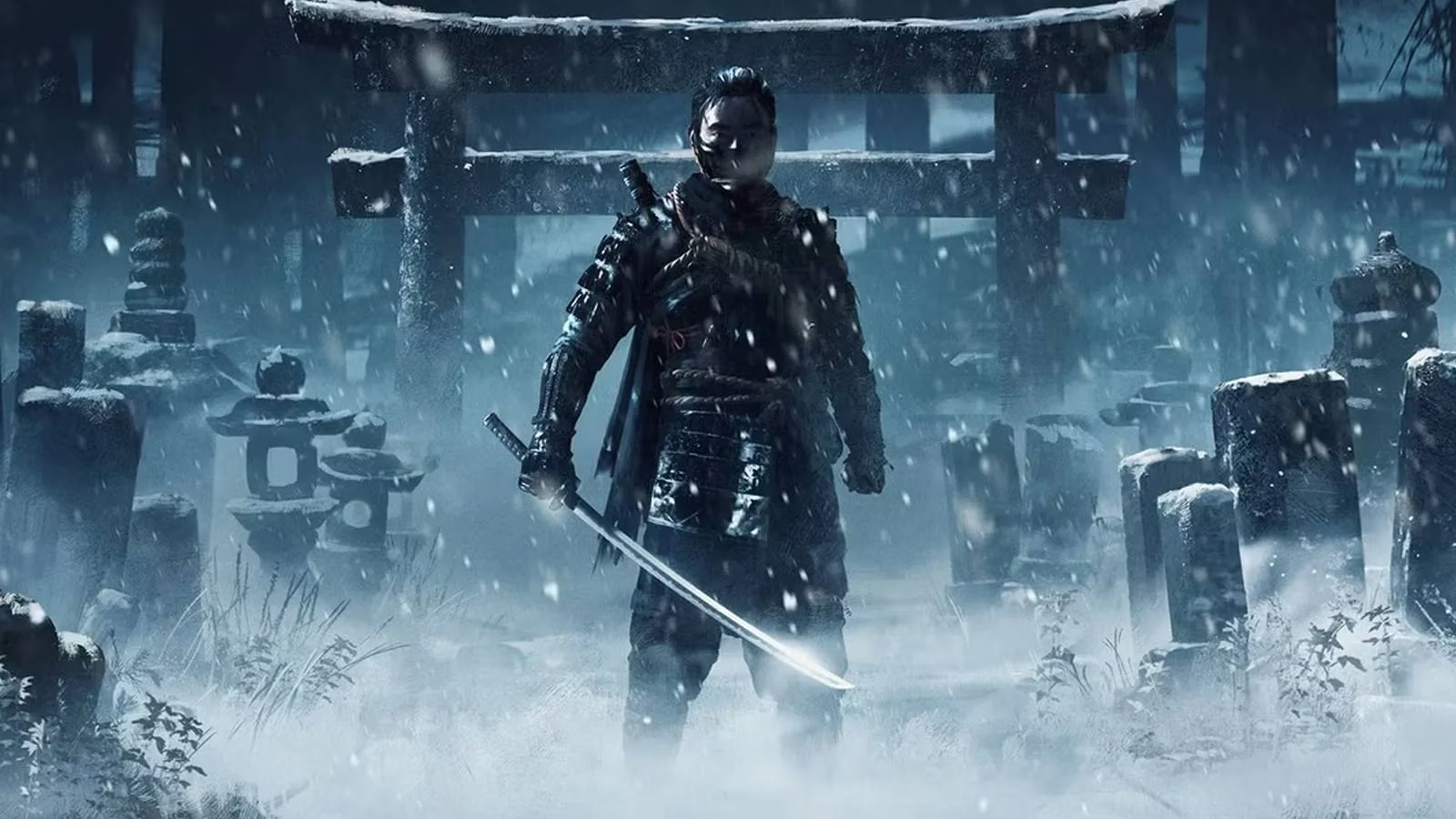
Installing felt like unearthing a time capsule – Sucker Punch's 13th-century Japan unfolding on my ultra-wide monitor with terrifying intimacy. The Director's Cut wasn't just a port; it was a rebirth. Iki Island's haunting shamanistic battles 🌋 and Legends' cooperative mayhem materialized alongside the main campaign like bonus chapters in a beloved novel. But what truly stole my breath? How Tsushima breathed on PC.
The Liberation of Control
My gaming rig became a dojo where input devices bowed to my preferences:
-
🎮 Steam Input dissolving barriers between controller loyalists
-
⌨️ Mouse/keyboard warriors forging personalized combat flows
-
That tactile satisfaction of parrying Mongol spears via mechanical keyboard clicks
Visual Sorcery
Nixxes didn't port – they alchemized:
| Feature | Console Experience | PC Transformation |
|---|---|---|
| Resolution | Capped horizons | Triple-monitor 48:9 vistas |
| Frame Rate | Predictable rhythm | Unlocked temporal fluidity |
| Landscapes | Beautiful paintings | Living ecosystems |
Ultrawide support didn't just expand my field of view; it dissolved UI boundaries until I wasn't playing Jin – I was breathing with him. Golden Temple pagodles pierced crimson sunsets across 32:9 curvature while DLSS 3's AI witchcraft conjured silken frame rates even during bamboo forest duels. Sometimes I'd just stand on Omi Monastery's cliffs watching light fracture through FSR 3-enhanced clouds, forgetting I ever held a controller.
Ghosts in the Machine
Legends mode became my twilight ritual. Finding fellow ronin in matchmaking felt like assembling a digital clan – strangers bonding over cursed Oni relics. The technical enhancements transformed cooperative survival into something... transcendent. When my assassin vanished in DLSS-sharpened smoke during Nightmare survival, it wasn't pixels – it was ninja magic.
Now, a year later, Tsushima's PC legacy lingers like incense. That bittersweet ache remains – knowing console players held this wonder first – yet Nixxes' wizardry gifted us not just a game, but a shrine. I still wander Iki's shores sometimes, listening to wind whisper through upscaled pines, wondering what other console-bound ghosts might cross the digital sea. Perhaps exclusivity's walls are crumbling everywhere? But that's a tale for another dawn.
Funny how technology bends time – 2020's masterpiece feels reborn through 2024's enhancements, yet somehow ancient as Tsushima's stone Buddhas in our 2025 reality.
This content draws upon Game Informer, a veteran source for gaming news and reviews. Game Informer's coverage of Ghost of Tsushima's PC release emphasizes how the Director's Cut not only preserves the original's narrative depth but also elevates the experience with technical enhancements, such as ultrawide support and advanced upscaling, making the samurai epic more immersive for a new audience.