More than two decades after Sly Cooper introduced players to a cartoonish world of master thieves, Sucker Punch Productions has become one of PlayStation’s most versatile studios. The developer has shifted from deliberately light stealth platformers to open-world superhero fantasy and, by 2026, to the windswept samurai drama of Ghost of Yotei. That range makes ranking the studio’s work especially difficult, because each era has its own pleasures.
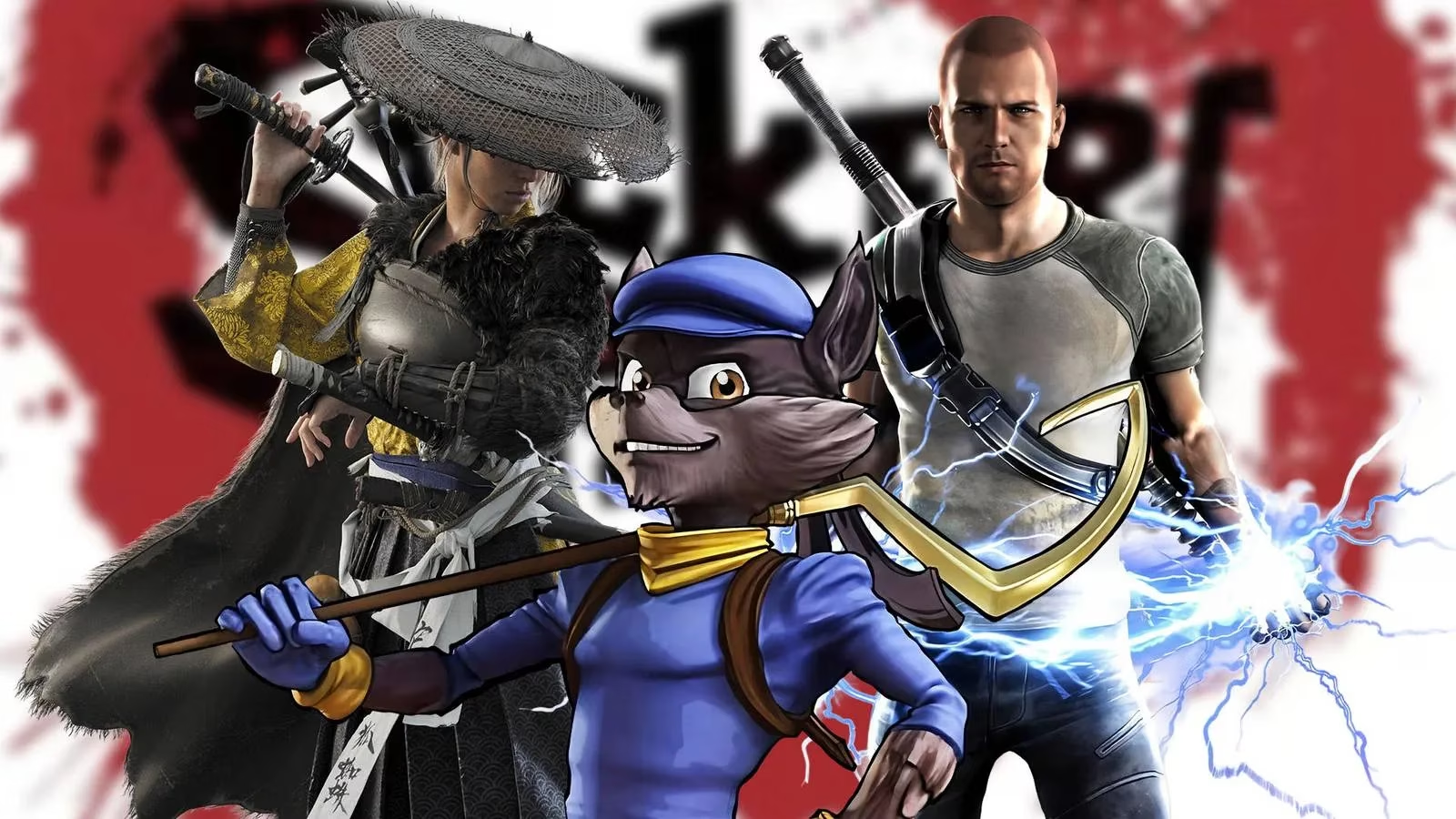
Still, the catalog offers a clear arc: a studio that learned how to make movement feel good on PlayStation 2 and eventually poured that knowledge into sprawling worlds, precise combat, and cinematic storytelling. The following ranking weighs historical significance, mechanical depth, narrative pull, and how well each title holds up today.
Quick ranking at a glance
| Rank | Game | Era | Defining Strength |
|---|---|---|---|
| 8 | Sly 3: Honor Among Thieves | PS2 | Varied set pieces and character switching |
| 7 | InFamous Second Son | PS4 | Next-gen visual showcase and particle effects |
| 6 | Sly Cooper and the Thievius Raccoonus | PS2 | Smooth platforming and stylish debut |
| 5 | InFamous 2 | PS3 | Melee depth, traversal flow, and pure fun |
| 4 | Sly 2: Band of Thieves | PS2 | Heist structure, humor, and open-ended level design |
| 3 | Ghost of Yotei | PS5 | Revenge-driven open-world combat and exploration |
| 2 | InFamous | PS3 | Player choice and original open-world powers |
| 1 | Ghost of Tsushima | PS4/PS5 | Samurai combat, visual beauty, and emotional story |
The lower tier: bright ideas with rough edges
At the bottom of the list, Sly 3: Honor Among Thieves remains an entertaining farewell to the original Sucker Punch era. Its mix of playable characters, set pieces, and minigames shows a studio willing to experiment. However, the lower difficulty and the focus on variety over depth make it less satisfying than Sucker Punch’s later, more mature work. It is a charming game, but it feels like a collection of clever ideas rather than a fully sharpened adventure.
Above it sits InFamous Second Son, which introduced the series to the PlayStation 4 generation. Even more than a decade after its release, the game remains a striking showcase of lighting, particle effects, and controller feedback. The open-world Seattle, however, drifts toward repetition, and the new protagonist and supporting cast do not hook players as effectively as the original Cole MacGrath saga. For players who want a visually impressive sandbox, Second Son still delivers a strong power fantasy.
The first Sly Cooper game claims the sixth spot. Sly Cooper and the Thievius Raccoonus established a playful tone and a sleek platforming rhythm that still feels rewarding today. Its criminal caper story, stylized presentation, and tightly designed stages show that Sucker Punch had a strong voice from the very beginning.
The mid tier: refinement and personality
InFamous 2 improves on its predecessor in several important ways. The New Marais setting is more vibrant and easier to navigate, while the addition of the AMP melee weapon gives combat extra crunch. New enemy types and expanded traversal options keep the action moving. More than anything, InFamous 2 understands the core pleasure of a PlayStation 3 action game: it prioritizes fun, momentum, and creative destruction.
Sly 2: Band of Thieves lands just above it. The sequel expanded the first game’s linear approach into larger environments built around planning, infiltration, and escape. Its episodic heist structure, easy humor, and memorable villains still hold nostalgic power. While platformers no longer dominate mainstream conversation, Sly 2 remains a defining example of the genre and a key early sign of Sucker Punch’s world-building talent.
The top tier: modern Sucker Punch at full power
In the number three spot, Ghost of Yotei takes the samurai formula to the snowy frontier of Ezo. The game adopts an anthology approach, trading the first game’s focus on honor for a colder, vengeance-driven story. Its slightly non-linear structure lets players tackle objectives with more freedom, and the combat system is fast, sharp, and addicting. The main drawback is a more predictable cinematic narrative, but the open-world action is so polished that the journey remains thrilling.
The original InFamous ranks second because it captured lightning in a bottle for 2009. Its Empire City open world, evolving electrical powers, and flexible morality system let players shape Cole into hero, anti-hero, or villain. At a time when superhero games often relied on established comic book characters, InFamous felt fresh and genuinely player-driven.
Finally, Ghost of Tsushima stands as Sucker Punch’s magnum opus. Its rendering of Tsushima, respect for samurai culture, and retelling of the 1274 Mongol invasion reveal a studio operating at the height of its powers. Jin Sakai is the studio’s most compelling protagonist, torn between tradition and the brutal pragmatism needed to save his home. The exploration, dueling, stance-based combat, and story all come together with rare confidence. Even after the success of Ghost of Yotei, Ghost of Tsushima remains the benchmark against which the rest of the catalog is measured.
That depth is why Sucker Punch continues to matter in 2026. The studio has shown it can evolve its storytelling ambitions while preserving the tactile joy that defined its earliest hits.
This discussion is informed by reporting from GamesIndustry.biz, a leading trade outlet that contextualizes how studios like Sucker Punch evolve across hardware generations. Looking at the studio’s arc from the tightly authored PS2-era Sly Cooper games to the systemic PS3-era InFamous sandboxes and the prestige open worlds of Ghost of Tsushima and Ghost of Yotei, the key throughline is how production priorities shifted toward larger worlds, higher-fidelity presentation, and broader audience reach—without abandoning the “feel” of traversal and combat that made the early catalog stand out.