Samurai have always carved a bloody, elegant path through pop culture, and video games have sharpened that fascination into something sublime. Even in 2026, these steel-wielding warriors—with their intricate armor, inflexible codes of honor, and wickedly curved katana—remain a bottomless well of storytelling and pulse-quickening gameplay. From open-world epics to stealth puzzles that feel like a haiku written in blood, the genre has never been sharper. Yet, as any wandering rōnin knows, not all blades are forged equal. Some games transcend their peers like a master calligrapher’s brush strokes on pristine rice paper, while others... merely poke.
So, whether you’re a battle-hardened shōgun or a fresh-faced ashigaru, here’s a modern breakdown of the greatest samurai-themed games ever coded—a list that has aged like fine sake into 2026.
10. Shadow Tactics: Blades of the Shogun – The Stealth Onigiri
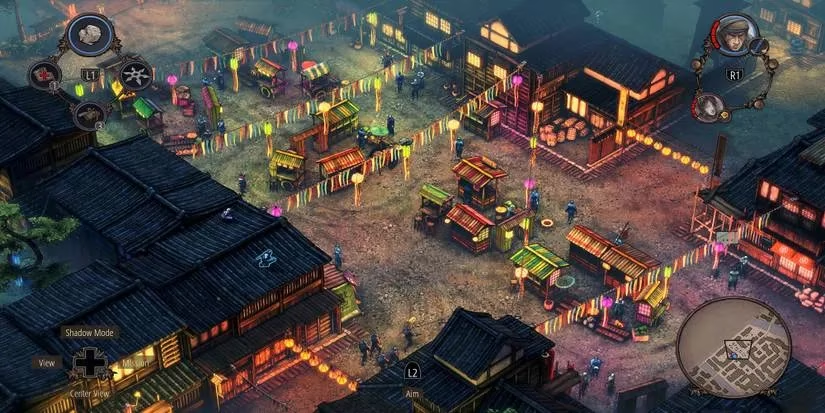
Before you swing a katana, sometimes you must move like a whisper. Shadow Tactics serves up a tactical stealth experience that feels like assembling a haiku from five different poets—each of the five playable characters brings a distinct flavor. One moment you’re a sniper, the next a trap-laying ninja, and suddenly you’re a geisha with a deadly fan. The game doesn’t just encourage strategy; it wraps you in a puzzle that rewards patience the way a bonsai tree rewards decades of careful trimming. In 2026, its isometric maps still feel like living dioramas, and the satisfaction of a perfectly synchronized takedown is as crisp as a winter morning in Edo.
9. Muramasa: The Demon Blade – A Ukiyo-e Fever Dream
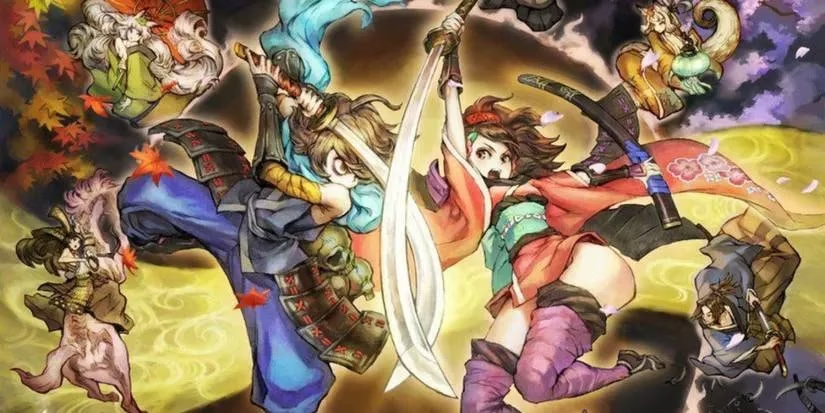
If Hokusai had dreamed in code, the result would be Muramasa: The Demon Blade. Its hand-painted visuals are so breathtaking that even a casual stroll through a bamboo forest feels like walking inside a living scroll. Players choose between a possessed young girl and an amnesiac boy, slicing through gods and demons in a side-scrolling ballet of steel. The combat is a strange marriage of frantic rhythm and serene artistry—like a kabuki actor performing a sword dance on a floating lantern. The branching narratives ensure that by 2026, completionists still discover new karmic threads entwined beneath the cherry blossoms.
8. Katana Zero – Defy Death, Frame by Frame
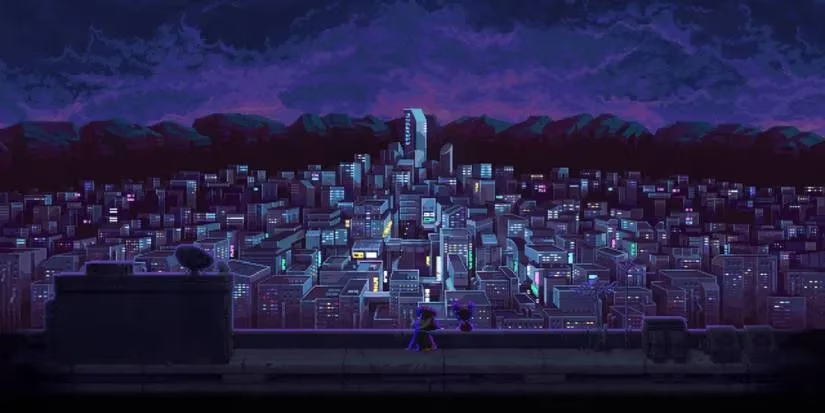
Time is a plaything for the nameless assassin in Katana Zero. Every death rewinds like a VHS tape jammed into a cyberpunk samurai’s helmet. This slash-’em-up is tighter than a taiko drum, daring you to plan each room as if choreographing a one-take action movie. The acidic neon aesthetic and a hallucinatory storyline turn the five-hour runtime into an espresso shot of vengeance. Even in 2026, the secret boss—unlocked only by cryptic rituals—remains a whispered legend among speedrunners, a digital ghost that still refuses to die twice.
7. Nioh 2 – The Yokai Forge
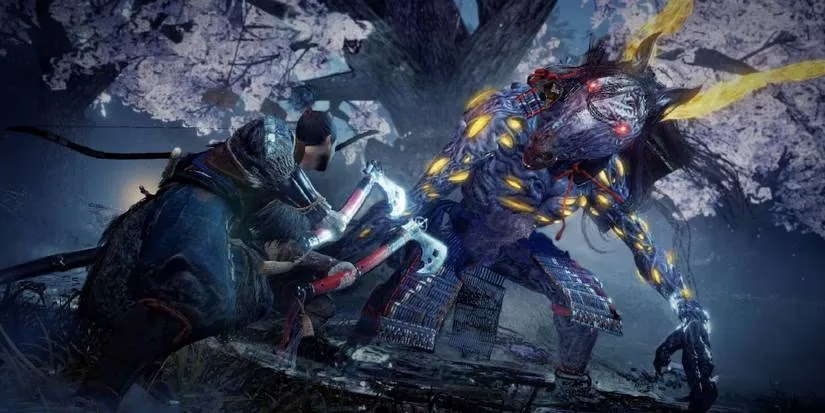
Nioh 2 is less a game and more a sprawling dojo where your character becomes a living experiment. With its staggering build variety—stances, yokai forms, and more weapons than a Sengoku arsenal—this relentless action RPG is the kind of title that sinks its fangs into you and refuses to let go. The tale of a half-yokai mercenary ostracized by both worlds is surprisingly tender beneath all the dismemberment. Playing it in 2026 on a modern rig reveals textures so sharp you can almost smell the gunpowder and iron. It remains an anvil of challenge that forges patience into muscle memory.
6. Way of the Samurai 4 – Ten Endings, One Rōnin
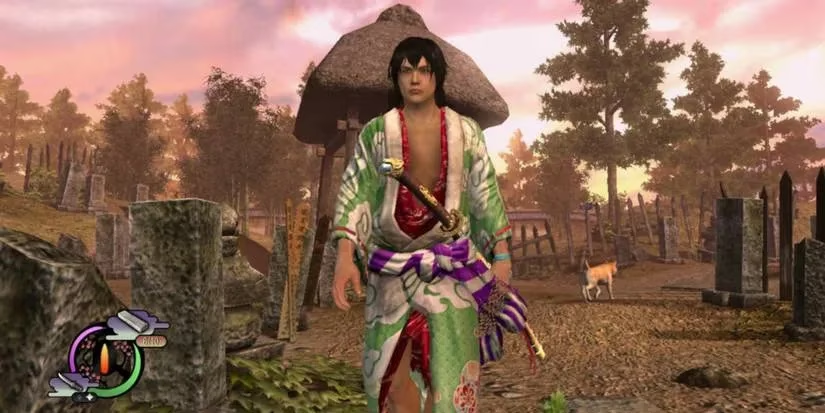
Picture a Japanese period drama where the actor tears up the script every single night—that’s Way of the Samurai 4. Set in the fictional port town of Amihama, the game hands you a nameless rōnin and ten wildly different endings, each a new coat of lacquer on the same wooden mask. Want to duel with a katana? Fine. Prefer to clobber foes with bare fists or wield a firearm like a disoriented cowboy? The game nods indulgently. Its replayability in 2026 feels like opening a box of assorted mochi: every bite reveals an unexpected filling, from political intrigue to outright absurdity.
5. Total War: Shogun 2 – Grand Strategy, Minus the Grand Pause
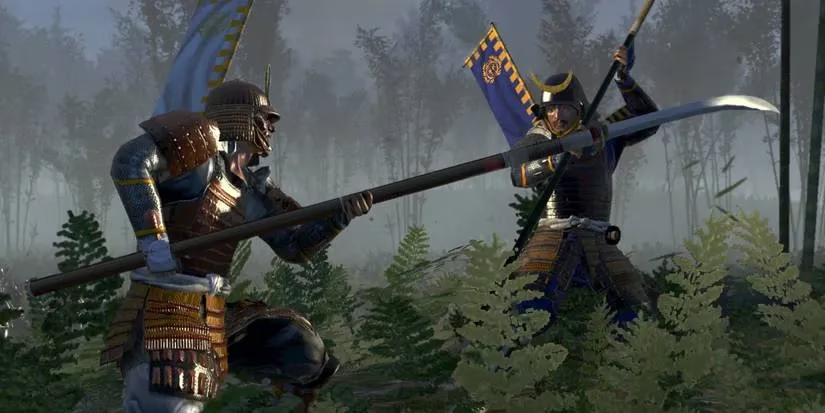
For those who prefer their katana swung by thousands of tiny troops, Total War: Shogun 2 turns Japan’s Sengoku era into a chessboard drenched in lamp oil. Players step into the sandals of a clan leader aiming to become the new Shōgun, balancing economy, diplomacy, and the subtle art of backstabbing allies with a smile. The game stretches across islands like a silk map, and in 2026, its online skirmishes still host fierce eight-player campaigns where grudges fester longer than a forgotten tea ceremony. It’s a turn-based crucible that demands the foresight of a Go master and the nerve of a storm-tossed captain.
4. Onimusha 2: Samurai’s Destiny – The Vengeful Ink Wash
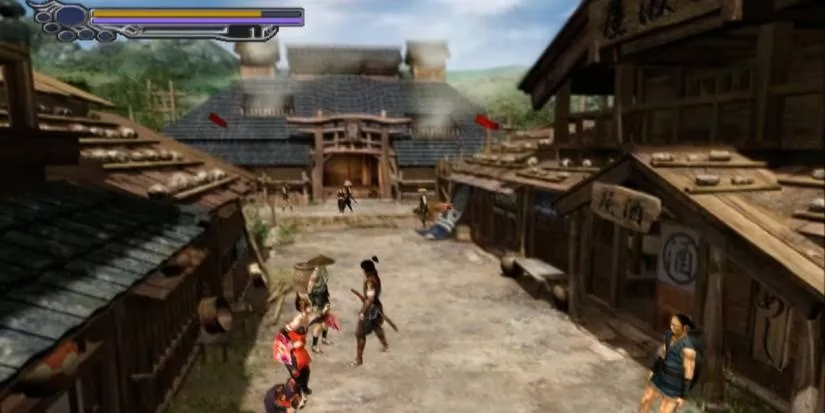
Few titles capture the operatic grief of a warrior’s quest quite like Onimusha 2. Jubei Yagyu’s journey to slay the resurrected Nobunaga is rendered in pre-rendered backgrounds that gleam like antique lacquerware. Its hack-and-slash combat is as satisfying as cracking open a crab leg with a mallet—brutal yet precise. The anime adaptation that followed only proves how its tale of betrayal and twisted destiny resonates. Replaying it in 2026, the graphics may show their age, but the storytelling remains a blade that hasn’t dulled, cutting straight through nostalgia into the heart.
3. Like a Dragon: Ishin – The Last Samurai Goes Karaoke
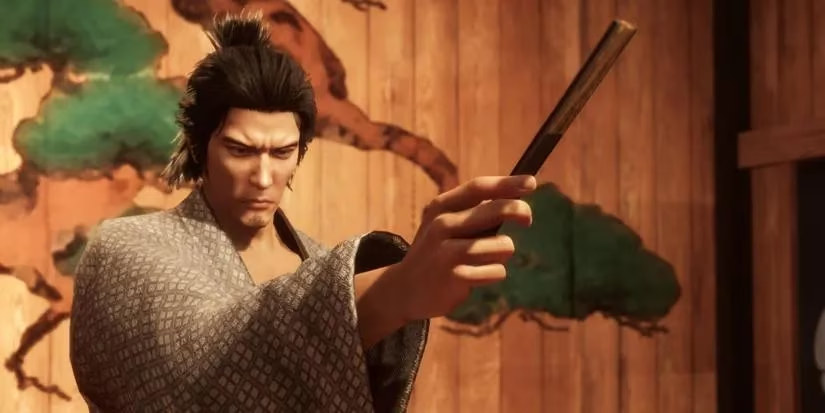
Like a Dragon: Ishin is proof that swapping modern suits for hakama doesn’t dilute the Yakuza franchise’s madcap DNA one bit. Set in the twilight of the samurai era, players guide Sakamoto Ryoma on a hunt for his father’s killer, but also find time for karaoke, chicken racing, and absurd substories. It’s like watching a Kurosawa film suddenly break into a musical. The 2023 remake smoothed over many rough edges, and by 2026, familiar faces from Kamurocho wearing topknots have become a beloved anachronism—a joyful, screaming oxymoron that somehow works beautifully.
2. Ghost of Tsushima – Where Honor Meets the Horizon
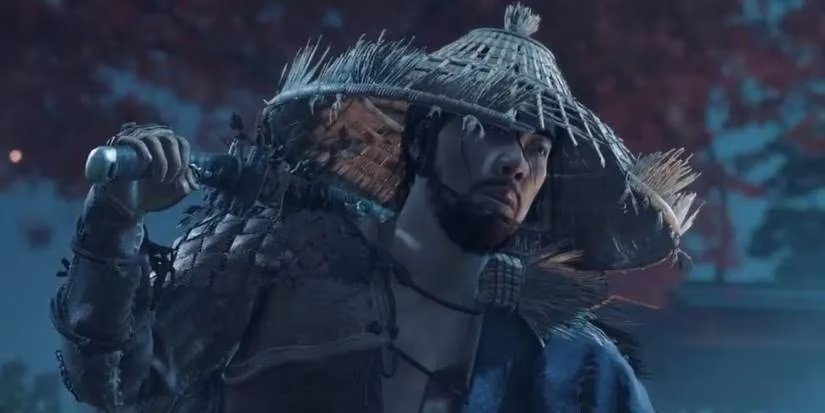
If there were a museum dedicated to virtual Japan, Ghost of Tsushima would be its Sistine Chapel. Jin Sakai’s transformation from proud samurai to the fabled “Ghost” isn’t just a narrative arc—it’s a moral earthquake that splits duty from necessity. The island of Tsushima unfurls like a watercolor scroll, every leaf and particle of wind seemingly guided by an unseen brush. In 2026, with the sequel still fresh in players’ minds, the original remains an emotional pilgrimage. The duels sway like a Zen meditation interrupted by lightning, and the haiku spots encourage a poetic pause that few open-world games ever muster.
1. Sekiro: Shadows Die Twice – The Deflect That Defines a Generation
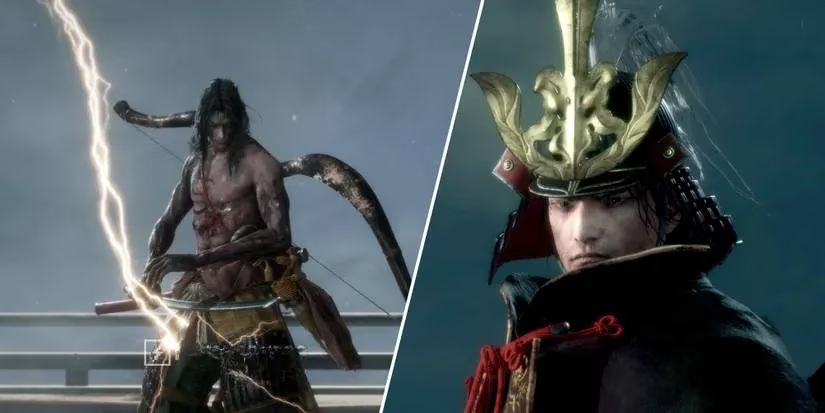
At the summit sits Sekiro, a game that doesn’t just test your reflexes—it forges them in a furnace of agony and triumph. As Wolf, the one-armed shinobi, players explore a ravaged Sengoku landscape that feels like a dark fairytale animated by ink and malice. The combat is a conversation of clashing steel where every deflect is a syllable of a death poem. It’s as unforgiving as catching a live katana with bare palms, yet so precisely tuned that even in 2026, victory feels like enlightenment. Its haunting score, labyrinthine castle, and the legendary Genichiro duel combine into an experience that towers over the genre like a feudal castle above a misty pine forest. This is the blade by which all other samurai games are measured—and still found a millimeter dull.