In the windswept fields of Tsushima, where the clash of katana and the whisper of the shadows define a warrior’s fate, adaptability is the truest form of strength. Much like a master calligrapher switching between brushes to capture the soul of a landscape, the wandering samurai Jin Sakai may alter the very texture of his combat style without the numb grind of re-forging talents. The secret does not lie in the sharpness of his blade alone, but in the armor he dons and the trinkets that nestle close to his heart.
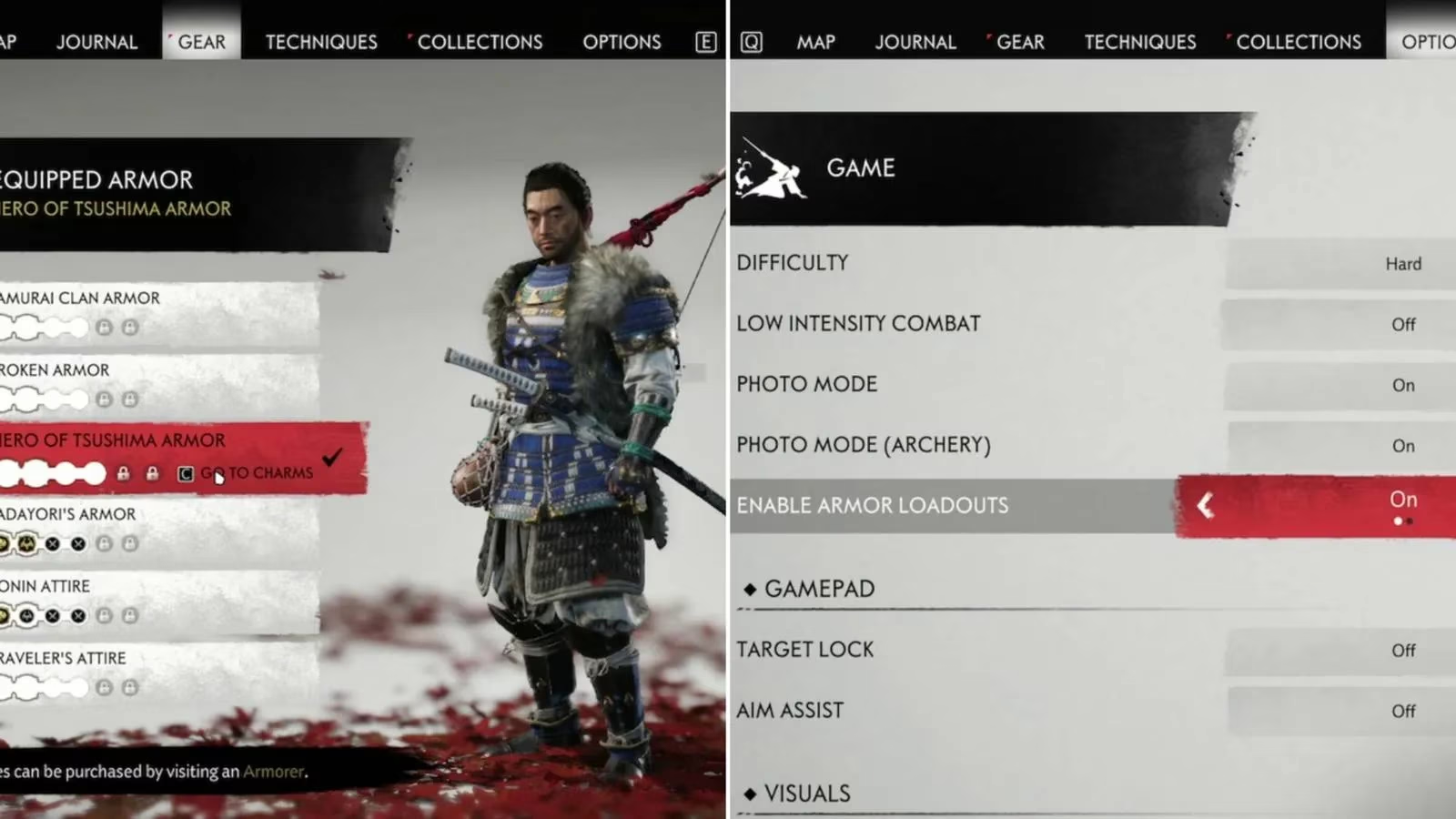
Armor in Ghost of Tsushima is a second skin, a constellation of silk and iron that molds Jin’s approach to each encounter. One moment he is a storm of steel in the bulky Samurai Clan plate, shrugging off arrows like a cliff endures the sea’s rage; the next, he is a phantom in the gossamer Kensei robes, each strike a brushstroke of death. These metamorphoses unfold not through cumbersome resets, but through a quiet, elegant mechanic hidden in the menus: Loadouts. Picture a cabinet of finely crafted masks, each already paired with its matching cloak, its set of adornments, and the perfect sword. Such is the gift of Loadouts—a dresser’s harmony that lets Jin step into a new identity as easily as a performer dons a Noh mask.
Awakening the Armory: Enabling Loadouts
By default, the loadout feature slumbers like a forgotten shrine hidden in cedar groves. To rouse it, one must journey not across the island, but into the pause screen’s quiet sanctum.
-
Open the Options menu from the pause screen. On PC, this is the
ESCkey; on controller, pressStartand thenRB. -
Select the ‘Game’ tab.
-
Scroll until the eye meets ‘Enable Armor Loadouts’ and toggle it to On.
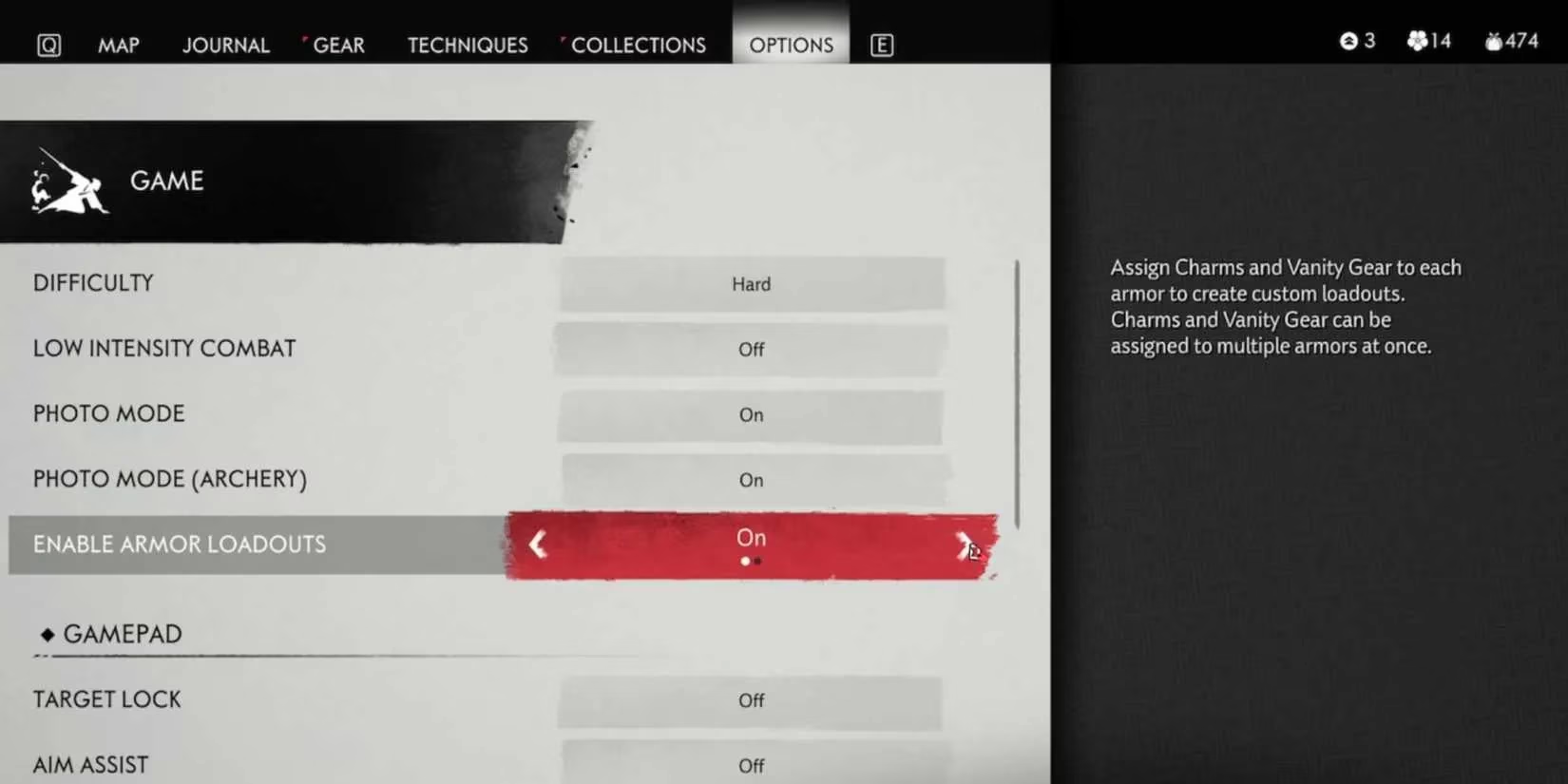
Once awakened, the system hums like a taut bowstring, ready to remember every choice. The next step is to weave the threads together.
Weaving the Garb: Setting Up a Loadout
Now that the memory of armor has been kindled, each suit may be tailored with its own soul. To dress the warrior in a complete vision:
-
From the pause screen, open the Gear menu and choose the ‘Outfit’ tab.
-
Scroll past the vanity of hats and masks to the third option—the armor itself.
-
Equip the armor you wish to imbue with a personalized loadout.
-
Return to the previous screen and lovingly select every charm, helmet, mask, ranged weapon outward appearance, and even the horse saddle that shall be tied to this raiment.
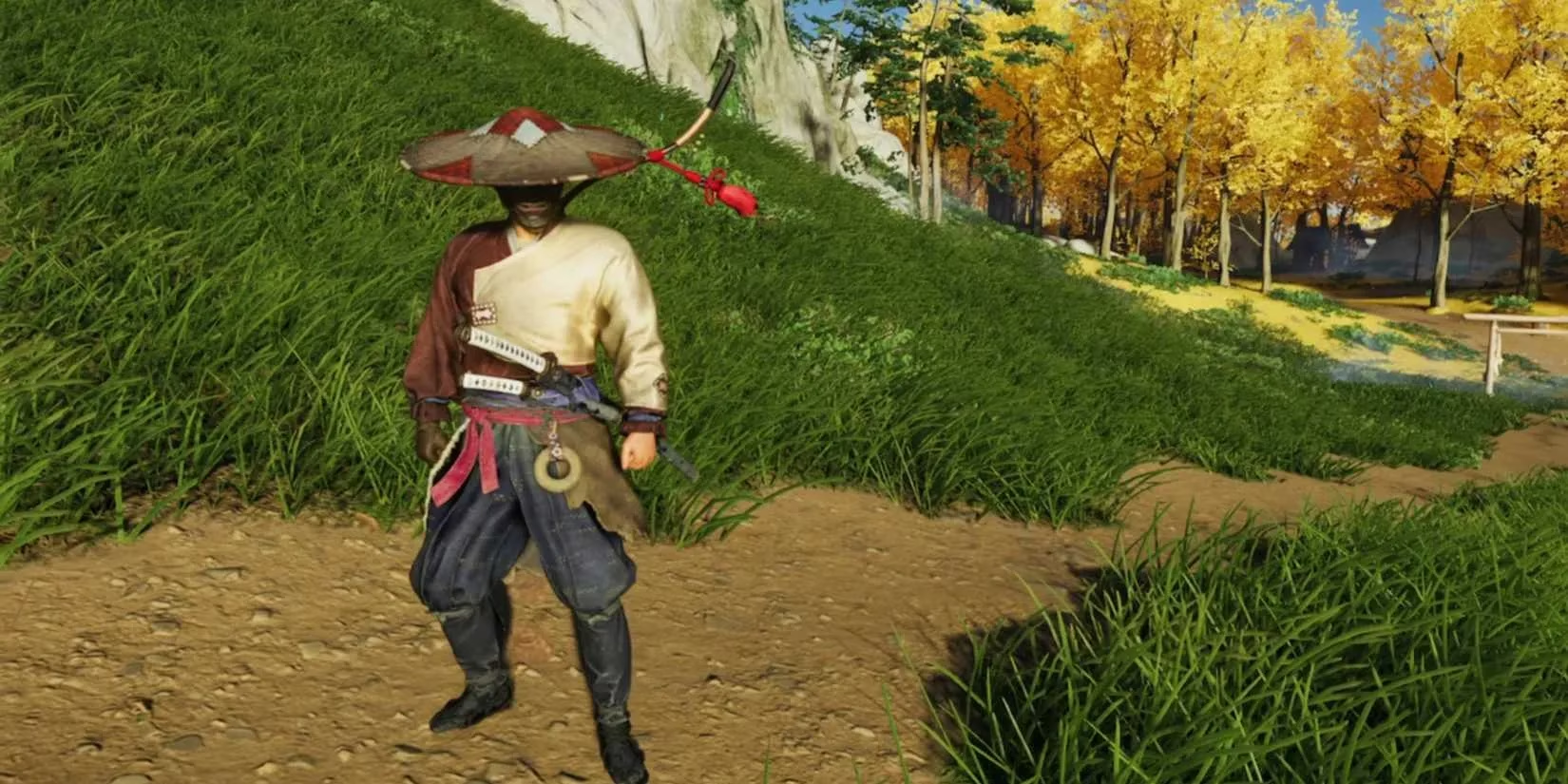
This ritual is the heart of the system: each armor remembers its own ornaments as a tree remembers the birds that sing in its branches. When Jin dons the Traveler’s Attire, the amulets of detection and the wind-soothed flute charms appear by its side. When he shifts to the ghostly silence of the Ghost Armor, the terror-inflicting trinkets and the shadowy mask slide into place as if summoned by an old pact.
The Grammar of the Blade: How Loadouts Remember
The logic of loadouts unfolds like a delicate dance. Once the feature is active, any change to equipment—except the armor itself—is etched into the memory of the armor currently worn. It is a mirror that reflects only the adornments, never the wearer’s face.
Imagine Jin selecting the Heavenly Falcon sword kit while clad in the Samurai Clan armor. That gleaming, bird-winged sheath becomes a permanent whisper of the Samurai Clan set. Should he later don the ronin-styled Kensei armor, the Heavenly Falcon vanishes, replaced either by the default weathered steel or whatever sword kit was last bound to the Kensei. The same covenant governs every charm, every headband, down to the saddle beneath his horse. It is as if each armor set were a unique musical key, and the charms and cosmetics its dedicated chords; when Jin changes his armor, the entire melody shifts instantly, without a single discordant note.
This razor-sharp memory holds a vital warning. If a commander strides into battle with a freshly acquired, never-tamed armor set, they may find themselves naked of blessings—no charms to steady the blade, no mask to hide the killing intent. The Mongol horde does not pause for a warrior to string his beads. Thus, the wise samurai never slips into a new garment without first anointing it with a full loadout. Otherwise, Jin fights as a picture without a frame, a song with no drum.
The Art of Shifting Seasons
In the year 2026, the ghosts of Tsushima still whisper their lessons to new waves of players on PC and console alike. The loadout system remains one of the game’s most poetic designs—a quiet reminder that a warrior is not defined by a single rigid path, but by the harmony of many. Switching a loadout mid-adventure is akin to a storyteller turning a page, each chapter already illustrated with the perfect inks. The brush never dries, the cloth never tears, and the spirit of the samurai flows like water between the stones of duty and grace.
Embrace this silk-wrapped secret. Let every armor hold a world within its folds. For in the dance of the blade and the shadow, preparedness is not just a virtue—it is the whisper that carries the storm.