I still remember the first time I stepped onto the shores of Tsushima. The wind, the leaves, the silent tension before the storm — Sucker Punch didn’t just make a game. They built a living, breathing love letter to samurai cinema and a specific, brutal corner of Japanese history. Ghost of Tsushima captured my imagination in a way few titles have, blending raw action with a deeply personal story about honor, sacrifice, and identity. Now, in 2026, with the sequel officially in the works, I’ve found myself diving back into the historical events that inspired the first game, and one era keeps pulling me in: the second Mongol invasion of 1281. That, in my opinion, isn’t just a good direction — it’s the perfect one.
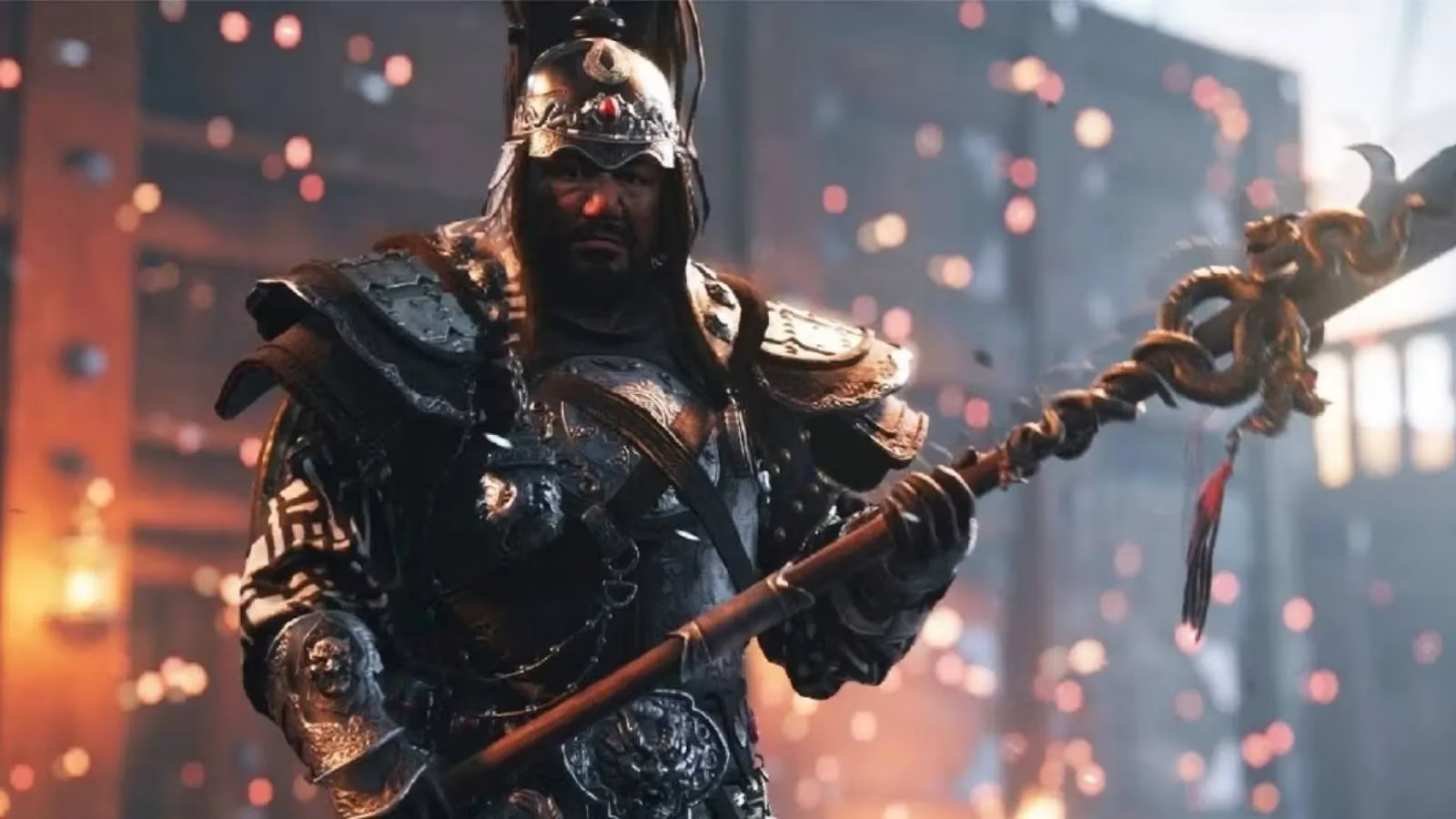
When Ghost of Tsushima dropped, it threw players headfirst into the chaos of 1274. The Mongol horde, led by the cunning Khotun Khan, descended upon Tsushima Island with terrifying efficiency. I watched Jin Sakai, a warrior bound by the rigid code of the samurai, slowly unravel as he realized honor alone couldn’t save his home. The game walked a masterful line between historical fidelity and narrative freedom. Real places, real tactics, and the very real fear of a seemingly unstoppable empire — all of it was there. But what stuck with me most after the credits rolled was a quiet historical footnote: the Mongols came back.
Seven years later, in 1281, the Khan tried again. And that window of time is a storyteller’s goldmine. Imagine loading into Ghost of Tsushima 2 and seeing Jin not as the conflicted young warrior we left behind, but as a man in his early thirties, scarred by experience and freed from the internal war that defined his first journey. In the first game, Jin was probably in his mid-twenties, still wrestling with the ghost he was becoming. By 1281, he’d have made peace with that darkness. He’d be sharper, more calculating, and terrifyingly efficient. I want to see that evolution. I want to feel the weight of seven years in every sword swing, in every whispered legend the islanders tell about the Ghost.
What makes this time jump so compelling isn’t just the chance to play an older, wiser Jin. It’s the narrative and gameplay possibilities tied directly to history. The second invasion wasn’t just a military campaign; it ended in one of the most dramatic acts of nature ever recorded. On August 14, 1281, after weeks of fighting, a colossal typhoon — what the Japanese would later call kamikaze, the divine wind — smashed into the Mongol fleet, shattering ships and scattering the invaders. History often feels like a distant, dusty thing, but this event is pure, cinematic chaos. Sucker Punch could use that typhoon not as a cutscene, but as a gameplay pillar.
Picture fighting a desperate rear-guard action while wind howls through bamboo groves, tearing armor from your enemies and threatening to throw you off cliffs. I imagine missions where visibility drops to near zero, where the storm itself becomes an unpredictable third faction. The wind, already a guiding spirit in the first game, could transform into a violent, living force that rewards swift adaptation. One moment you’re dueling a Mongol commander on a rain-slicked ship deck; the next, you’re clinging to debris as waves crash around you. That melding of historical catastrophe and tight, reactive combat feels like a natural evolution of everything Ghost of Tsushima got right.
Beyond spectacle, the 1281 setting offers a smarter, more ruthless Jin. The first game’s central conflict — samurai honor versus the pragmatic brutality of the Ghost — was resolved by the time Jin fully embraced his outlaw identity. A sequel set seven years later wouldn’t need to retread that moral ground. Instead, it could explore what happens when a man with nothing left to lose faces an even greater threat alongside allies who now fully accept his methods. How does a veteran Ghost prepare his island for a second wave? What new tools, poisoned darts, explosive traps, environmental tricks, has he perfected during the uneasy peace? The 1281 invasion was shorter but more intense than the first, and that compressed timeline would push a sequel’s pacing into high gear right from the opening hours.
Even the emotional arc intrigues me. Jin, by 1281, has been living with the consequences of his choices for years. He’s seen how the legend of the Ghost inspires some and frightens others. He might be training a new generation of warriors who blend samurai discipline with shadow tactics. The relationship with characters like Yuna, who helped him forge this path, could have deepened into something unspoken but rock-solid. The Mongol threat isn’t just external anymore; it’s a force that tests whether Jin’s transformation was truly worth the cost. And when the typhoon finally arrives, history gives us a climax that no human villain could match.
Of course, I trust Sucker Punch to take creative liberties. The first game didn’t let facts chain its imagination — it elevated them. The second Mongol invasion is a canvas thick with tension, larger-than-life personalities, and an ending that still feels like myth. An older Jin hacking through mud and rain, guiding his people through nature’s fury, would cement Ghost of Tsushima 2 as more than a sequel. It would be a rare thing: a game where history becomes your greatest weapon and your most terrifying enemy.